

ACCOUNTABILITY ON TRIAL: THE MANDELSON AFFAIR, THE RULE OF LAW IN BRITAIN, AND THE COLLAPSE OF ELITE RESPONSIBILITY IN TRUMP'S AMERICA. The arrest and subsequent release in the earlyhours of this morning on bail of former UK ambassador to the United States, Lord Peter Mandelson, on suspicion of misconduct in public office marks a significant moment in contemporary British constitutional and political life. According to police statements and reporting, Mandelson was taken into custody as part of an investigation into allegations that he passed sensitive government information to financier Jeffrey Epstein during his tenure as business secretary, allegations he has denied.  The Metropolitan Police confirmed searches of multiple properties and stated that the investigation remains ongoing.  While the presumption of innocence remains fundamental, the fact that a former senior minister and diplomat has been arrested underlines the seriousness with which such allegations are being treated. From the standpoint of the UK criminal justice system, the episode illustrates the continued vitality of the rule of law: no individual, regardless of rank or political stature, is beyond investigation. Misconduct in public office is a common-law offence designed to protect the integrity of public administration and to ensure that those entrusted with state power do not abuse it for private or improper purposes. The willingness of authorities to pursue allegations relating to actions taken while in high office demonstrates institutional independence and reinforces the principle that accountability extends across the political hierarchy. Politically, however, the consequences could be damaging to government credibility and public trust. The allegations arise in the context of Epstein-related disclosures and have already prompted intense scrutiny of political judgment, vetting processes, and elite networks. Mandelson’s earlier dismissal as ambassador following revelations about his association with Epstein underscores the reputational risks to governing institutions when senior figures are linked to misconduct claims.  Even in the absence of a conviction, the optics of elite entanglement with discredited networks can erode public confidence in governance and fuel perceptions of systemic privilege. The situation also invites comparison with developments in the United States, where Epstein-related disclosures have implicated numerous prominent individuals but have not consistently produced public investigations or prosecutions. Differences in prosecutorial priorities, evidentiary thresholds, and political pressures shape accountability outcomes in both systems. Critics argue that the uneven pursuit of allegations involving powerful figures contributes to declining public confidence in democratic institutions. In the U.S. context, debates over accountability during the Trump era have intensified concerns about executive influence, politicisation of justice, and the erosion of norms that historically constrained power. Ultimately, the broader issue transcends any single individual. Public confidence in democratic governance depends upon transparency, due process, and a demonstrable commitment to justice for victims. The full, unredacted disclosure of relevant Epstein-related materials subject to legal safeguards would help establish factual clarity, ensure accountability when wrongdoing is proven, and vindicate those harmed. Upholding the rule of law requires both restraint and resolve: restraint in respecting due process and the presumption of innocence, and resolve in ensuring that no perpetrator, however powerful, is shielded from scrutiny.US Institute of Diplomacy and Human RightsHuman Rights Watch UKOccupy DemocratsCentre for Human Rights and Democracy in AfricaAmnesty InternationalBirmingham City University Dr Nelson A. Agbor AFHEA Certified Human Rights Consultant V. Lecturer @ Birmingham City University.

DEATH IN CUSTODY AND DENIAL OF BURIAL RIGHTS IN CAMEROON: A PATTERN OF STATE ABUSE. The withholding of Anicet Ekane’s body by Cameroonian authorities raises profound concerns about state accountability, human dignity, and the rule of law. The political leader died in government custody under controversial circumstances after being denied access to his prescribed medical breathing device. The continued refusal to release his remains to his family not only compounds their grief but also violates fundamental cultural, legal, and humanitarian norms surrounding burial and mourning. From an academic and human rights point of view, the denial of a body to the next of kin represents a serious abuse. Across societies, the right of families to recover and bury their dead is recognised as an essential component of human dignity and transitional justice. When a state obstructs this process, it signals a troubling willingness to subordinate basic human rights to political expediency. Such actions undermine public trust in institutions and deepen perceptions of impunity. This case is not isolated. The disappearance of journalist Samuel Wazizi’s remains following his death in custody remains one of the most disturbing examples of opacity in Cameroon’s detention system. His family never saw his body, nor were they given transparent documentation explaining the circumstances of his death. Similarly, the remains of investigative journalist Martinez Zogo remain under government seal in a morgue, while official inquiries have yet to produce conclusive or publicly credible results. These unresolved cases reinforce a pattern of secrecy surrounding deaths in state custody. Taken together, these incidents suggest a systemic problem rather than a series of administrative irregularities. When detainees die under controversial conditions, and their bodies are withheld, sealed, or never returned, the result is an erosion of legal safeguards, due process, and democratic accountability. Such practices obstruct independent investigation, prevent forensic verification, and deny families closure while shielding authorities from scrutiny. The Cameroonian government must recognise that transparency, respect for human dignity, and the rule of law are inseparable from political legitimacy. Releasing Anicet Ekane’s body to his family, providing full disclosure regarding the circumstances of his death, and ensuring credible investigations into the cases of Wazizi and Zogo would constitute essential steps toward restoring public confidence. Without such measures, these tragedies will continue to symbolise systemic injustice rather than isolated failures.US Institute of Diplomacy and Human RightsHuman Rights Watch UKCentre for Human Rights and Democracy in AfricaAgbor Nkongho Dr Nelson A. Agbor AFHEA, Certified Human Rights Consultant V. Lecturer @ Birmingham City University.
I am pleased to share that I have been awarded a Professional Certificate in Artificial Intelligence Law from the London School of Business and Administration. In an era defined by rapid technological advancement, the governance, ethical deployment, and regulatory oversight of AI systems have become critically important. This certification deepens my understanding of the legal frameworks that shape responsible innovation and digital accountability. As artificial intelligence continues to transform industries, professionals across disciplines need to develop AI literacy and regulatory awareness. I encourage colleagues and peers to pursue AI learning opportunities to remain informed, relevant, and prepared for the evolving technological landscape.@top fansFacebook Dr Nelson A. Agbor, AFHEA Certified Human Rights Consultant V. Lecturer Birmingham City University
ACCOUNTABILITY BEYOND PRIVILEGE: LEGAL SCRUTINY OF HIGH-PROFILE FIGURES AND THE STRENGTH OF THE RULE OF LAW IN THE UNITED KINGDOM. The arrest and eventual release after over 12 hours of questioning yesterday of Andrew Mountbatten Windsor, better known as Prince Andrew, on his 66th birthday amid allegations involving Epstein, has renewed debate about equality before the law in the United Kingdom. While public figures often occupy symbolic positions above everyday civic life, the principle underpinning modern democratic systems is that no individual is beyond legal scrutiny. The scrutiny applied to high-profile figures signals not merely a legal process but a constitutional reaffirmation: the law is sovereign, and status confers neither immunity nor exemption. From a rule-of-law perspective, the significance of such an arrest, or even the credible pursuit of legal action, lies in reinforcing institutional independence. In the UK, policing authorities, prosecutors, and courts operate within a framework designed to minimise political interference. When a member of the elite is subjected to investigation or detention procedures, it demonstrates procedural neutrality and public accountability. This strengthens public trust, signalling that justice is administered through evidence and due process rather than social rank or political influence. However, it is important to maintain analytical balance. High-profile arrests can risk becoming spectacles shaped by media narratives, public pressure, or political motivations. The presumption of innocence remains a cornerstone of British jurisprudence, and safeguarding fair trial rights is as crucial as ensuring accountability. The legitimacy of the rule of law depends not only on holding powerful individuals accountable but also on protecting them from prejudicial treatment and trial by public opinion. The broader importance of this development extends beyond the United Kingdom. In countries such as Cameroon, where critics argue that political elites and powerful actors frequently evade legal consequences, the visible enforcement of legal accountability against influential individuals offers an instructive contrast. When justice systems demonstrate independence and impartiality, they discourage corruption, reduce impunity, and foster civic confidence. Conversely, selective justice erodes institutional credibility and entrenches inequality. The lesson, therefore, is not about any single individual but about institutional culture. A robust rule-of-law framework requires transparent procedures, independent courts, professional policing, and civic vigilance. Nations striving to strengthen democratic governance can draw from such examples: justice must be impartial, authority must be accountable, and legal institutions must function free from elite capture. Only under these conditions can the rule of law serve its intended purpose, safeguarding fairness, stability, and public trust.US Institute of Diplomacy and Human RightsOccupy DemocratsHuman Rights Watch UK@top fansFollowing Dr Nelson A. Agbor, AFHEA Certified Human Rights Consultant V. Lecturer @ Birmingham City University.


Nelson AgborInternational Journal of Law and Society, Volume 9, Issue 3, 2026Pages 314–328 · Published 17 July 2026DOI: 10.11648/j.ijls.20260903.12 This peer-reviewed article examines how jurisdictional
Nelson AgborInternational Journal of Law and Society, Volume 9, Issue 2, 2026Pages 289–303 · Published 25 June 2026DOI: 10.11648/j.ijls.20260902.25 This peer-reviewed article examines Cameroon as
Doctoral Thesis – University of Plymouth (January 2026) This doctoral thesis examines how political dynamics and entrenched power structures in Cameroon undermine the effective legal
On the 14th of October 2020, a plain carrying on board over 100 asylum seekers from the United States landed in the dilapidated Douala international
On Saturday, October 24 2020, unknown gunmen stormed the Mother Francisca School around midday, after arriving on motorbikes popularly known in the regions as Okada.
INTRODUCTION Covid- 19 is no doubt one of the bad faces of the soon to end the year 2020. The pandemic has and is still

Judicial review, parliamentary
sovereignty, democratic rights

International protections,
vulnerable populations, dignity

Accountability, rule of law,
democratic institutions

Cross-border issues, humanitarian law,
global frameworks

Research and Enterprise Seminar SeriesBirmingham City University24 June 2026 Dr Nelson Agbor presented this research seminar examining the consequences of the continuing Anglophone crisis for
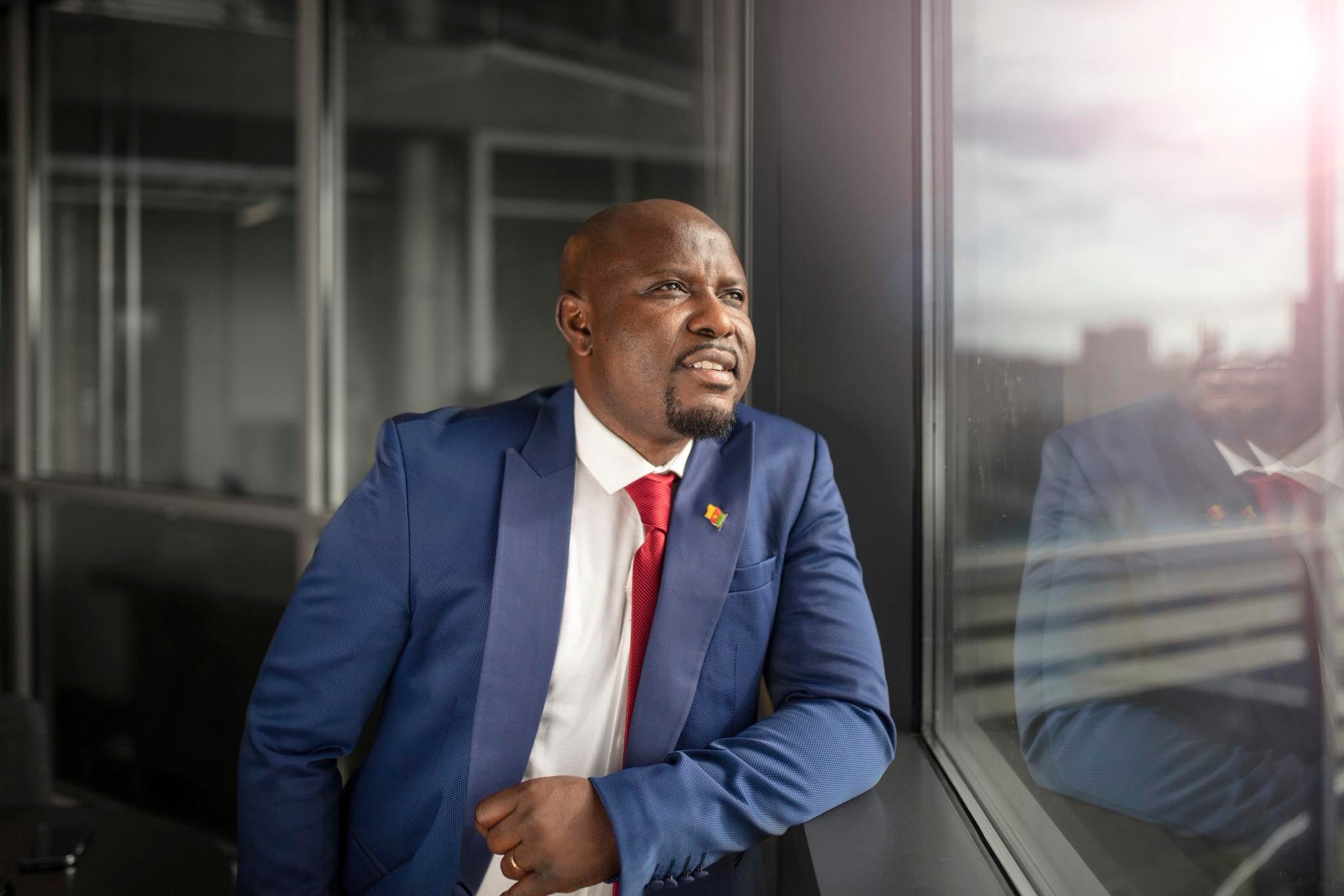
I am delighted to be invited as a speaker for the MAIR Research Seminar series. On March 4th, 2026 at 1:00 PM UK time, I
For over nine years, communities in the Northwest and Southwest regions of Cameroon have lived through profound pain, displacement and loss, often without the world
Dr. Nelson A. Agbor has been awarded a Doctor of Philosophy from the University of Plymouth following a successful thesis defense that sheds new light