Legal Theory

The philosophical heart of legal scholarship. What is law? Why should we obey it? How should power be constrained by principle? Legal theory asks the foundational questions that ground all other legal inquiry. It’s where we examine different schools of thought, challenge assumptions, and develop the intellectual frameworks that shape legal practice.

Cameroon’s Anglophone Conflict: A Decade of Human Suffering, Institutional Failure and International Indifference.

An Academic Perspective on the Humanitarian, Judicial, Economic and Political Consequences of the Crisis As Cameroon’s Anglophone conflict approaches its tenth anniversary in November 2026, the continuing devastation in the North-West and South-West regions stands as one of the most troubling failures of constitutional governance, human rights protection

Read More...

PEACE BUILDING AND THE CAMEROON ANGLOPHONE CRISIS: THE ILLUSION OF A “NATURAL DEATH WITHIN THE NEXT 10 OR 15 YEARS”

BY PROF. TARH NTANTANG (PHD) INTRODUCTION The Cameroon Anglophone crisis has persisted for nearly a decade, defying repeated state narratives proclaimed by the Cameroon Prime Minister, Dr Joseph Dion Nguty, that the conflict will “naturally die” within a generational time frame. This essay critically interrogates the illusion of

Read More...

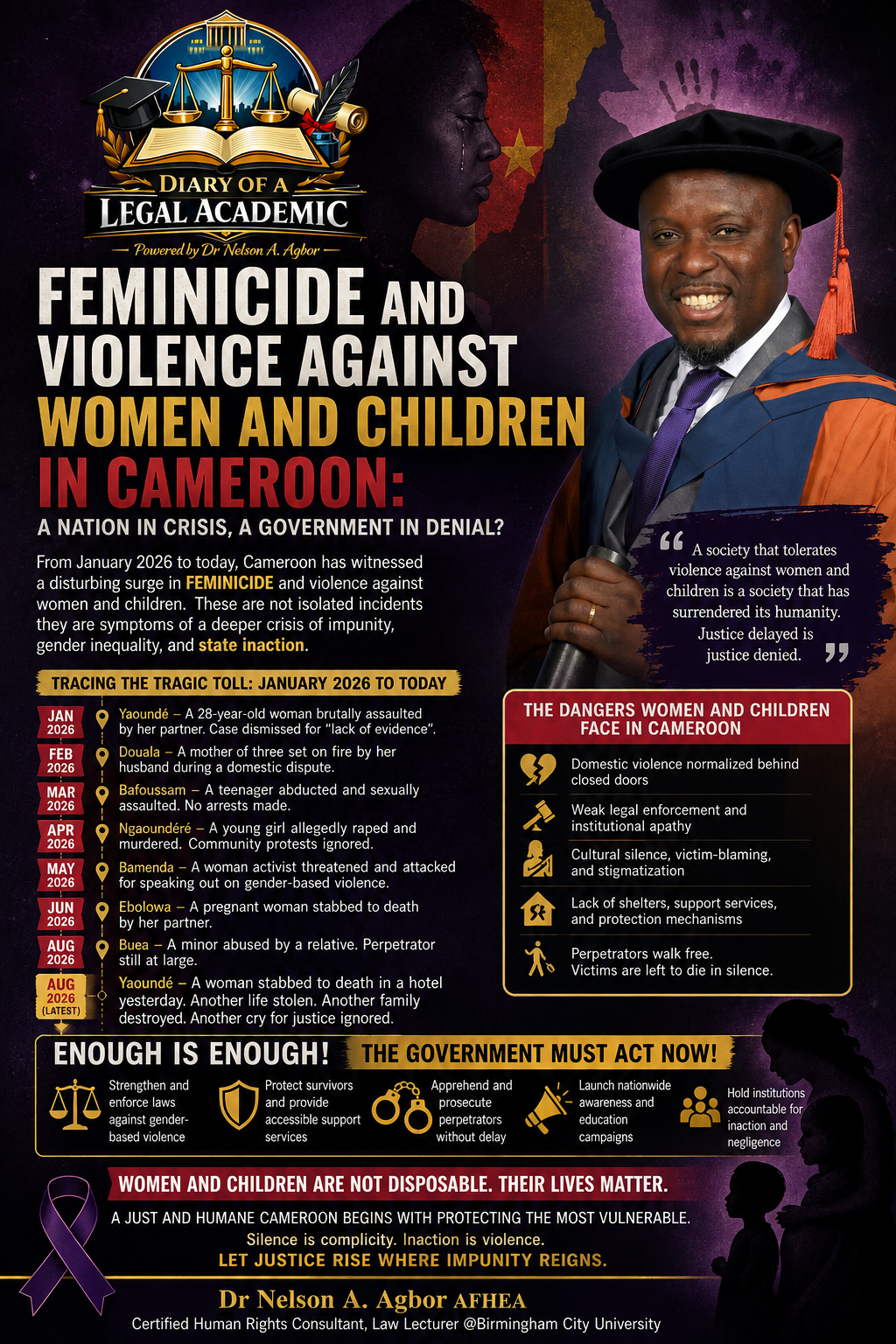
Feminicide and the Escalating Violence against Women and Children in Cameroon: A Human Rights Crisis Demanding State Accountability

Cameroon is facing an alarming escalation in violence against women and children, which can no longer be credibly treated as a collection of isolated criminal incidents. Since the beginning of 2026, reports of feminicide, intimate-partner killings, rape, child sexual abuse, infanticide and other forms of extreme violence have

Read More...

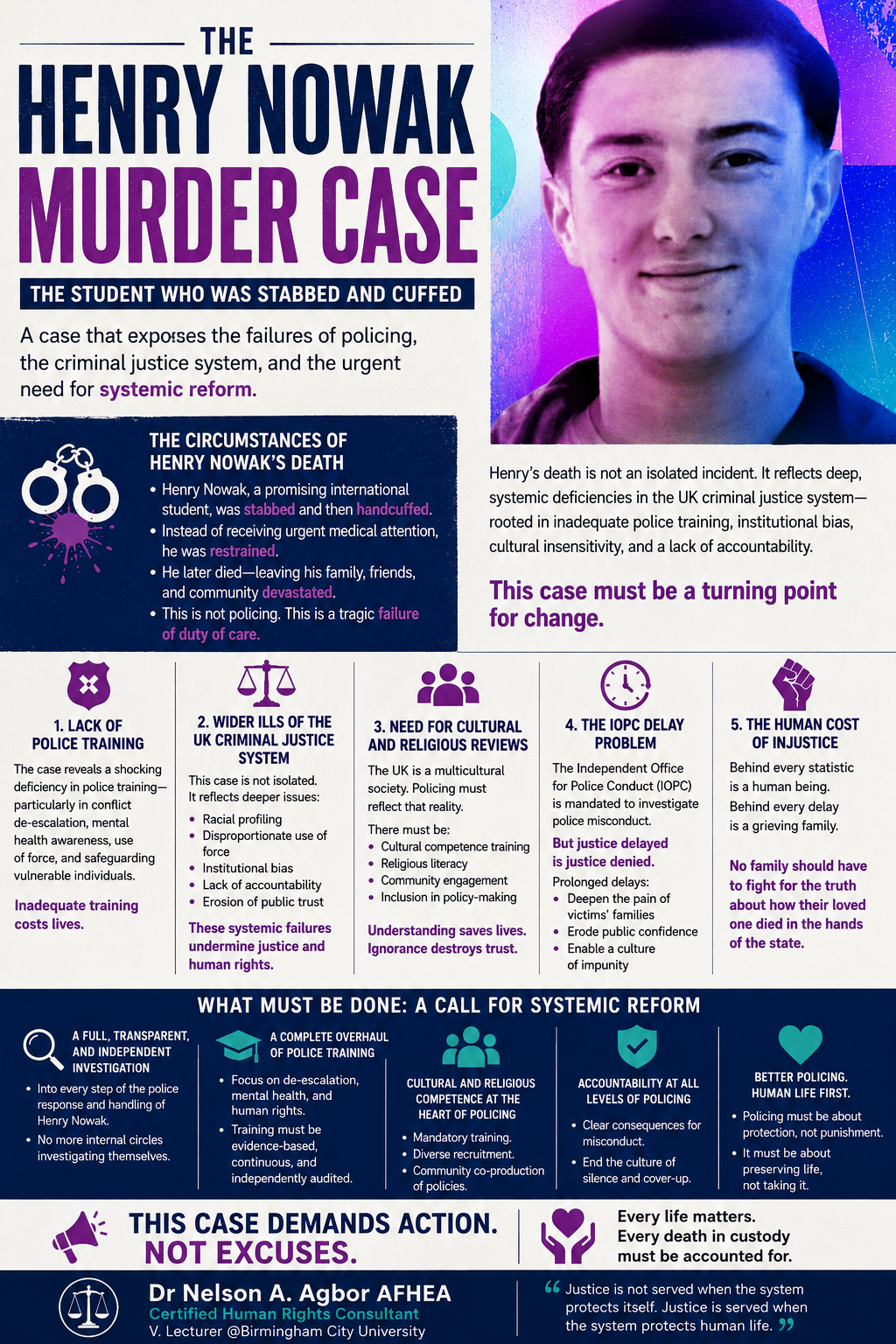
The Death of Henry Nowak: Police Training Failures, Institutional Accountability, and the Imperative for Reform in the UK Criminal Justice System.

The murder of Henry Nowak has rapidly emerged as one of the most troubling criminal justice cases in contemporary Britain. The case concerns the death of Henry Nowak, an 18-year-old University of Southampton student who was fatally stabbed in Southampton in December 2025. Evidence presented in subsequent criminal

Read More...

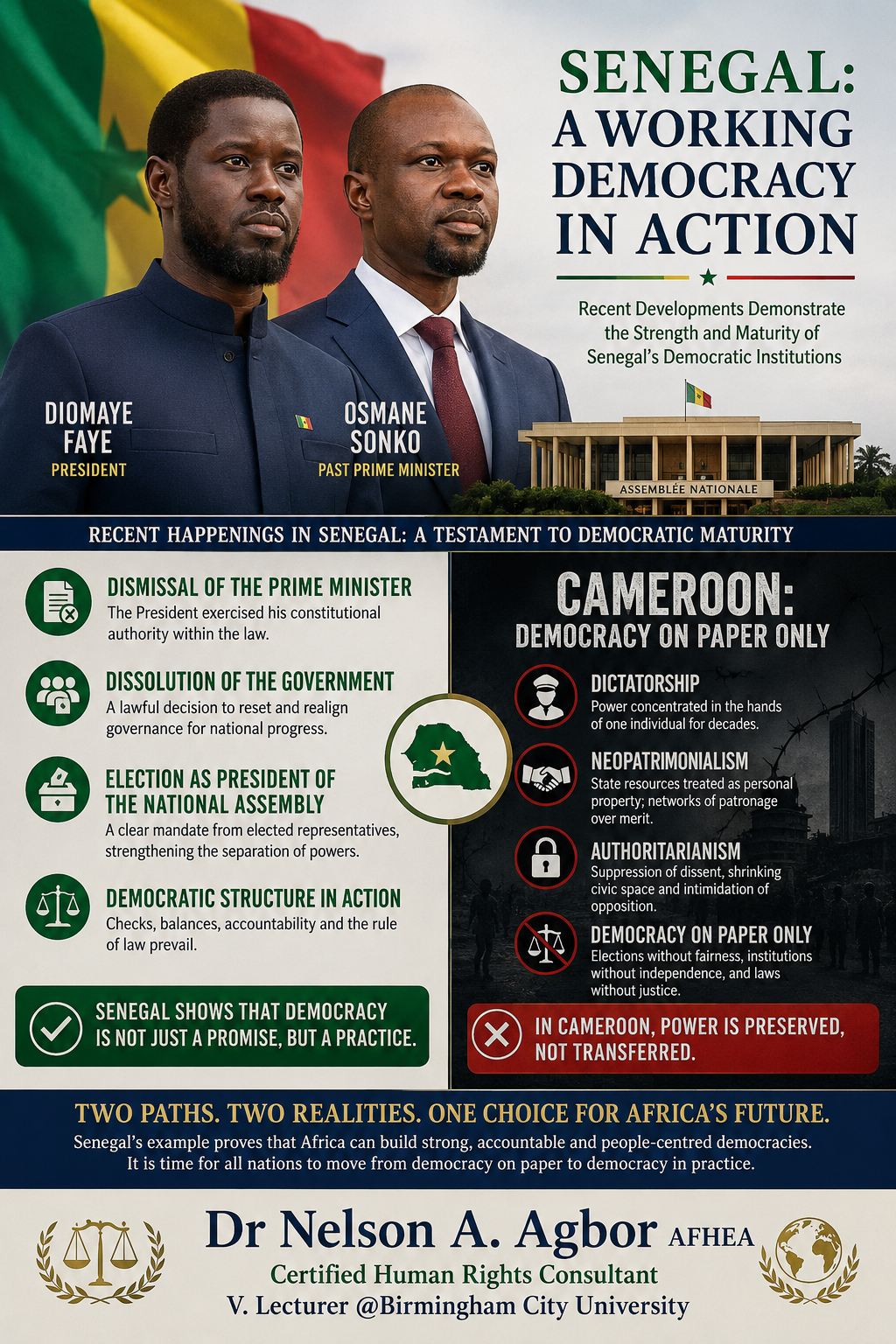
Democratic Consolidation in Senegal and Democratic Regression in Cameroon: A Comparative Analysis of Institutional Governance in Contemporary Africa.

The recent political developments in Senegal, including President Bassirou Diomaye Faye’s dismissal of Prime Minister Ousmane Sonko, the dissolution of the government, and Sonko’s subsequent emergence as a central parliamentary actor, provide a compelling contemporary illustration of democratic institutional resilience in Africa. Rather than descending into constitutional crisis,

Read More...

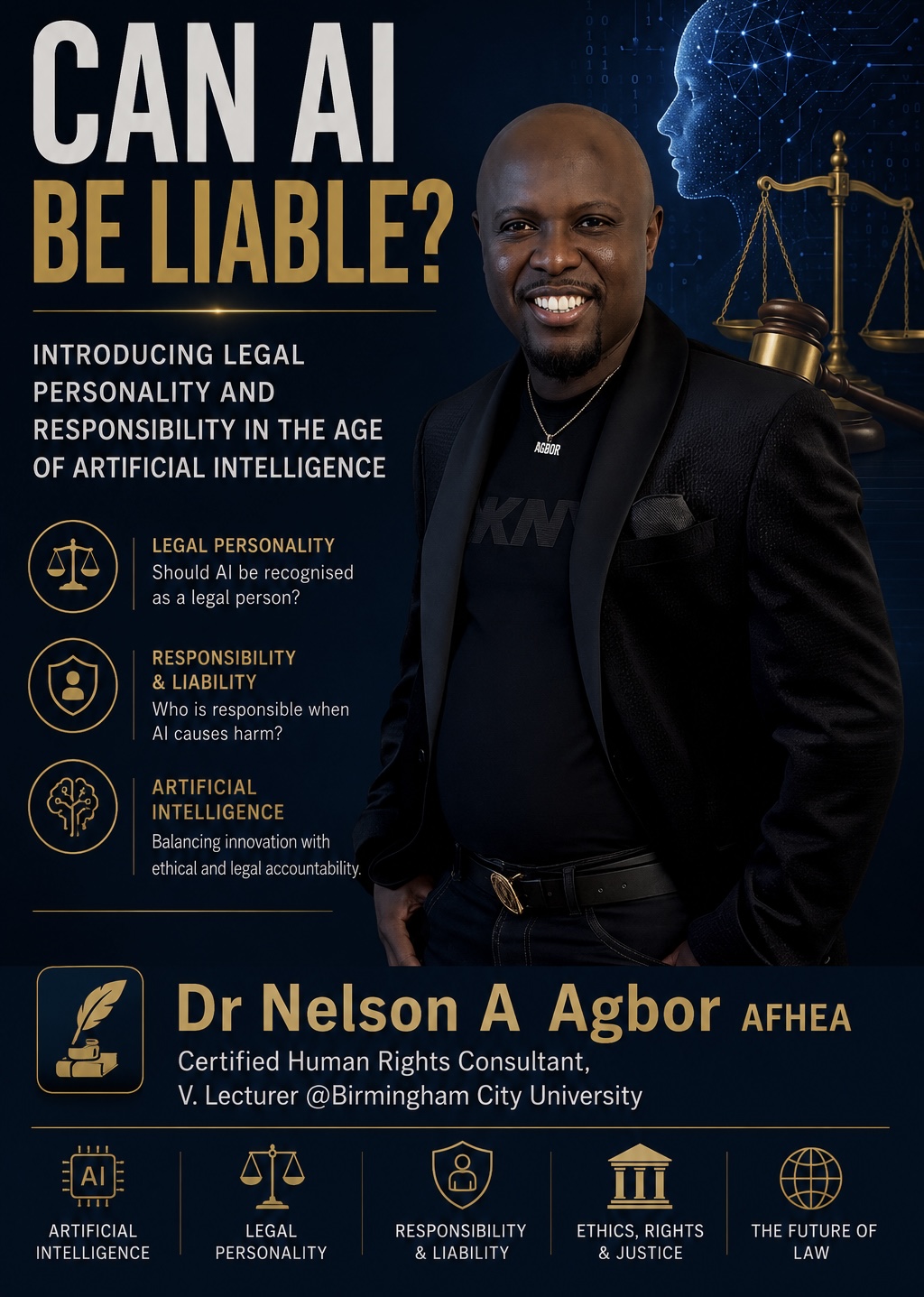
Can AI Be Liable? Introducing Legal Personality and Responsibility in the Age of Artificial Intelligence.

Artificial intelligence has rapidly evolved from a speculative technological concept into a transformative force shaping governance, commerce, healthcare, transport, and judicial administration. As AI systems become increasingly autonomous and capable of making decisions without immediate human intervention, legal scholars and policymakers confront a profound jurisprudential question: can artificial

Read More...

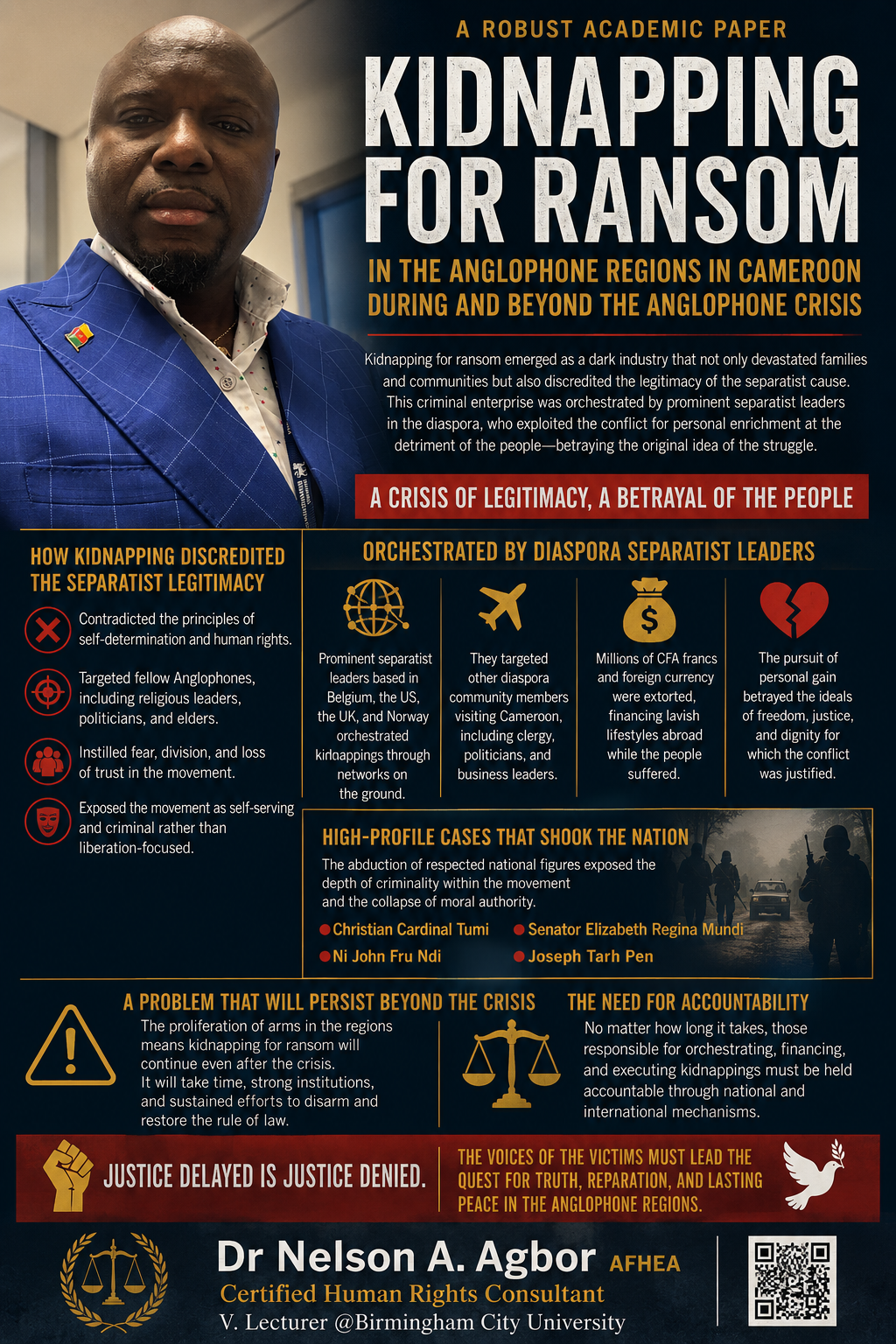
Kidnapping for Ransom and the Crisis of Separatist Legitimacy in Cameroon’s Anglophone Conflict: Diaspora Networks, War Economies, and the Politics of Accountability.

The Anglophone Crisis in Cameroon, which began in 2016 as a political protest against the perceived marginalisation of the English-speaking regions, gradually escalated into a violent armed conflict marked by widespread abuses against civilians. Although the conflict initially stemmed from legitimate grievances rooted in the historical “Anglophone problem,”

Read More...

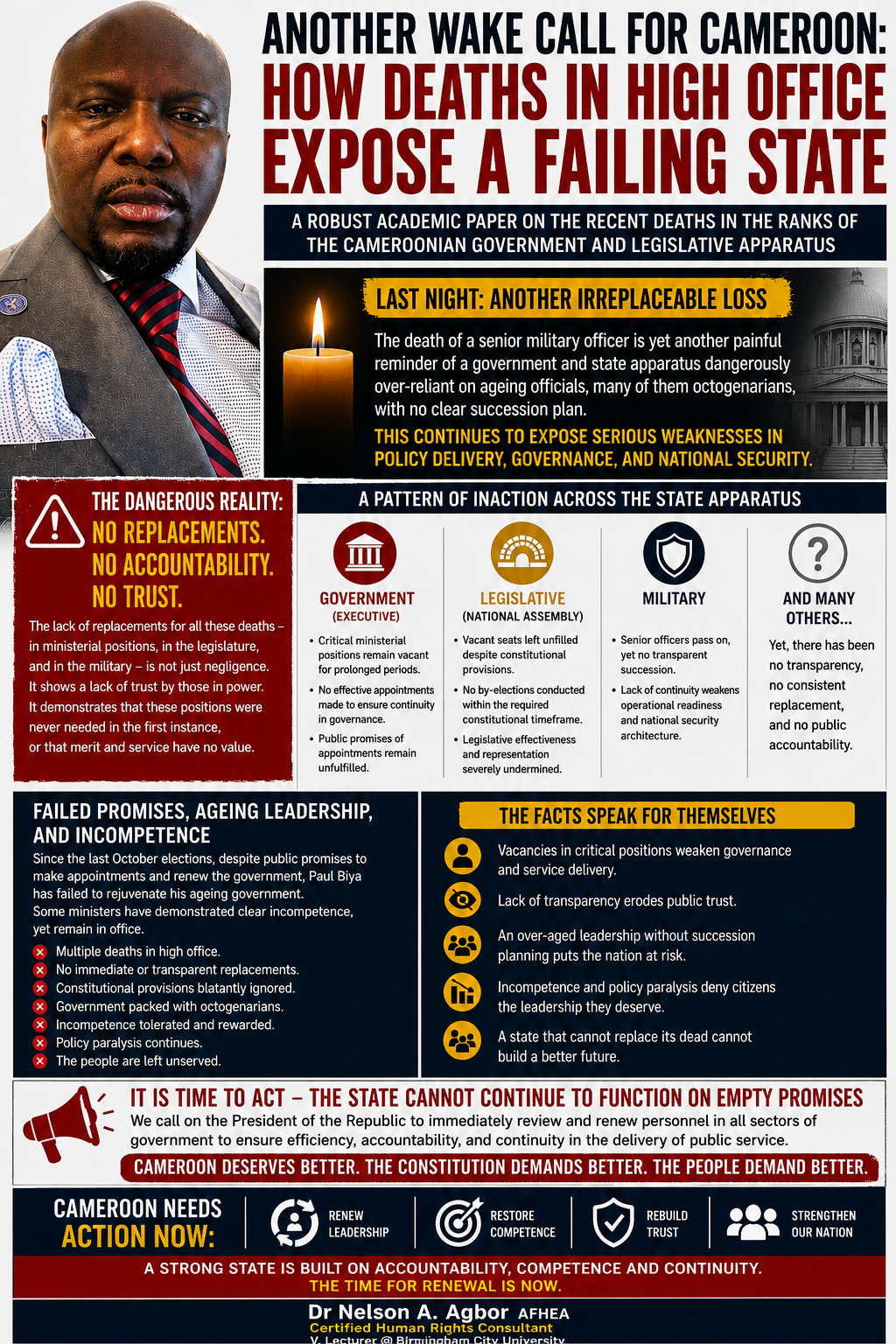
Deaths Without Replacement: Constitutional Neglect, Gerontocracy, and Administrative Decline in Cameroon’s Government, Legislature, and Military.

The recent wave of deaths within the Cameroonian political, administrative, and military establishment has exposed a profound structural crisis at the heart of the state. What initially appeared to be isolated incidents has become a pattern, revealing the fragility of a government overwhelmingly dominated by elderly officials who

Read More...

About Me

Legal Scholar & Human Rights Advocate

Dr Nelson A. Agbor

Visiting Lecturer in Law exploring the intersection of human rights, constitutional governance, and international law. Passionate about accessible legal education and meaningful scholarship.