Administrative Law

Where law meets governance. Administrative law is the lens through which we examine how public institutions exercise power—the rules, procedures, and accountability mechanisms that govern the agencies shaping our daily lives. Here we explore the tension between state authority and individual rights, the legitimacy of bureaucratic decision-making, and the crucial question: who watches the watchers?

Cameroon’s Anglophone Conflict: A Decade of Human Suffering, Institutional Failure and International Indifference.

An Academic Perspective on the Humanitarian, Judicial, Economic and Political Consequences of the Crisis As Cameroon’s Anglophone conflict approaches its tenth anniversary in November 2026, the continuing devastation in the North-West and South-West regions stands as one of the most troubling failures of constitutional governance, human rights protection

Read More...

PEACE BUILDING AND THE CAMEROON ANGLOPHONE CRISIS: THE ILLUSION OF A “NATURAL DEATH WITHIN THE NEXT 10 OR 15 YEARS”

BY PROF. TARH NTANTANG (PHD) INTRODUCTION The Cameroon Anglophone crisis has persisted for nearly a decade, defying repeated state narratives proclaimed by the Cameroon Prime Minister, Dr Joseph Dion Nguty, that the conflict will “naturally die” within a generational time frame. This essay critically interrogates the illusion of

Read More...

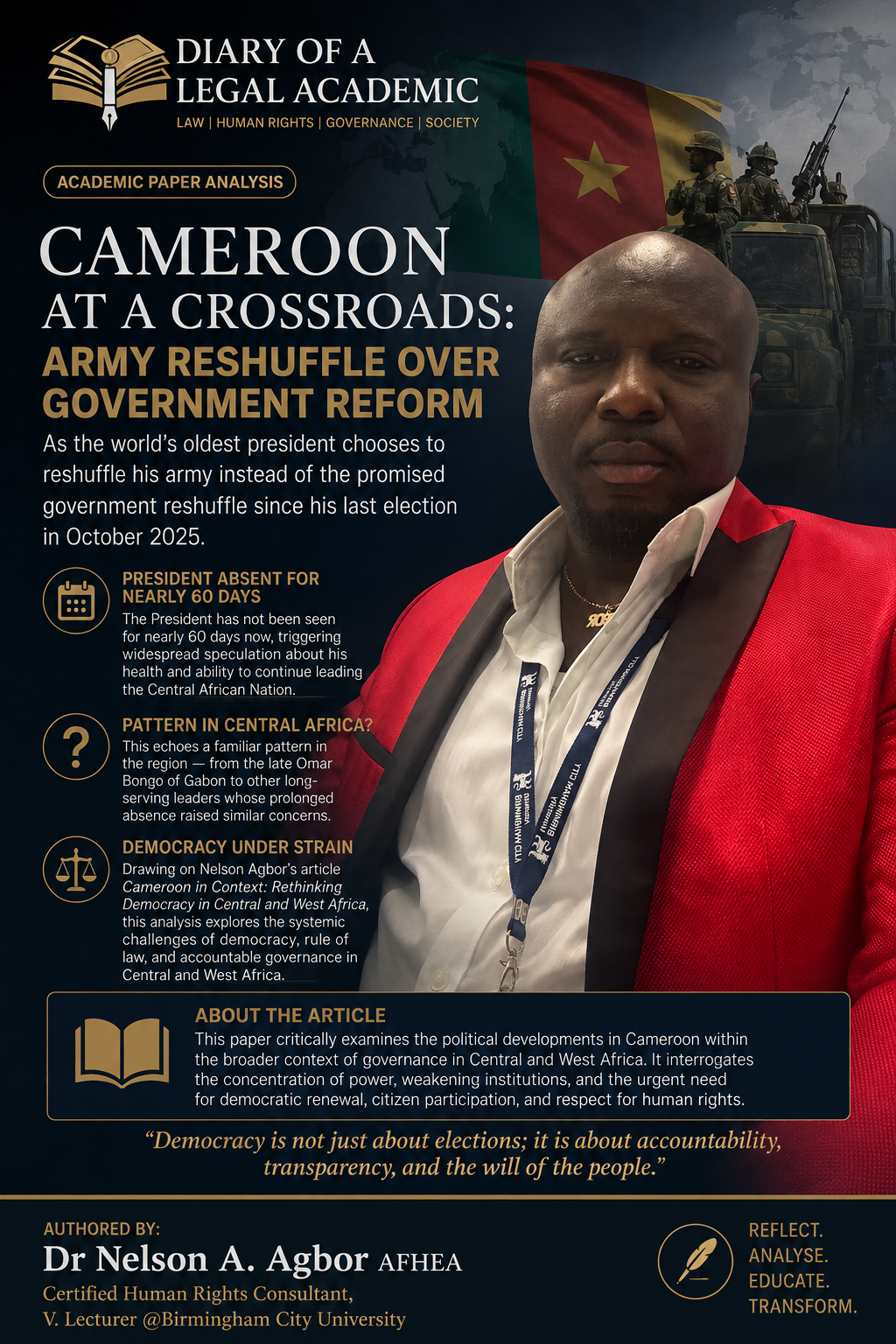
Cameroon at a Political Crossroads: Executive Continuity, Military Restructuring, and the Crisis of Democratic Governance.

Cameroon has entered one of its most uncertain political periods since President Paul Biya assumed office in 1982. Following his controversial re-election in October 2025 for an unprecedented eighth term, expectations grew that the president would undertake a long-promised government reshuffle to address mounting concerns over governance, economic

Read More...

CAMEROON GCE 2026 LEAKAGE: BETRAYAL OR INSTITUTIONAL FAILURE OF A SYSTEM

By Prof. Tarh Ntantang INTRODUCTION The Cameroon General Certificate of Education (GCE) Examination has historically represented one of the most important educational institutions within the Anglophone sub-system of education in Cameroon. It serves not only as an assessment mechanism but also as a gateway to higher education, employment

Read More...

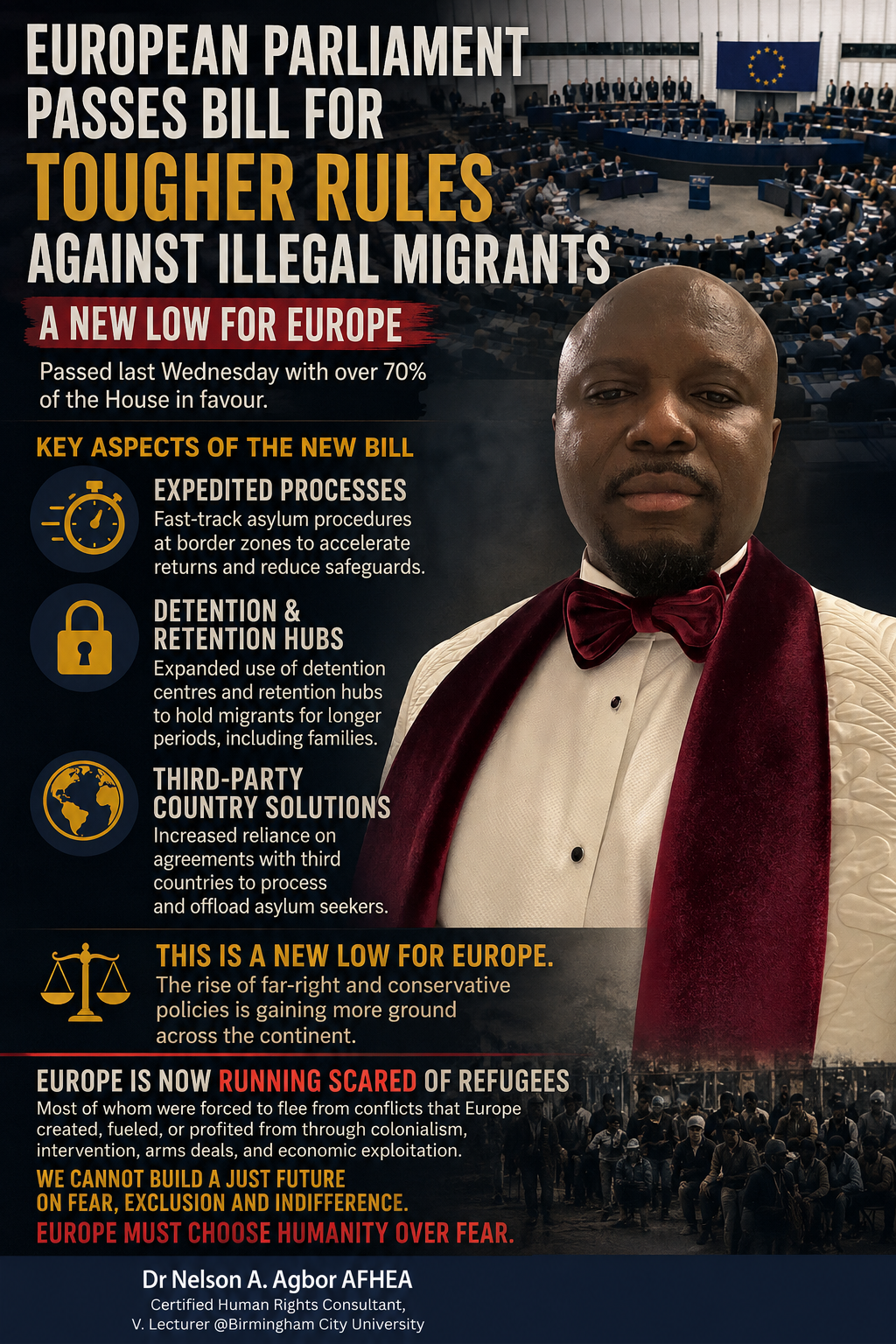
Human Rights at the Border: Critiquing the European Parliament’s Return Regulation in an Era of Far-Right Ascendancy.

The European Parliament’s approval on 17 June 2026 of a far-reaching overhaul of the European Union’s migrant return system marks a significant turning point in the evolution of European migration governance. The legislation, commonly known as the Return Regulation, aims to accelerate deportations, expand detention powers, and permit

Read More...

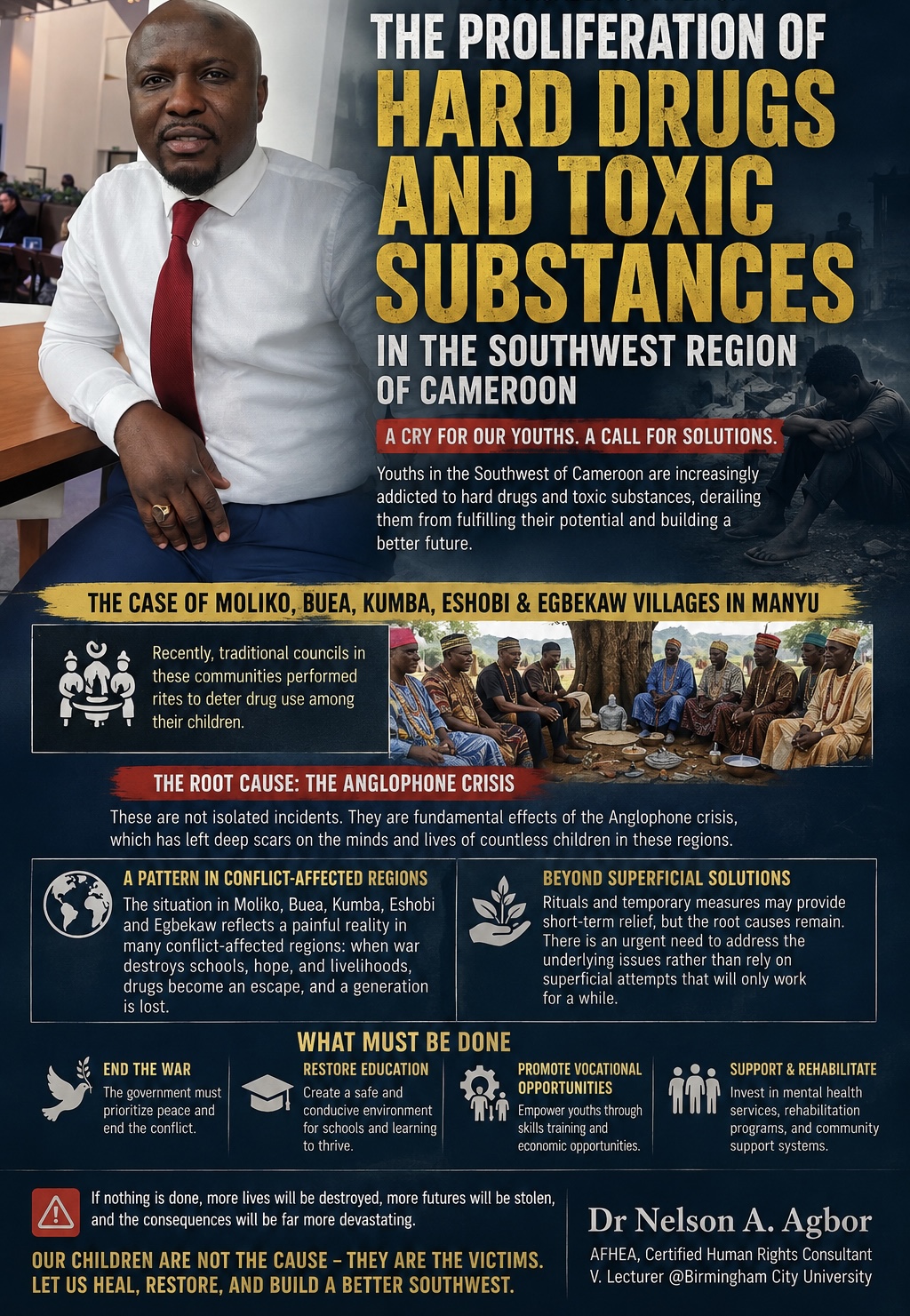
The Proliferation of Hard Drugs and Toxic Substance Abuse Among Youths in Conflict-Affected Communities of the Southwest Region of Cameroon: Evidence from Moliko, Kumba, Eshobi, and Egbekaw.

The growing use of hard drugs and toxic substances among young people in the Southwest Region of Cameroon has become a serious social, public health, and security concern. Across several communities, particularly in urban and semi-urban centres, the consumption of narcotics, pharmaceutical drugs, alcohol mixtures, and other harmful

Read More...

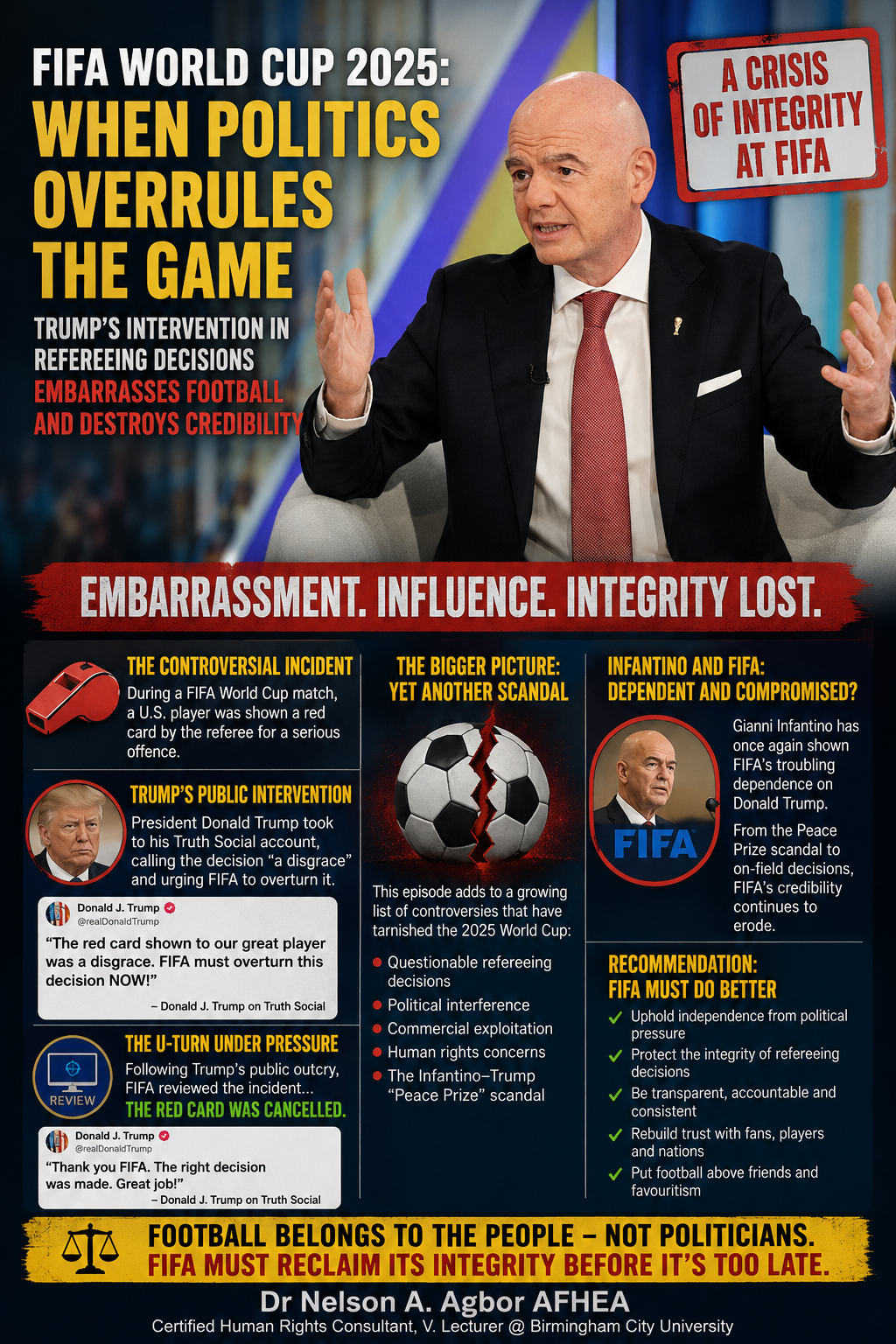
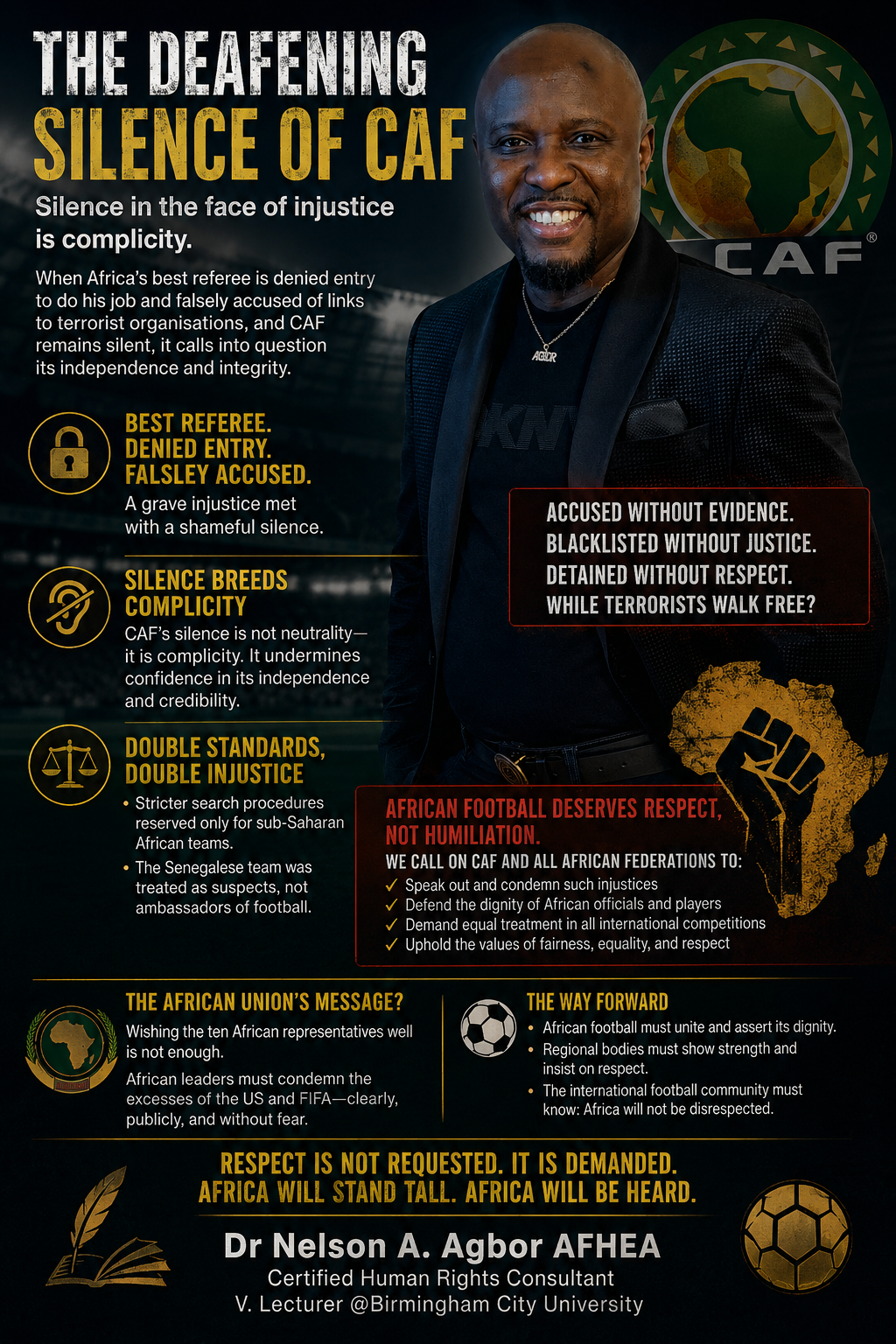
Silence as Complicity: CAF, Institutional Independence, and the Marginalisation of African Football.

The controversy surrounding the reported refusal of entry to a leading African referee and the allegations linking him to terrorist organisations raise profound questions about justice, due process, and institutional responsibility within international football governance. Beyond the individual circumstances of the case, the Confederation of African Football’s (CAF)

Read More...

About Me

Legal Scholar & Human Rights Advocate

Dr Nelson A. Agbor

Visiting Lecturer in Law exploring the intersection of human rights, constitutional governance, and international law. Passionate about accessible legal education and meaningful scholarship.