Rule of Law

The principle that law, not arbitrary will, governs society. The rule of law requires clarity, consistency, equality, and accountability. It’s the foundation upon which justice systems rest—and the principle repeatedly tested in states facing conflict, fragility, and authoritarian pressure. Understanding rule of law means examining both its promise and its vulnerabilities.

Cameroon’s Anglophone Conflict: A Decade of Human Suffering, Institutional Failure and International Indifference.

An Academic Perspective on the Humanitarian, Judicial, Economic and Political Consequences of the Crisis As Cameroon’s Anglophone conflict approaches its tenth anniversary in November 2026, the continuing devastation in the North-West and South-West regions stands as one of the most troubling failures of constitutional governance, human rights protection

Read More...

PEACE BUILDING AND THE CAMEROON ANGLOPHONE CRISIS: THE ILLUSION OF A “NATURAL DEATH WITHIN THE NEXT 10 OR 15 YEARS”

BY PROF. TARH NTANTANG (PHD) INTRODUCTION The Cameroon Anglophone crisis has persisted for nearly a decade, defying repeated state narratives proclaimed by the Cameroon Prime Minister, Dr Joseph Dion Nguty, that the conflict will “naturally die” within a generational time frame. This essay critically interrogates the illusion of

Read More...

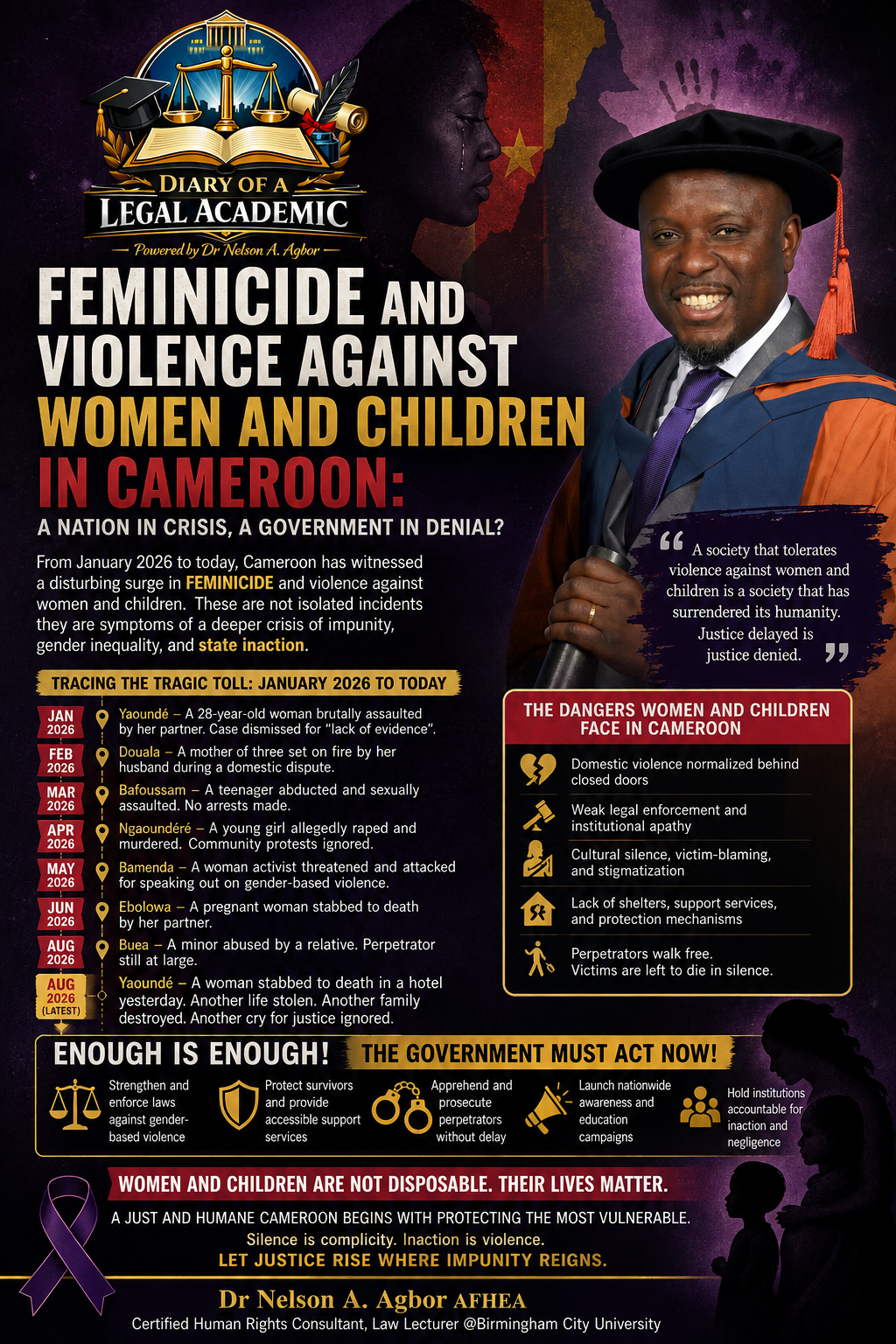
Feminicide and the Escalating Violence against Women and Children in Cameroon: A Human Rights Crisis Demanding State Accountability

Cameroon is facing an alarming escalation in violence against women and children, which can no longer be credibly treated as a collection of isolated criminal incidents. Since the beginning of 2026, reports of feminicide, intimate-partner killings, rape, child sexual abuse, infanticide and other forms of extreme violence have

Read More...

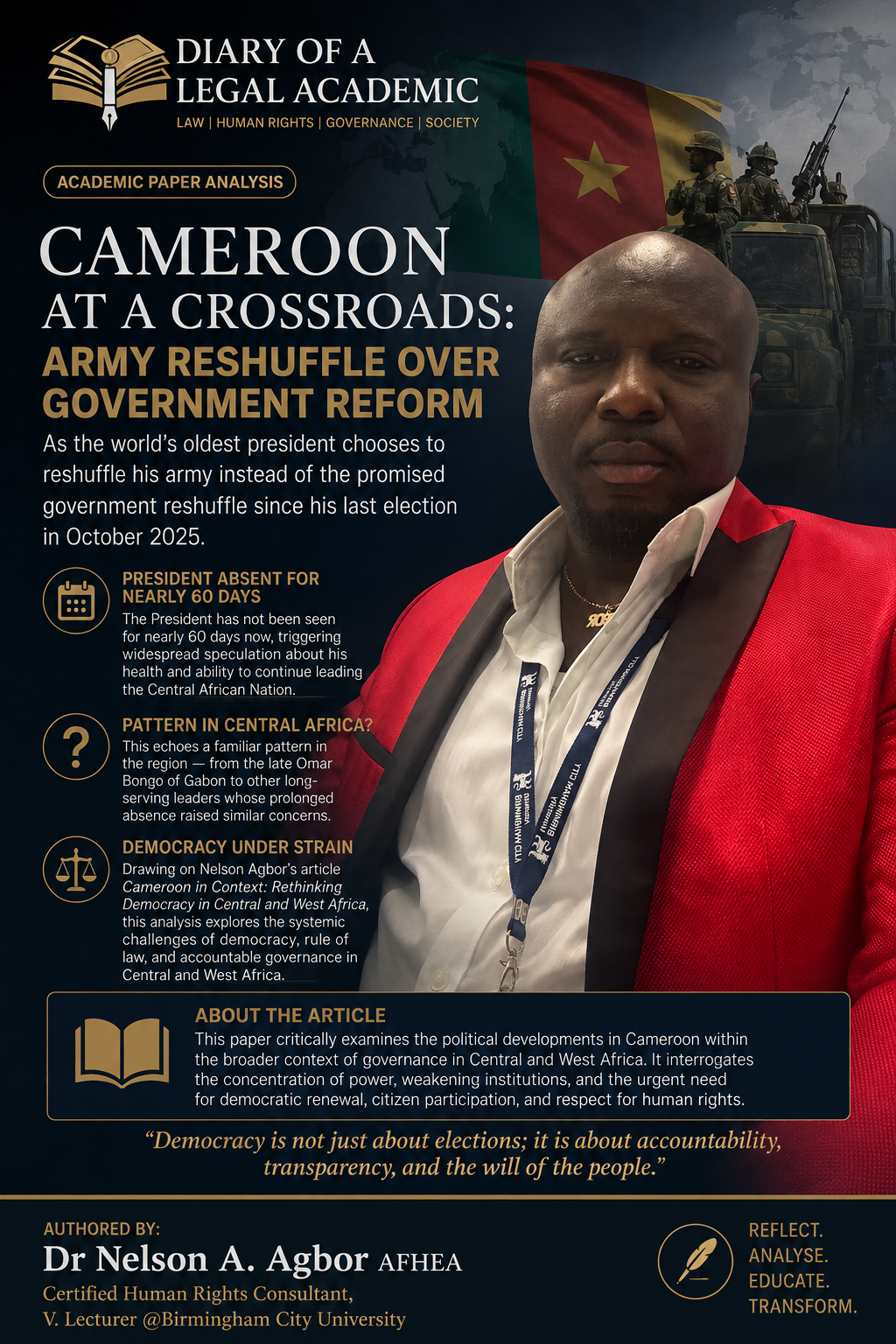
Cameroon at a Political Crossroads: Executive Continuity, Military Restructuring, and the Crisis of Democratic Governance.

Cameroon has entered one of its most uncertain political periods since President Paul Biya assumed office in 1982. Following his controversial re-election in October 2025 for an unprecedented eighth term, expectations grew that the president would undertake a long-promised government reshuffle to address mounting concerns over governance, economic

Read More...

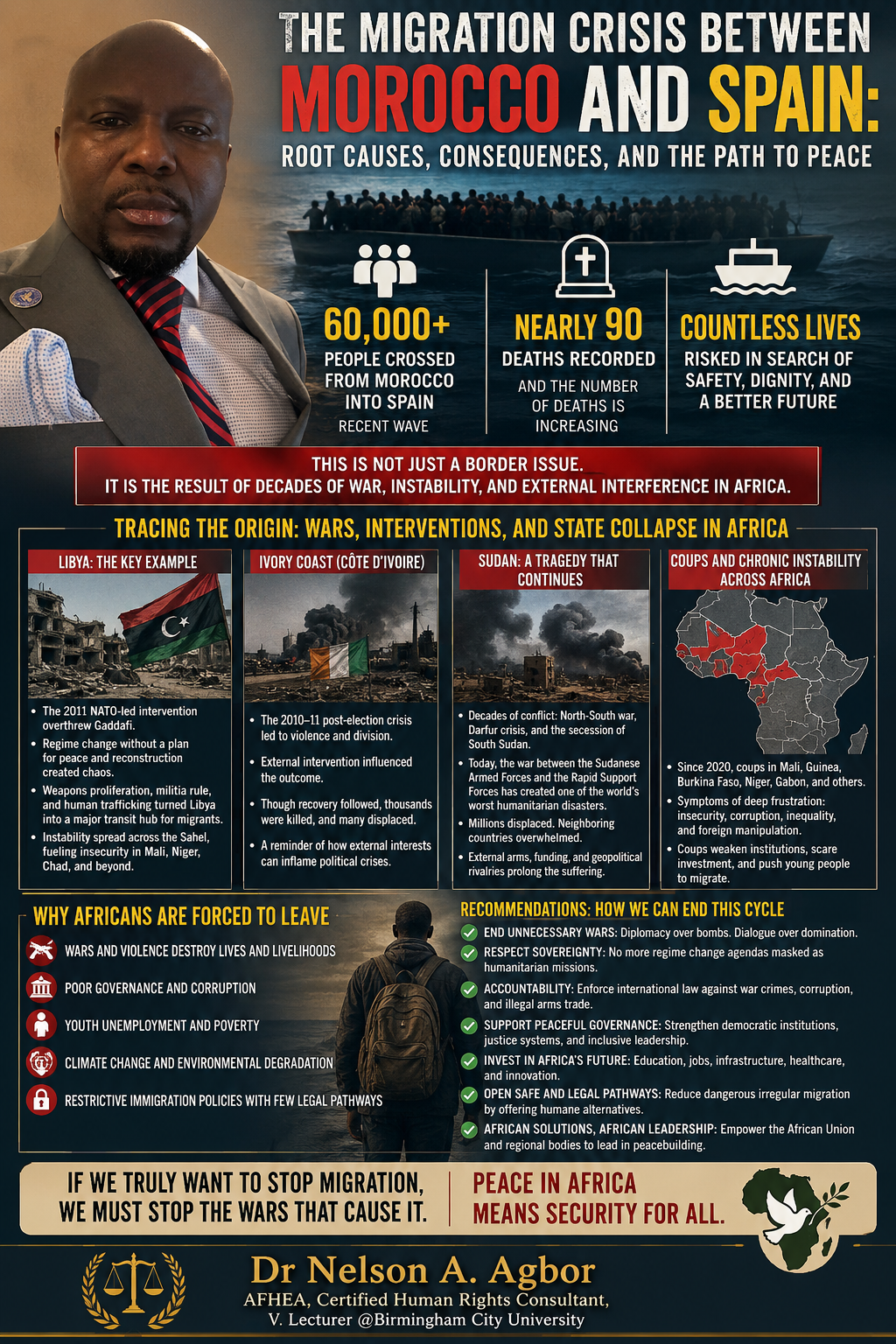
The Contemporary Migration Crisis Between Morocco and Spain: Conflict, State Fragility, and the International Politics of Displacement

The recent rise in irregular migration from Morocco to Spain has once again highlighted the complex humanitarian and geopolitical challenges facing Europe. Reports of tens of thousands of migrants attempting to reach Spanish territory, alongside a rising death toll approaching ninety fatalities in some recent incidents, underscore the

Read More...

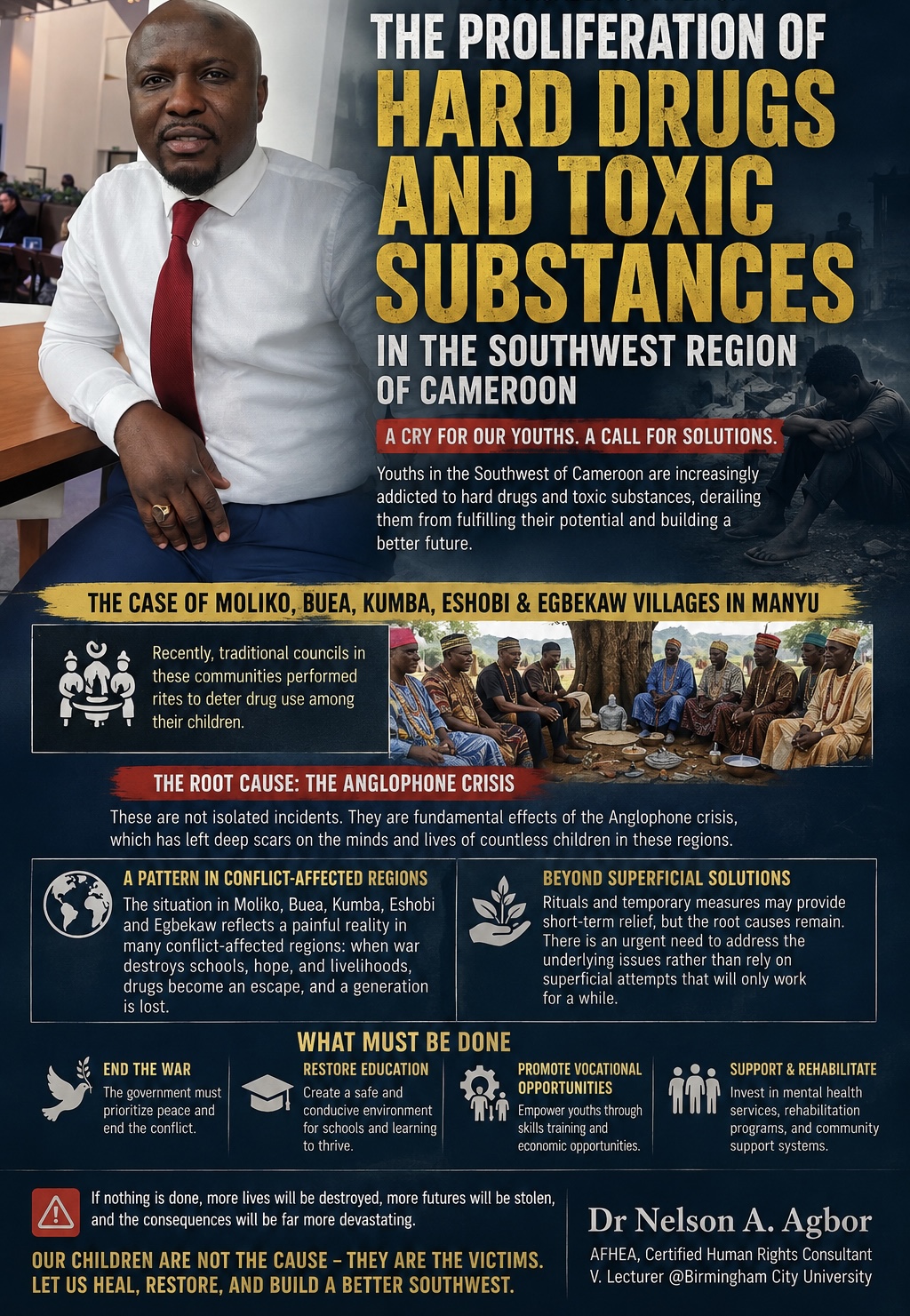
The Proliferation of Hard Drugs and Toxic Substance Abuse Among Youths in Conflict-Affected Communities of the Southwest Region of Cameroon: Evidence from Moliko, Kumba, Eshobi, and Egbekaw.

The growing use of hard drugs and toxic substances among young people in the Southwest Region of Cameroon has become a serious social, public health, and security concern. Across several communities, particularly in urban and semi-urban centres, the consumption of narcotics, pharmaceutical drugs, alcohol mixtures, and other harmful

Read More...

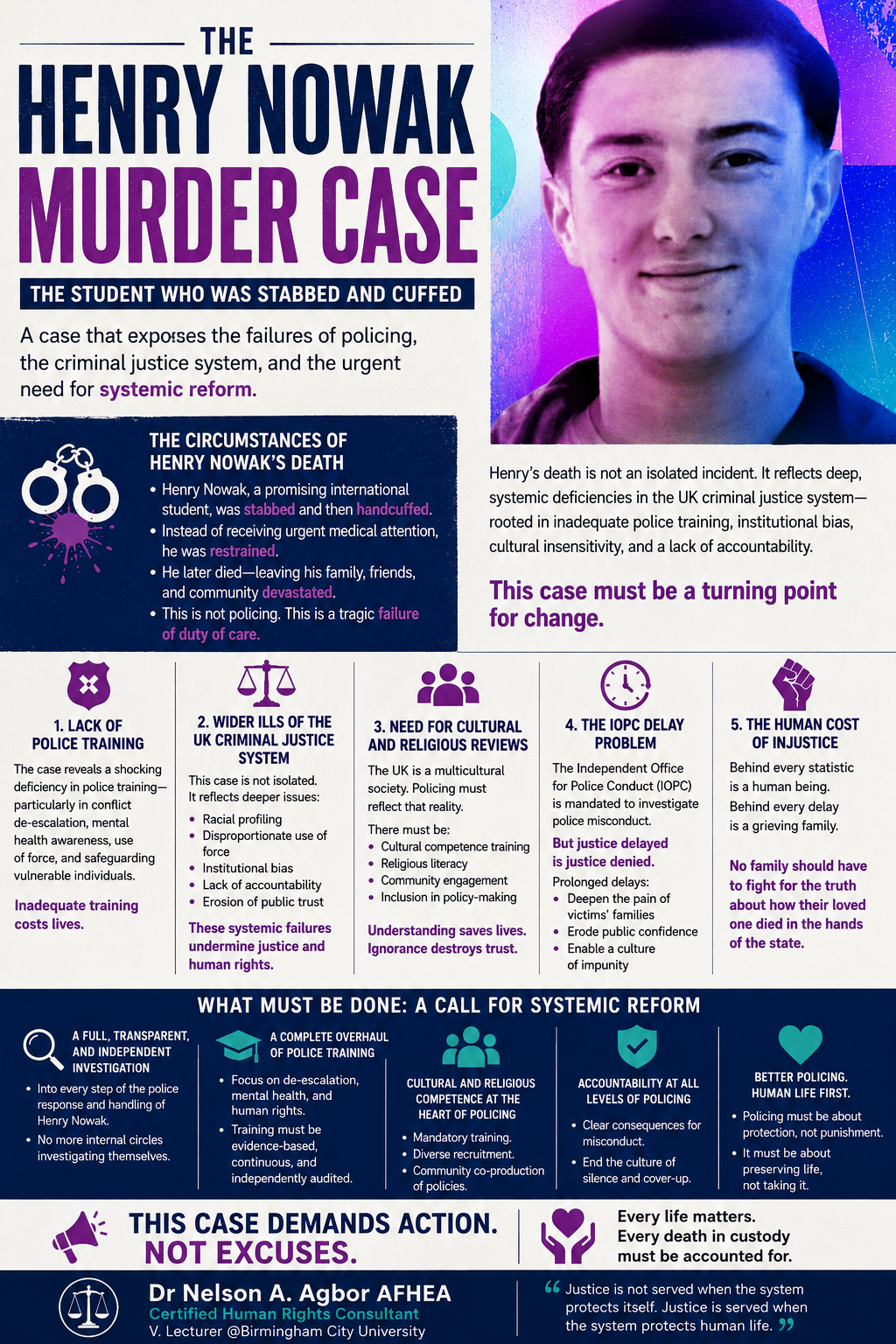
The Death of Henry Nowak: Police Training Failures, Institutional Accountability, and the Imperative for Reform in the UK Criminal Justice System.

The murder of Henry Nowak has rapidly emerged as one of the most troubling criminal justice cases in contemporary Britain. The case concerns the death of Henry Nowak, an 18-year-old University of Southampton student who was fatally stabbed in Southampton in December 2025. Evidence presented in subsequent criminal

Read More...

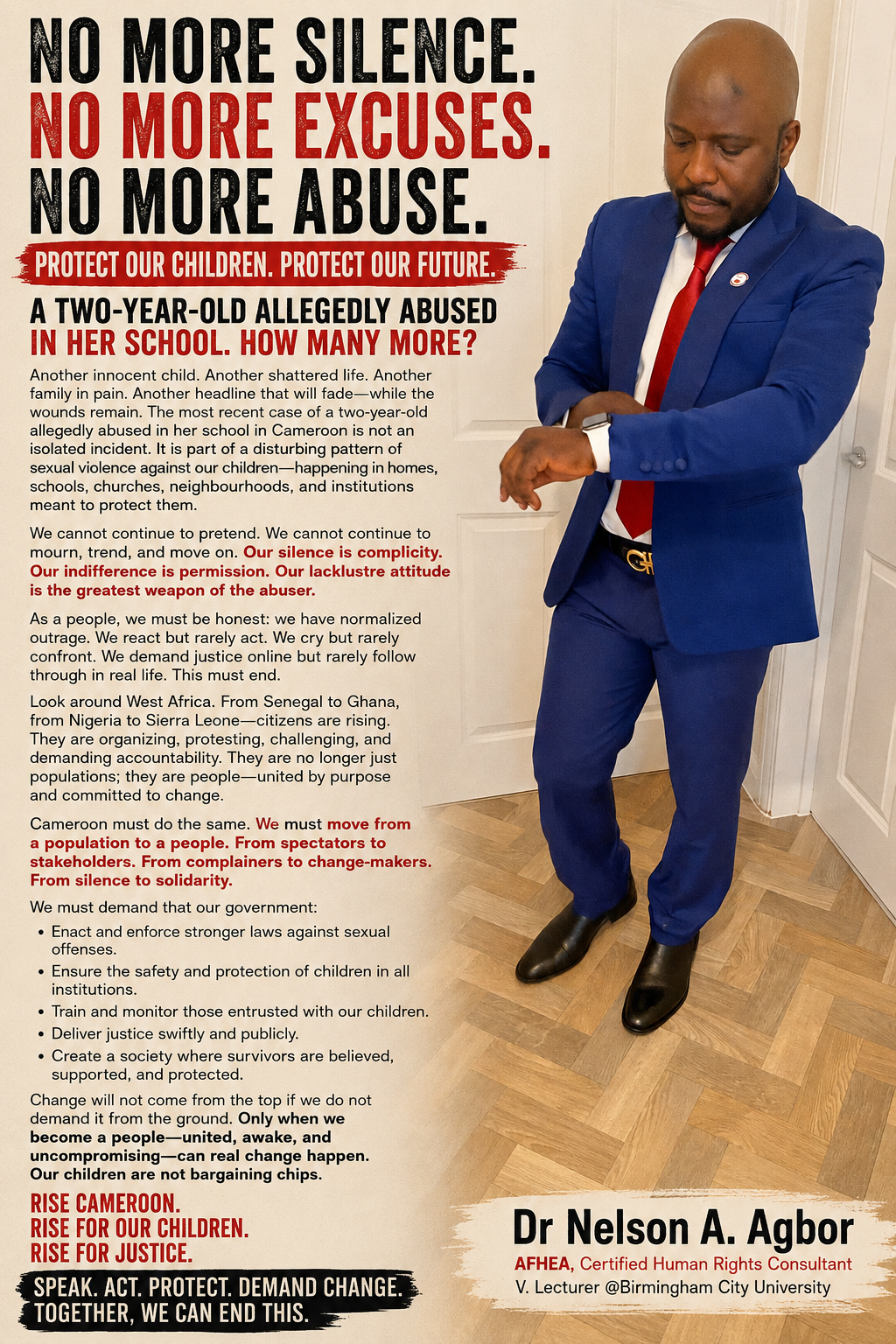
From Population to People: Sexual Violence, Public Apathy, and the Crisis of Civic Consciousness in Cameroon Following the Alleged Abuse of a Two-Year-Old Child in School.

The alarming prevalence of sexual abuse in Cameroon has become one of the gravest social crises facing the nation today. The recent allegation of sexual abuse against a two-year-old child in a school setting has once again shocked the public conscience and exposed the vulnerability of children in

Read More...

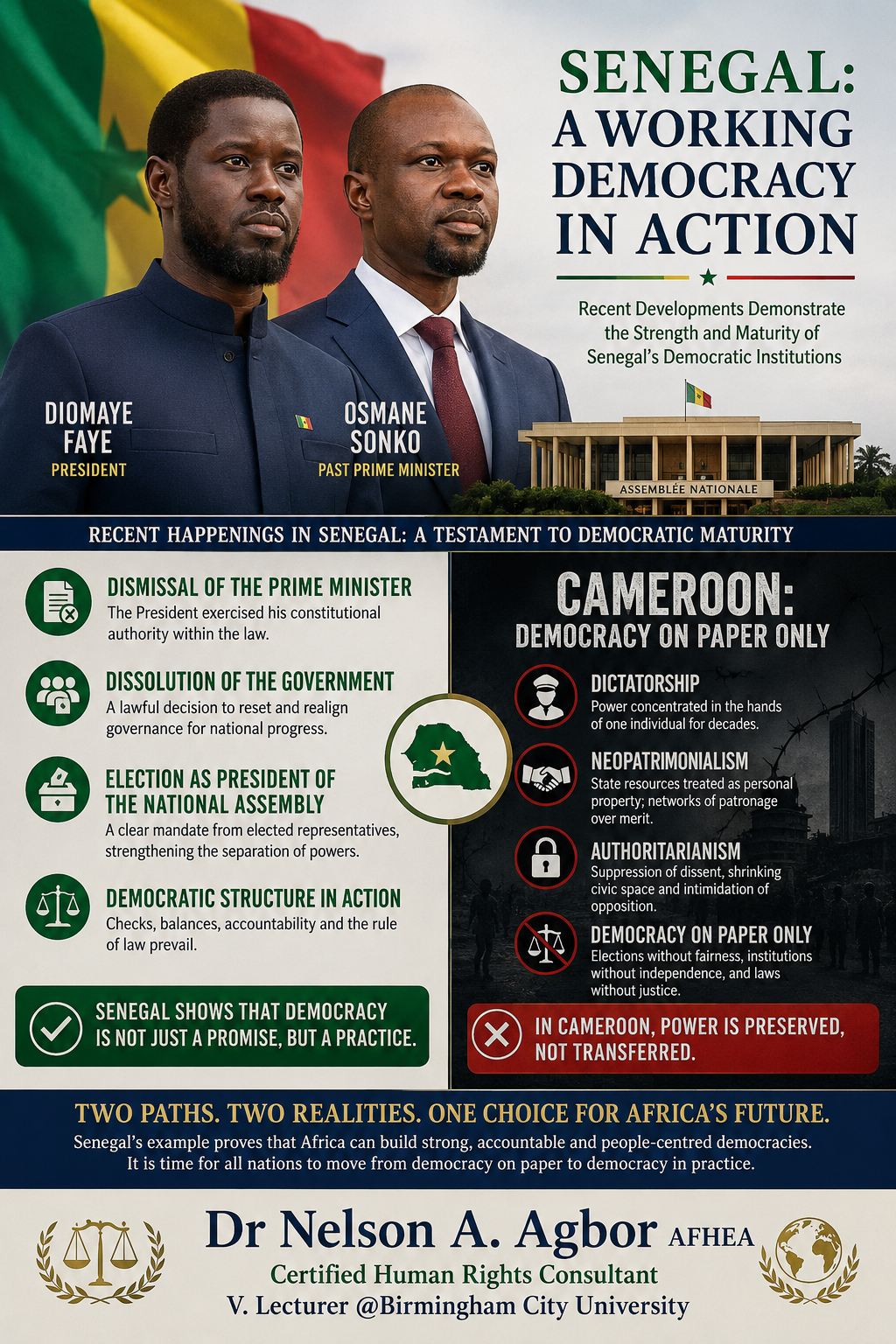
Democratic Consolidation in Senegal and Democratic Regression in Cameroon: A Comparative Analysis of Institutional Governance in Contemporary Africa.

The recent political developments in Senegal, including President Bassirou Diomaye Faye’s dismissal of Prime Minister Ousmane Sonko, the dissolution of the government, and Sonko’s subsequent emergence as a central parliamentary actor, provide a compelling contemporary illustration of democratic institutional resilience in Africa. Rather than descending into constitutional crisis,

Read More...

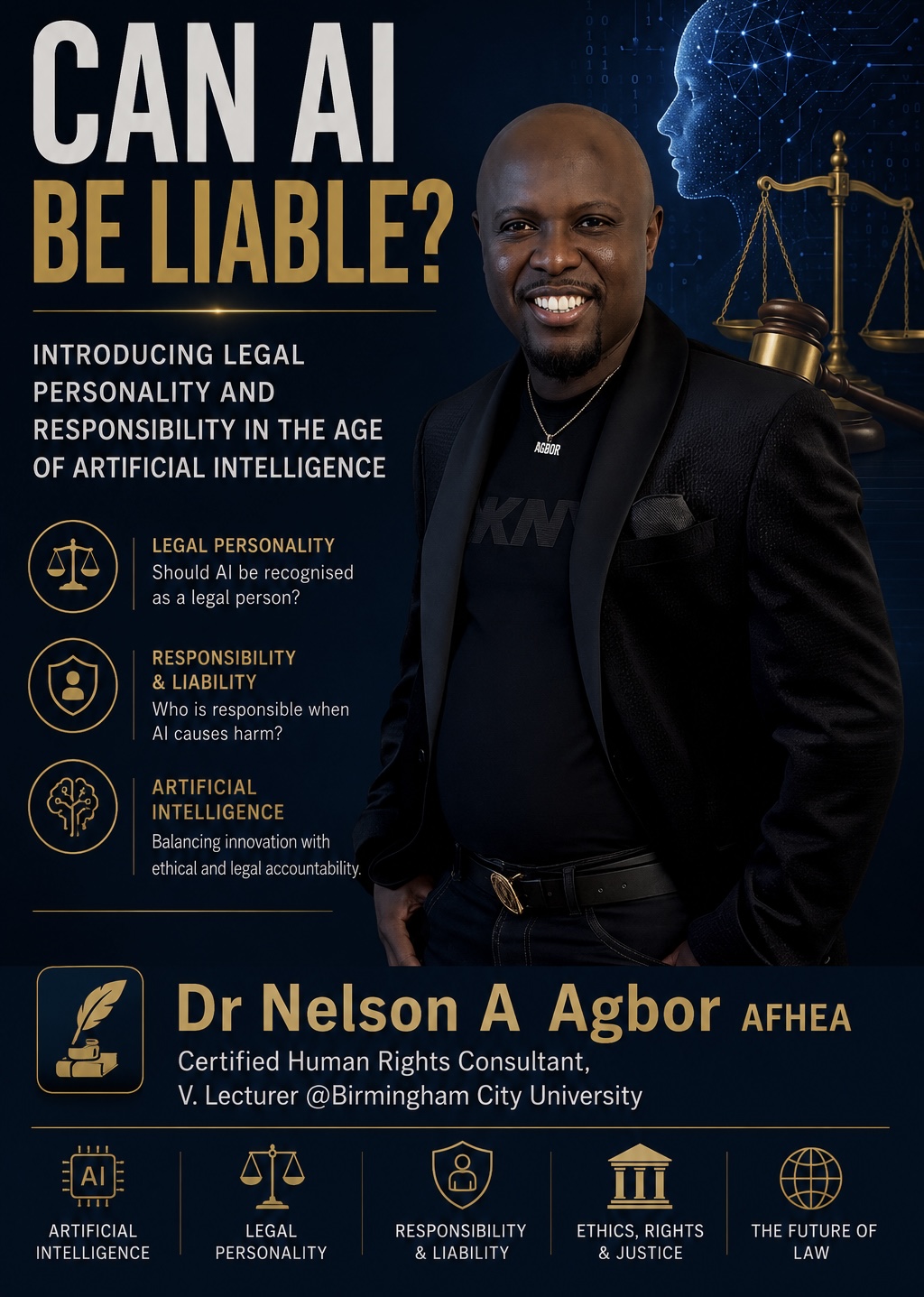
Can AI Be Liable? Introducing Legal Personality and Responsibility in the Age of Artificial Intelligence.

Artificial intelligence has rapidly evolved from a speculative technological concept into a transformative force shaping governance, commerce, healthcare, transport, and judicial administration. As AI systems become increasingly autonomous and capable of making decisions without immediate human intervention, legal scholars and policymakers confront a profound jurisprudential question: can artificial

Read More...

About Me

Legal Scholar & Human Rights Advocate

Dr Nelson A. Agbor

Visiting Lecturer in Law exploring the intersection of human rights, constitutional governance, and international law. Passionate about accessible legal education and meaningful scholarship.