Governance & Democracy

Law, politics, and power intersecting. This space explores how democratic institutions function, how authority is legitimated, and how law shapes—and is shaped by—the systems through which societies govern themselves. It’s where constitutional theory meets political reality, where representation meets accountability, and where the rule of law is tested.

CAMEROON: ONE NATION, ONE FLAG, ONE HEARTBEAT – AN ILLUSION OF A COUNTRY EMBROILED IN A TEN-YEAR CONFLICT.

By Prof Tarh Ntantang Since independence and reunification, the Republic of Cameroon has projected itself under the nationalist slogan “One Nation, One Flag”, a symbolic expression aimed at promoting unity, territorial integrity, and collective identity among its culturally and linguistically diverse populations. This was one of the messages
Read More...

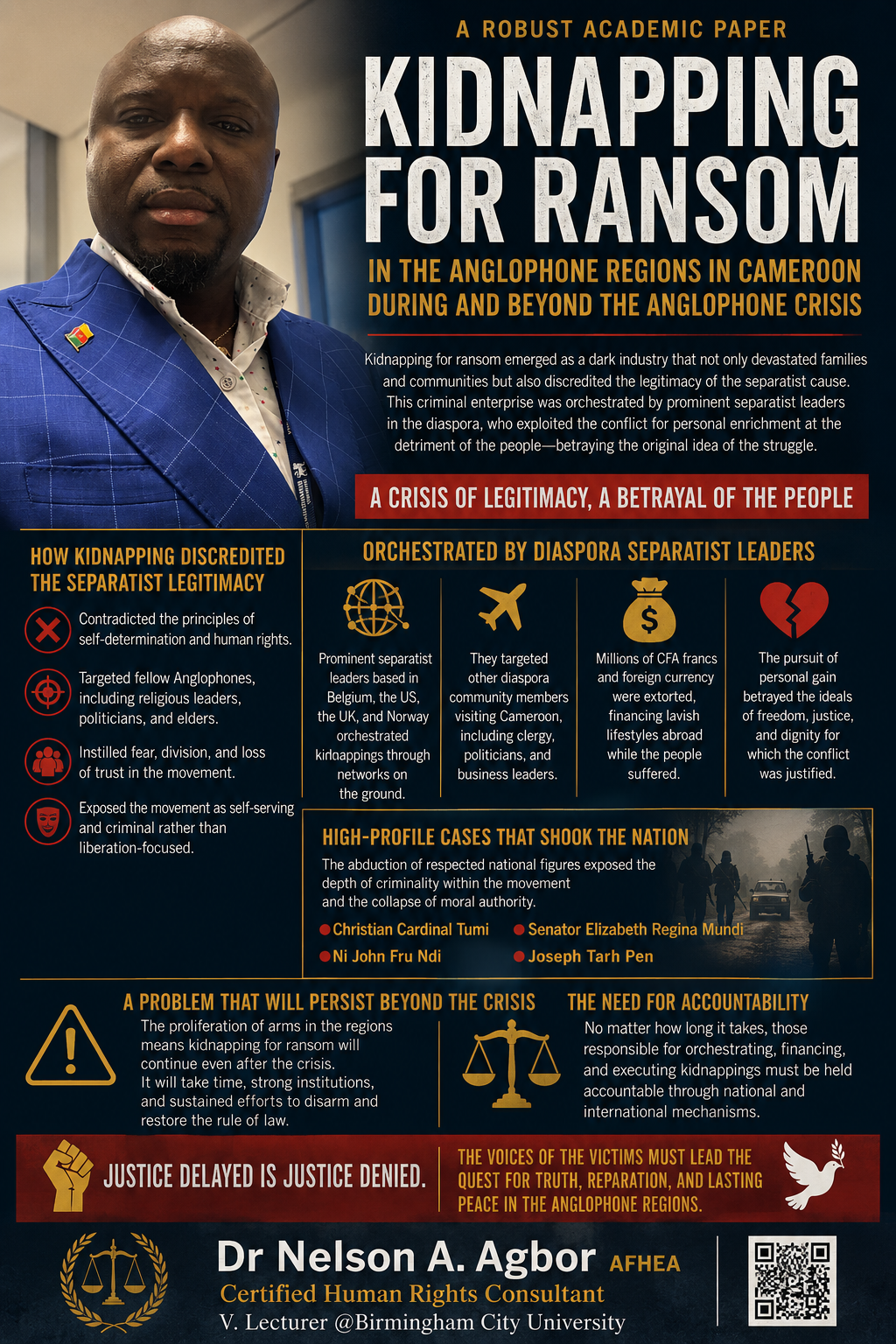
Kidnapping for Ransom and the Crisis of Separatist Legitimacy in Cameroon’s Anglophone Conflict: Diaspora Networks, War Economies, and the Politics of Accountability.

The Anglophone Crisis in Cameroon, which began in 2016 as a political protest against the perceived marginalisation of the English-speaking regions, gradually escalated into a violent armed conflict marked by widespread abuses against civilians. Although the conflict initially stemmed from legitimate grievances rooted in the historical “Anglophone problem,”

Read More...

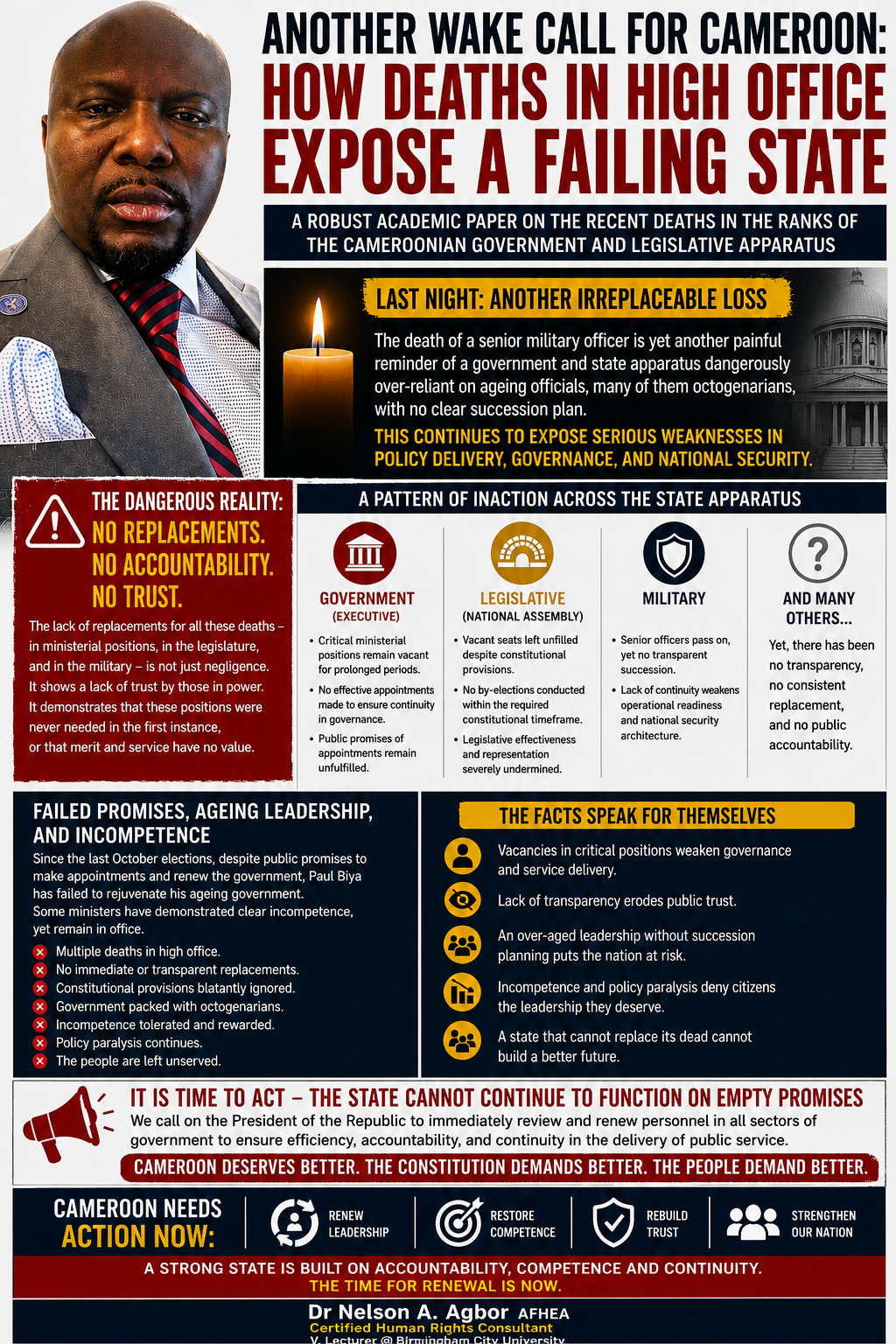
Deaths Without Replacement: Constitutional Neglect, Gerontocracy, and Administrative Decline in Cameroon’s Government, Legislature, and Military.

The recent wave of deaths within the Cameroonian political, administrative, and military establishment has exposed a profound structural crisis at the heart of the state. What initially appeared to be isolated incidents has become a pattern, revealing the fragility of a government overwhelmingly dominated by elderly officials who

Read More...

CAMEROON UNDER BIYA: TRUE LEADERSHIP IS NOT ABOUT POWER, IT IS ABOUT PURPOSE.

By Dr Tarh Ntantang INTRODUCTION This article offers a comprehensive examination of political leadership in Cameroon under Paul Biya, arguing that the country’s enduring governance challenges stem from a fundamental disconnect between the exercise of power and the pursuit of national purpose. Drawing on theories of transformational leadership,

Read More...

CAMEROON DEMOCRATIC BACKSLIDING: PAUL BIYA’S INSTITUTIONALISATION OF A MONARCHICAL SYSTEM OF GOVERNMENT

By Dr Tarh Ntantang ABSTRACT This article interrogates the phenomenon of democratic backsliding in Cameroon under the long-standing presidency of Paul Biya. It advances the central argument that the Cameroonian political system has gradually evolved into a quasi-monarchical order characterised by extreme centralisation of authority, erosion of institutional

Read More...

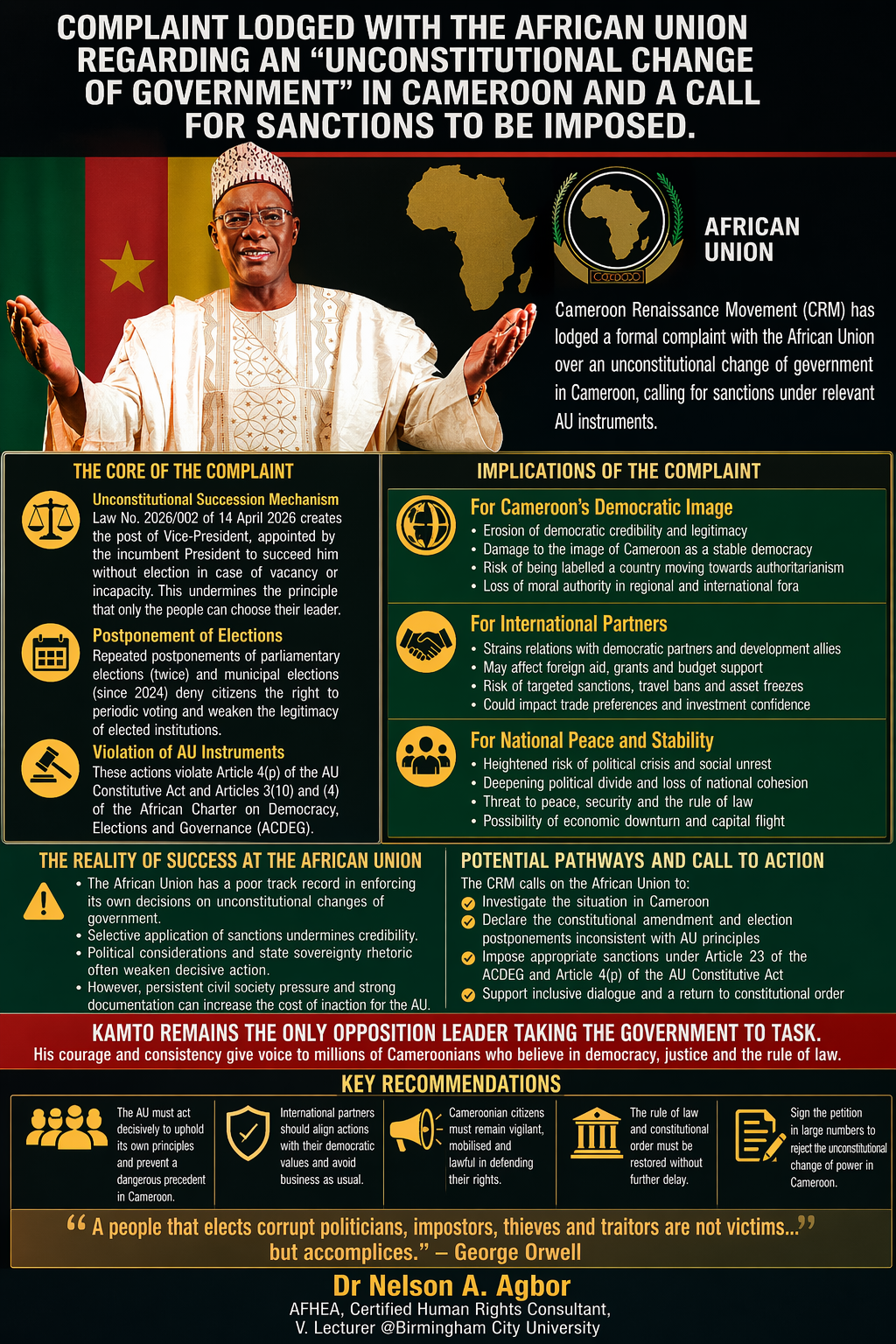
Opposition, Constitutionalism, and Accountability in Cameroon: The Singular Role of Maurice Kamto in Challenging the Consolidation of Executive Power.

The complaint submitted by the Cameroon Renaissance Movement (CRM) to the African Union (AU) regarding an alleged “unconstitutional change of government” in Cameroon raises complex legal, institutional, and political questions that extend beyond the immediate national context. At its core, the complaint invokes continental norms embedded in the

Read More...

About Me

Legal Scholar & Human Rights Advocate

Dr Nelson A. Agbor

Visiting Lecturer in Law exploring the intersection of human rights, constitutional governance, and international law. Passionate about accessible legal education and meaningful scholarship.