Administrative Law

Where law meets governance. Administrative law is the lens through which we examine how public institutions exercise power—the rules, procedures, and accountability mechanisms that govern the agencies shaping our daily lives. Here we explore the tension between state authority and individual rights, the legitimacy of bureaucratic decision-making, and the crucial question: who watches the watchers?

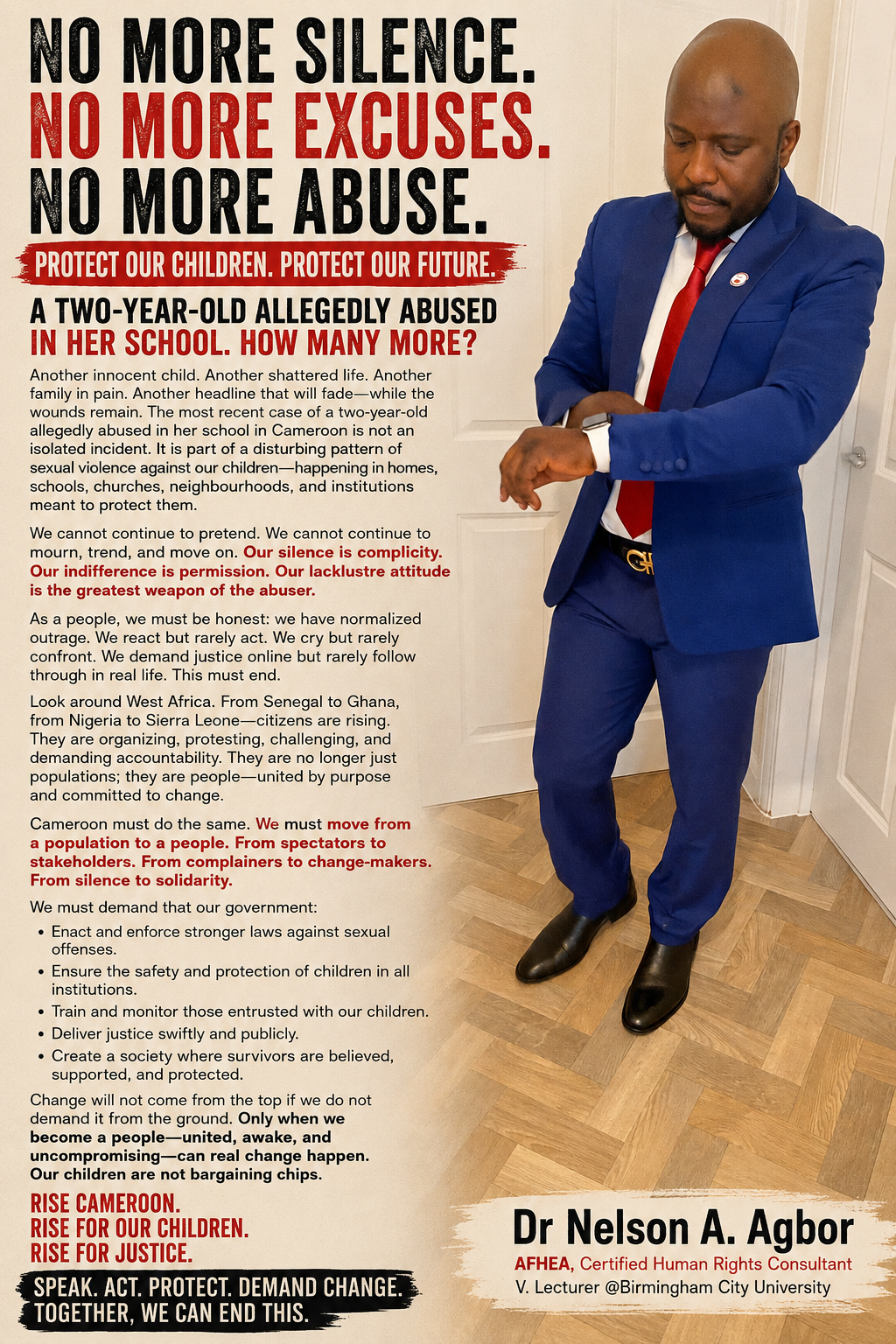
From Population to People: Sexual Violence, Public Apathy, and the Crisis of Civic Consciousness in Cameroon Following the Alleged Abuse of a Two-Year-Old Child in School.

The alarming prevalence of sexual abuse in Cameroon has become one of the gravest social crises facing the nation today. The recent allegation of sexual abuse against a two-year-old child in a school setting has once again shocked the public conscience and exposed the vulnerability of children in

Read More...

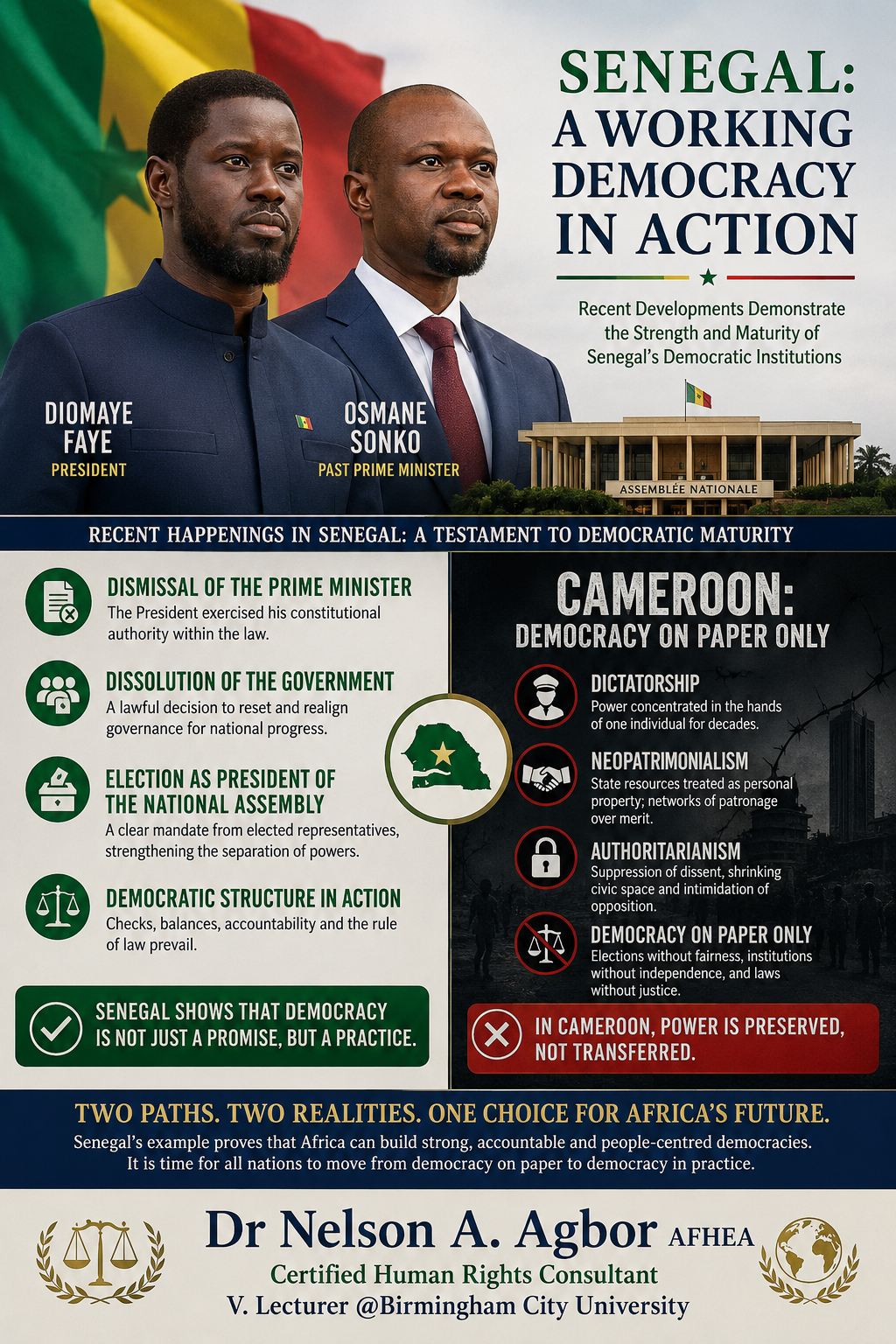
Democratic Consolidation in Senegal and Democratic Regression in Cameroon: A Comparative Analysis of Institutional Governance in Contemporary Africa.

The recent political developments in Senegal, including President Bassirou Diomaye Faye’s dismissal of Prime Minister Ousmane Sonko, the dissolution of the government, and Sonko’s subsequent emergence as a central parliamentary actor, provide a compelling contemporary illustration of democratic institutional resilience in Africa. Rather than descending into constitutional crisis,

Read More...

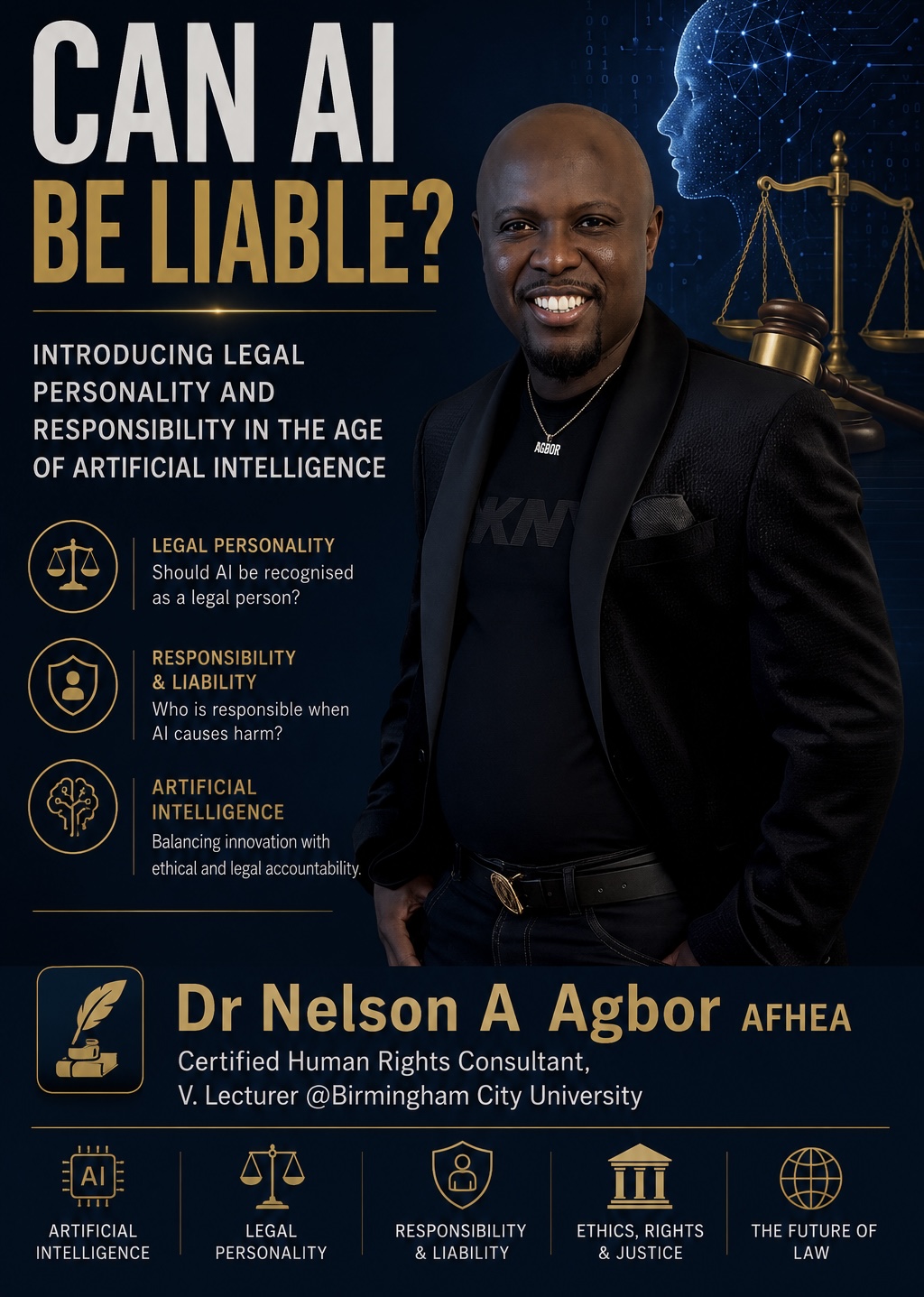
Can AI Be Liable? Introducing Legal Personality and Responsibility in the Age of Artificial Intelligence.

Artificial intelligence has rapidly evolved from a speculative technological concept into a transformative force shaping governance, commerce, healthcare, transport, and judicial administration. As AI systems become increasingly autonomous and capable of making decisions without immediate human intervention, legal scholars and policymakers confront a profound jurisprudential question: can artificial

Read More...

CAMEROON: ONE NATION, ONE FLAG, ONE HEARTBEAT – AN ILLUSION OF A COUNTRY EMBROILED IN A TEN-YEAR CONFLICT.

By Prof Tarh Ntantang Since independence and reunification, the Republic of Cameroon has projected itself under the nationalist slogan “One Nation, One Flag”, a symbolic expression aimed at promoting unity, territorial integrity, and collective identity among its culturally and linguistically diverse populations. This was one of the messages

Read More...

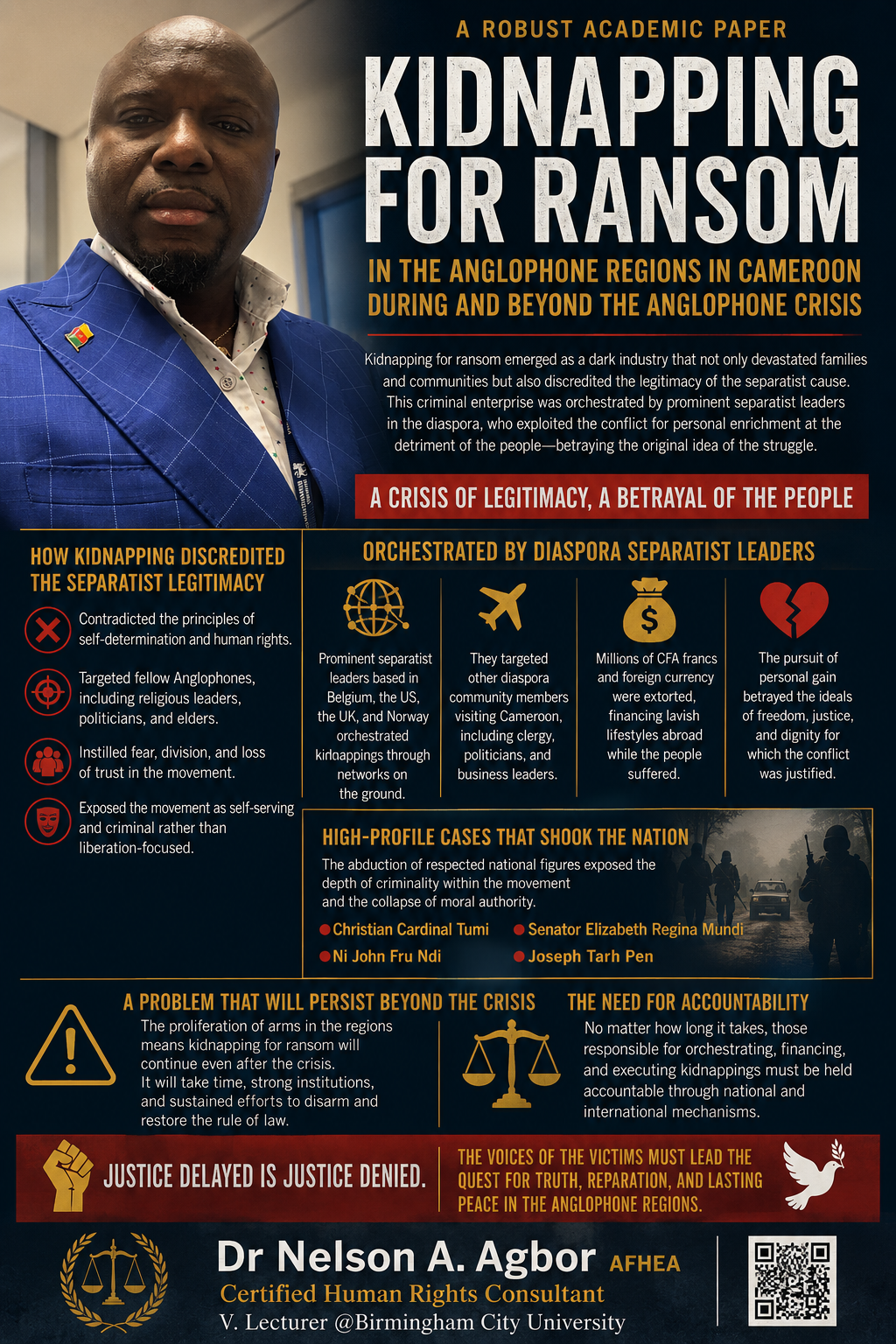
Kidnapping for Ransom and the Crisis of Separatist Legitimacy in Cameroon’s Anglophone Conflict: Diaspora Networks, War Economies, and the Politics of Accountability.

The Anglophone Crisis in Cameroon, which began in 2016 as a political protest against the perceived marginalisation of the English-speaking regions, gradually escalated into a violent armed conflict marked by widespread abuses against civilians. Although the conflict initially stemmed from legitimate grievances rooted in the historical “Anglophone problem,”

Read More...

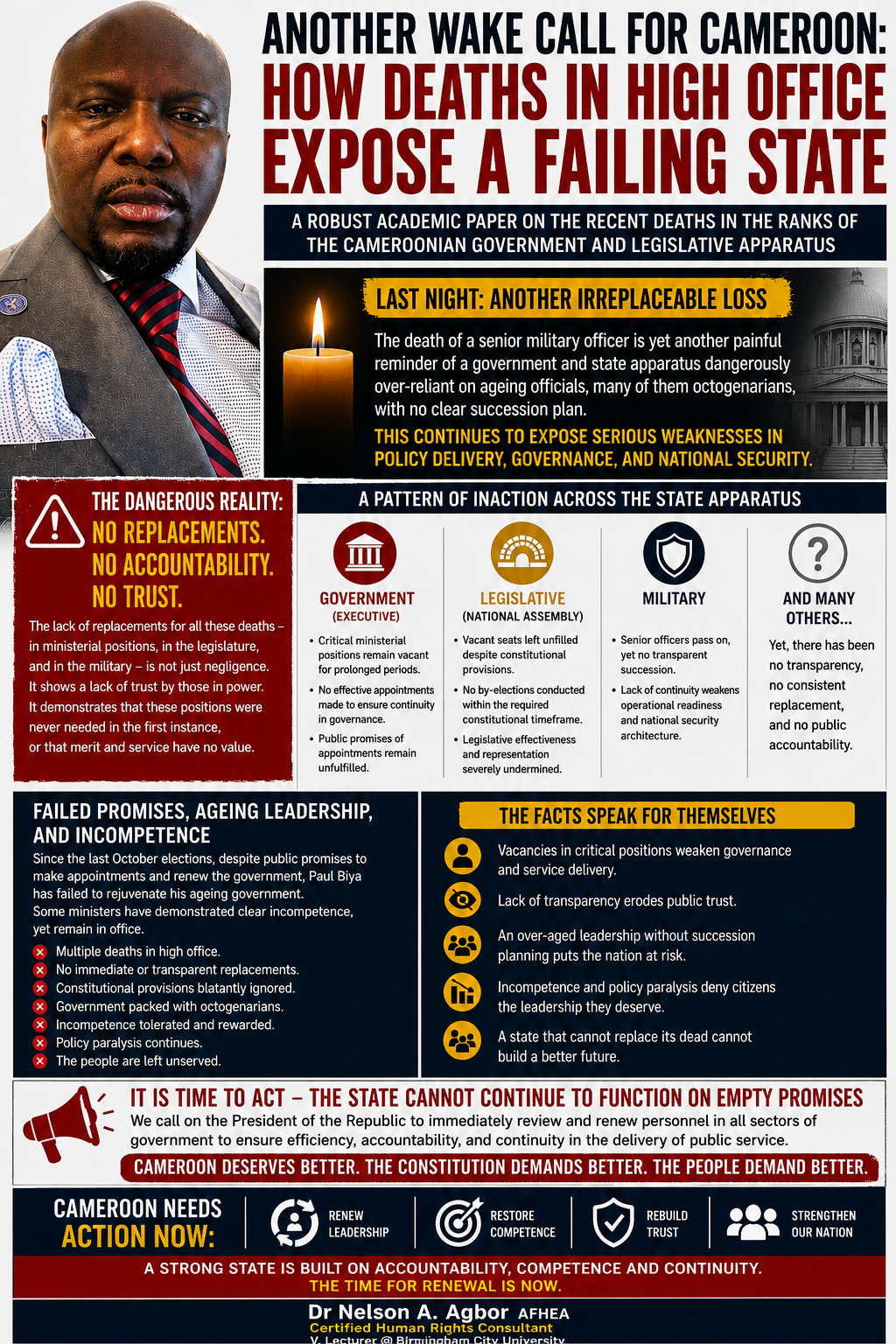
Deaths Without Replacement: Constitutional Neglect, Gerontocracy, and Administrative Decline in Cameroon’s Government, Legislature, and Military.

The recent wave of deaths within the Cameroonian political, administrative, and military establishment has exposed a profound structural crisis at the heart of the state. What initially appeared to be isolated incidents has become a pattern, revealing the fragility of a government overwhelmingly dominated by elderly officials who

Read More...

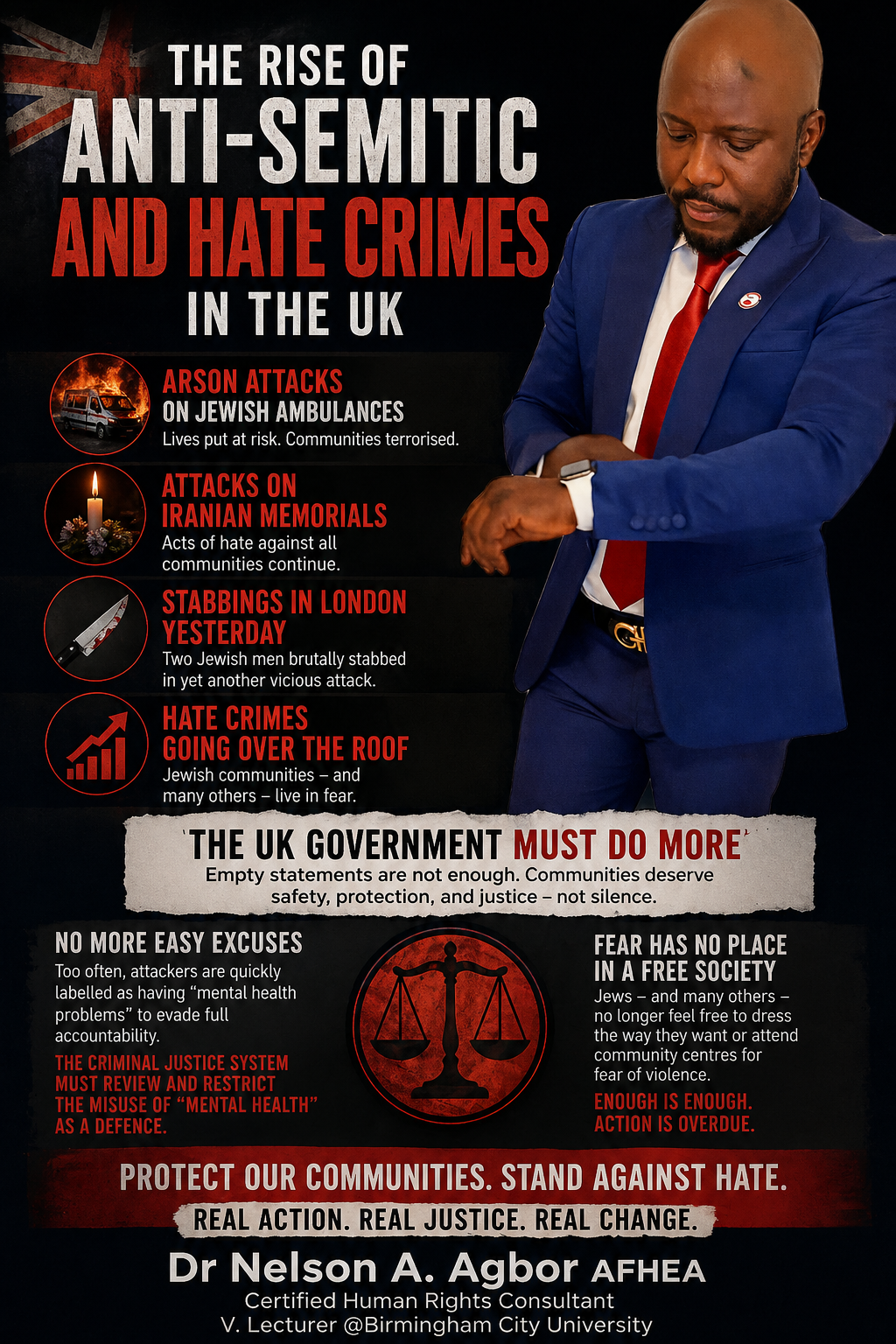
Escalating Hate: Antisemitic Violence, Institutional Framing, and the Limits of Criminal Justice in Contemporary Britain.

The contemporary United Kingdom is witnessing a deeply troubling resurgence of antisemitic and hate-motivated violence, a phenomenon that demands rigorous academic scrutiny and urgent policy intervention. Recent empirical data show that antisemitism is no longer confined to sporadic incidents but has become a persistent, structurally embedded threat. The

Read More...

CAMEROON UNDER BIYA: TRUE LEADERSHIP IS NOT ABOUT POWER, IT IS ABOUT PURPOSE.

By Dr Tarh Ntantang INTRODUCTION This article offers a comprehensive examination of political leadership in Cameroon under Paul Biya, arguing that the country’s enduring governance challenges stem from a fundamental disconnect between the exercise of power and the pursuit of national purpose. Drawing on theories of transformational leadership,

Read More...

About Me

Legal Scholar & Human Rights Advocate

Dr Nelson A. Agbor

Visiting Lecturer in Law exploring the intersection of human rights, constitutional governance, and international law. Passionate about accessible legal education and meaningful scholarship.