Commentary

Explore original research, in-depth analyses, and timely commentary on pressing issues in international human rights law, constitutional governance, and contemporary legal challenges. This collection examines the political realities shaping human rights protection in crisis-affected regions, providing critical perspectives on legal accountability, state responsibility, and the rule of law in complex geopolitical contexts.

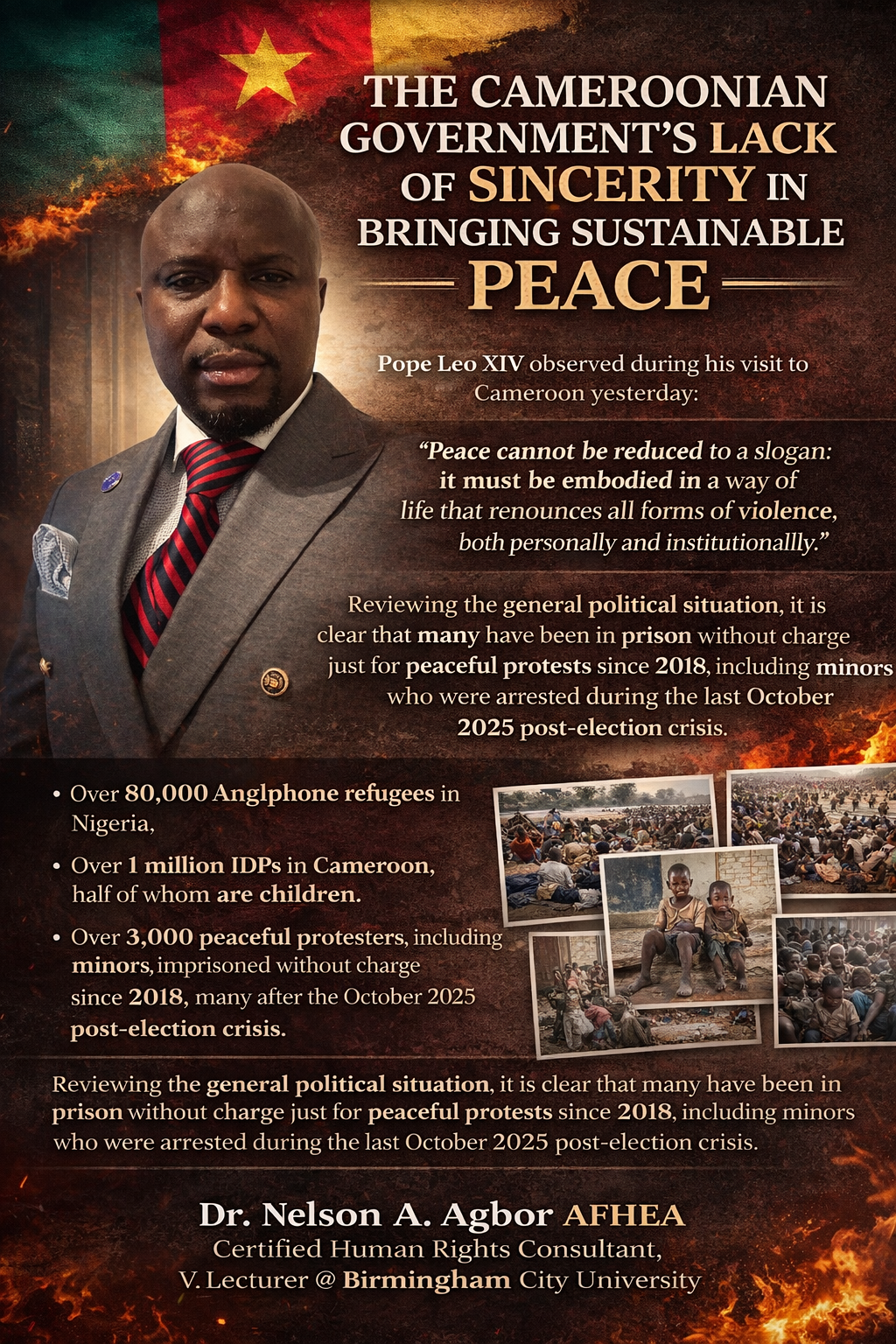
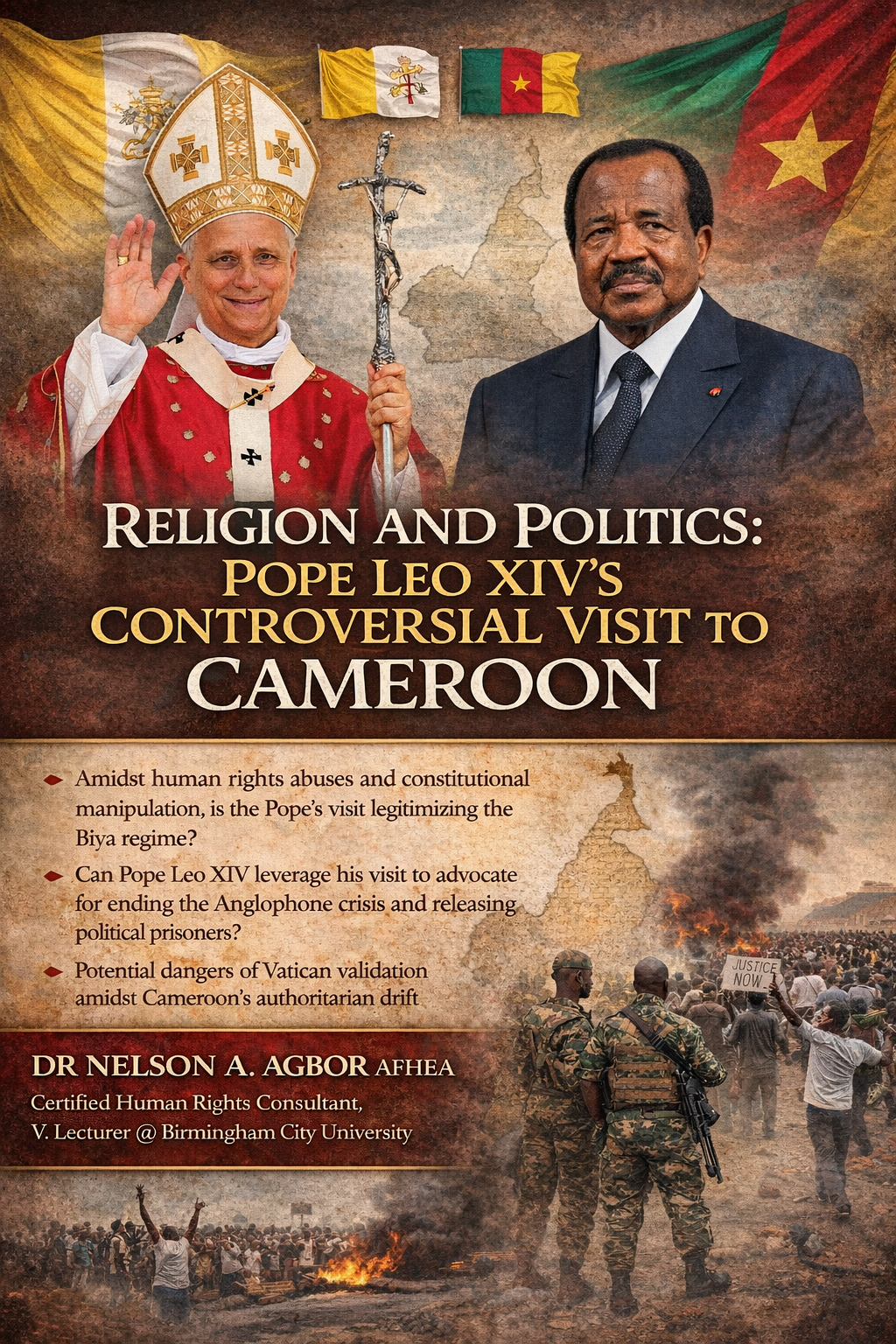
Performative Peace and Political Reality: Evaluating State Sincerity in Conflict Resolution in Cameroon’s Anglophone Crisis amid Pope Leo XIV’s Speech.

The question of sustainable peace in Cameroon remains one of the most pressing political and humanitarian crises in contemporary Africa. Despite repeated official rhetoric emphasising unity and stability, mounting evidence from humanitarian organisations, civil society actors, and international observers points to a persistent gap between state discourse and

Read More...

U.S.-IRAN-ISRAEL: DIPLOMACY OR MORE WAR?

By Dr Tarh Ntantang The 2026 U.S.-ISRAEL-IRAN conflict marks a decisive rupture in Middle Eastern geopolitics, shifting from proxy confrontation to open interstate warfare. This article interrogates whether diplomacy remains viable or whether structural dynamics favour prolonged conflict. It argues that, despite intermittent diplomatic gestures, entrenched mistrust, strategic

Read More...

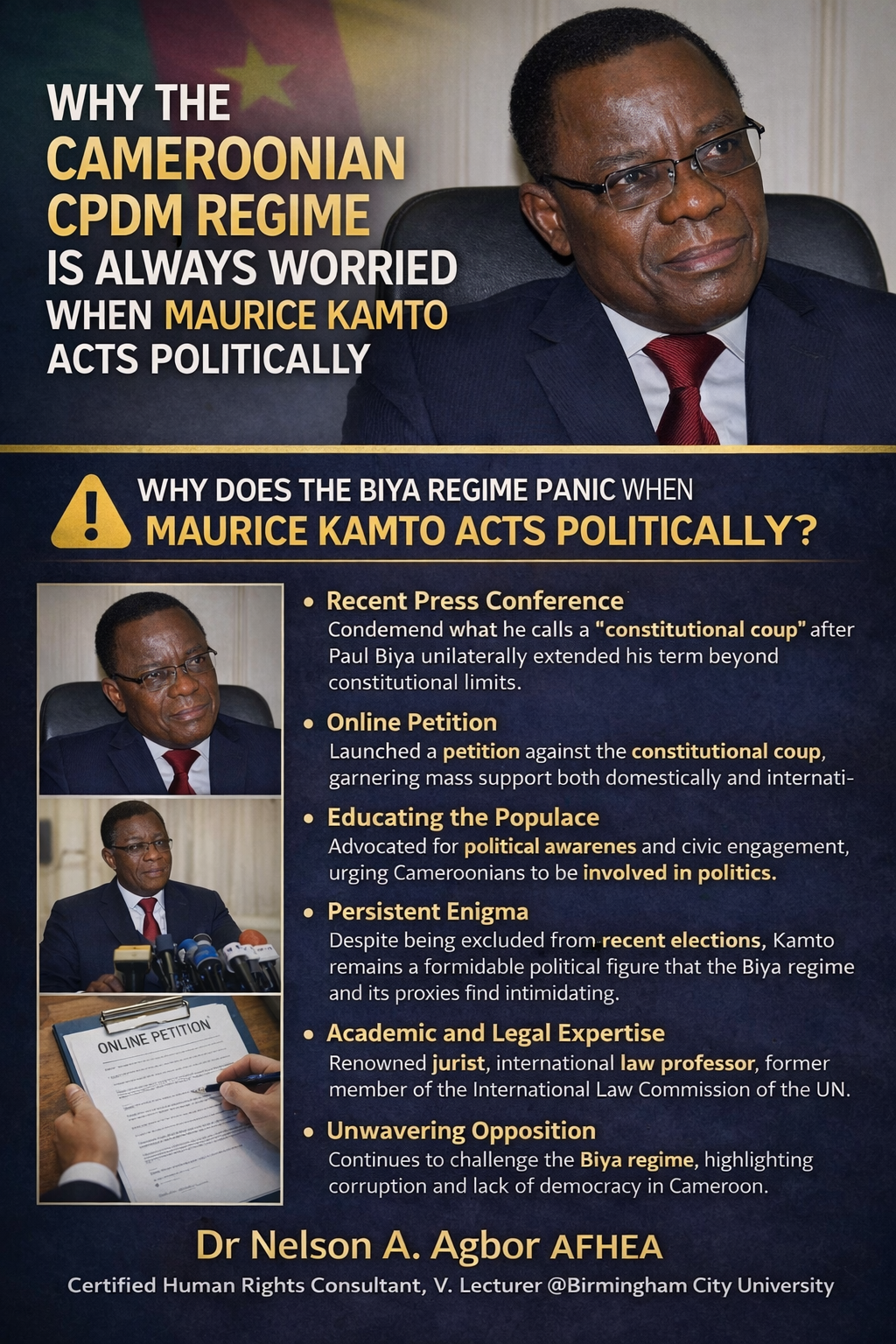
An Intellectual Threat to Authoritarian Stability: The Persistent Political Anxiety of the CPDM Regime in the Face of Maurice Kamto.

Contemporary political dynamics in Cameroon reveal a recurrent pattern: the ruling Cameroon People’s Democratic Movement (CPDM) appears persistently reactive, often entering what may be analytically described as “defensive panic mode” whenever Maurice Kamto undertakes a significant political act. This paper argues that such reactions are neither incidental nor

Read More...

HOW THE END OF THE PETRODOLLAR COULD UNDERMINE U.S. GLOBAL POWER.

By Dr Tarh Ntantang This article explores the potential geopolitical and economic consequences of the erosion or collapse of the “petrodollar system”—the longstanding practice of pricing and trading global oil in U.S. dollars. It contends that while the end of the petrodollar would not, in a literal sense,

Read More...

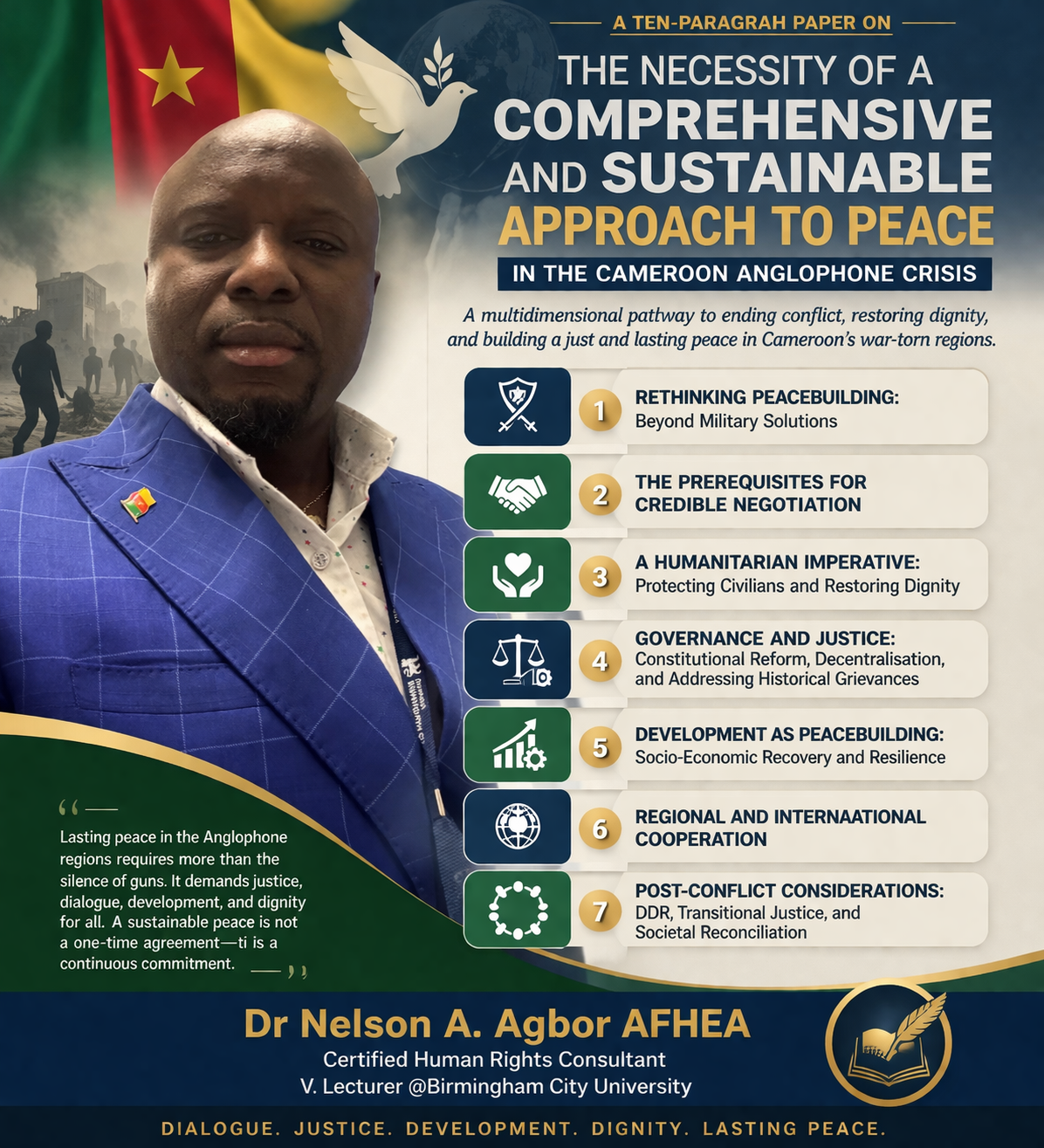
The Necessity of Comprehensive Peacebuilding in Cameroon’s Anglophone Crisis: Governance, Justice, and Human Security.

The prolonged Anglophone crisis in Cameroon is one of the most complex and deeply rooted conflicts in modern Africa, characterised by historical grievances, governance failures, and increasing violence. Since 2016, tensions between the central government and Anglophone regions have developed into an armed conflict marked by widespread human

Read More...

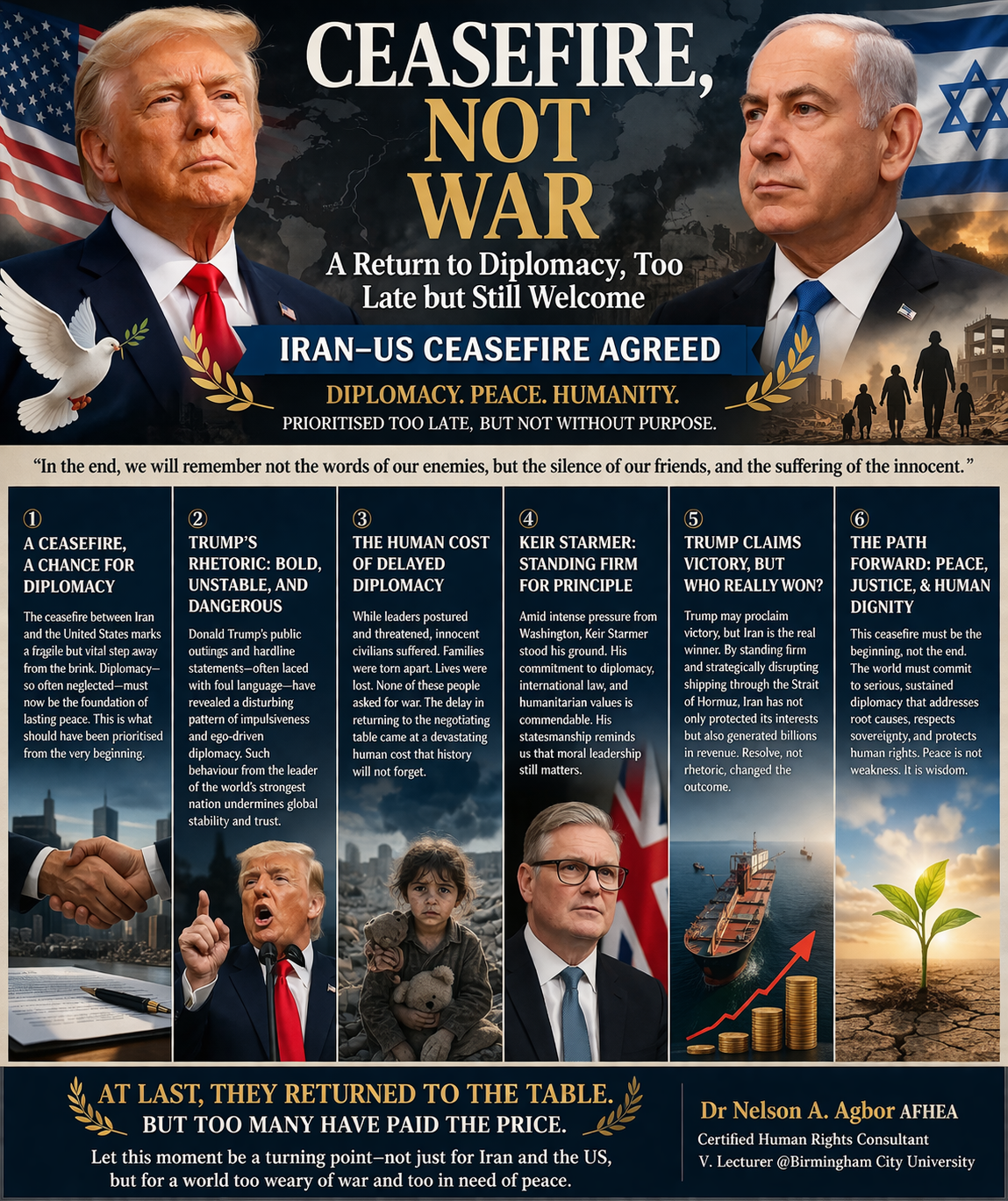
A Conflict Prolonged: Leadership Failures, Diplomatic Delay, and Iran’s Strategic Advantage in the Ceasefire with the United States.

The recent ceasefire agreement between Iran and the United States marks a significant, albeit delayed, shift towards diplomacy in a relationship long characterised by hostility, strategic mistrust, and episodic escalation. From an international relations standpoint, this development highlights the continued importance of negotiation as a tool for de-escalation,

Read More...

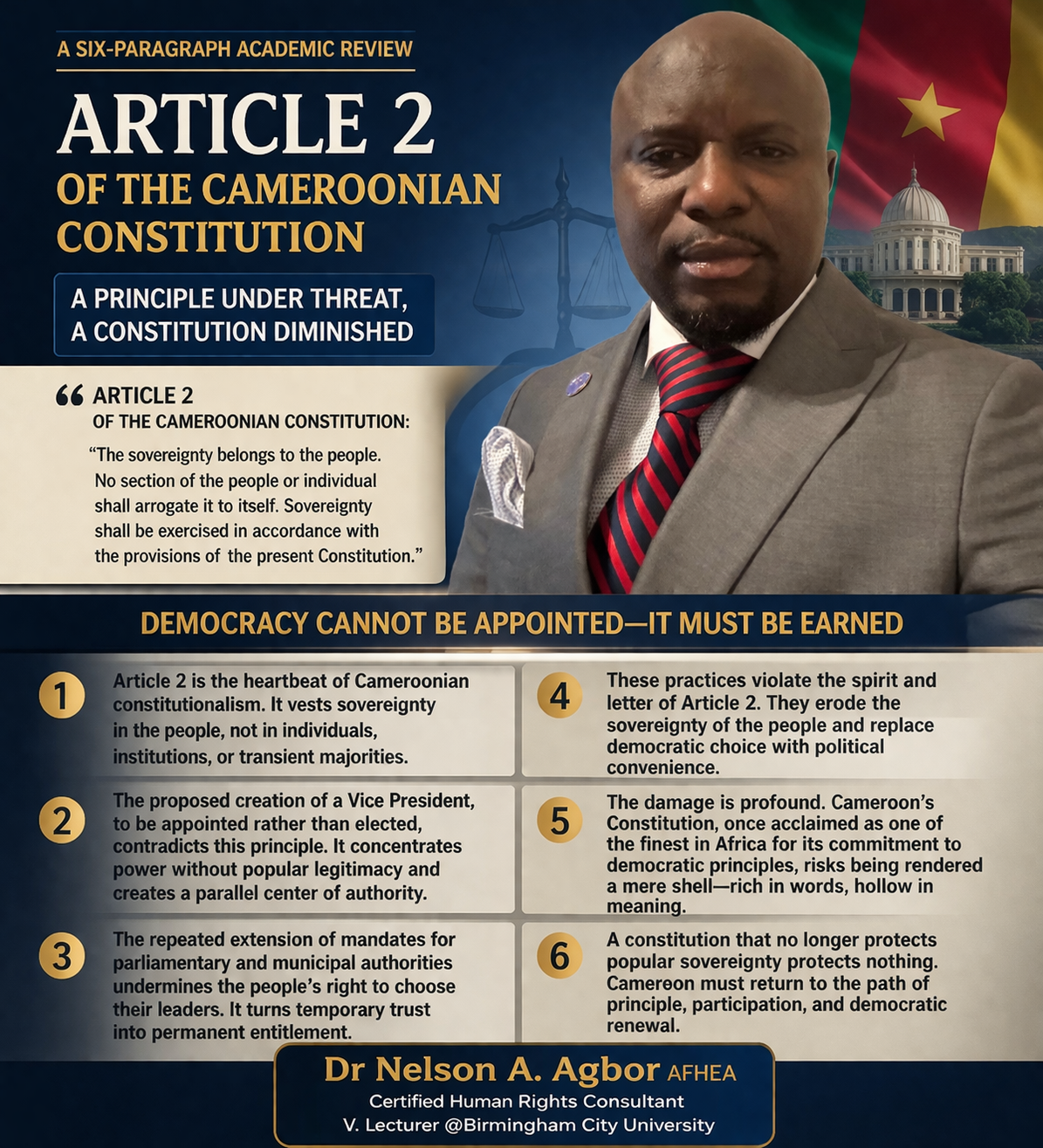
Article 2 of the Cameroonian Constitution Revisited: Democratic Principles and Constitutional Crisis of Executive Appointment and Mandate Extension.

Article 2 of the Constitution of Cameroon holds a fundamental role within the country’s constitutional framework. It asserts that national sovereignty resides with the people, who exercise it either through elected representatives or via a referendum. The provision further affirms the democratic nature of the state, emphasising that

Read More...

About Me

Legal Scholar & Human Rights Advocate

Dr Nelson A. Agbor

Visiting Lecturer in Law exploring the intersection of human rights, constitutional governance, and international law. Passionate about accessible legal education and meaningful scholarship.