Commentary

Explore original research, in-depth analyses, and timely commentary on pressing issues in international human rights law, constitutional governance, and contemporary legal challenges. This collection examines the political realities shaping human rights protection in crisis-affected regions, providing critical perspectives on legal accountability, state responsibility, and the rule of law in complex geopolitical contexts.

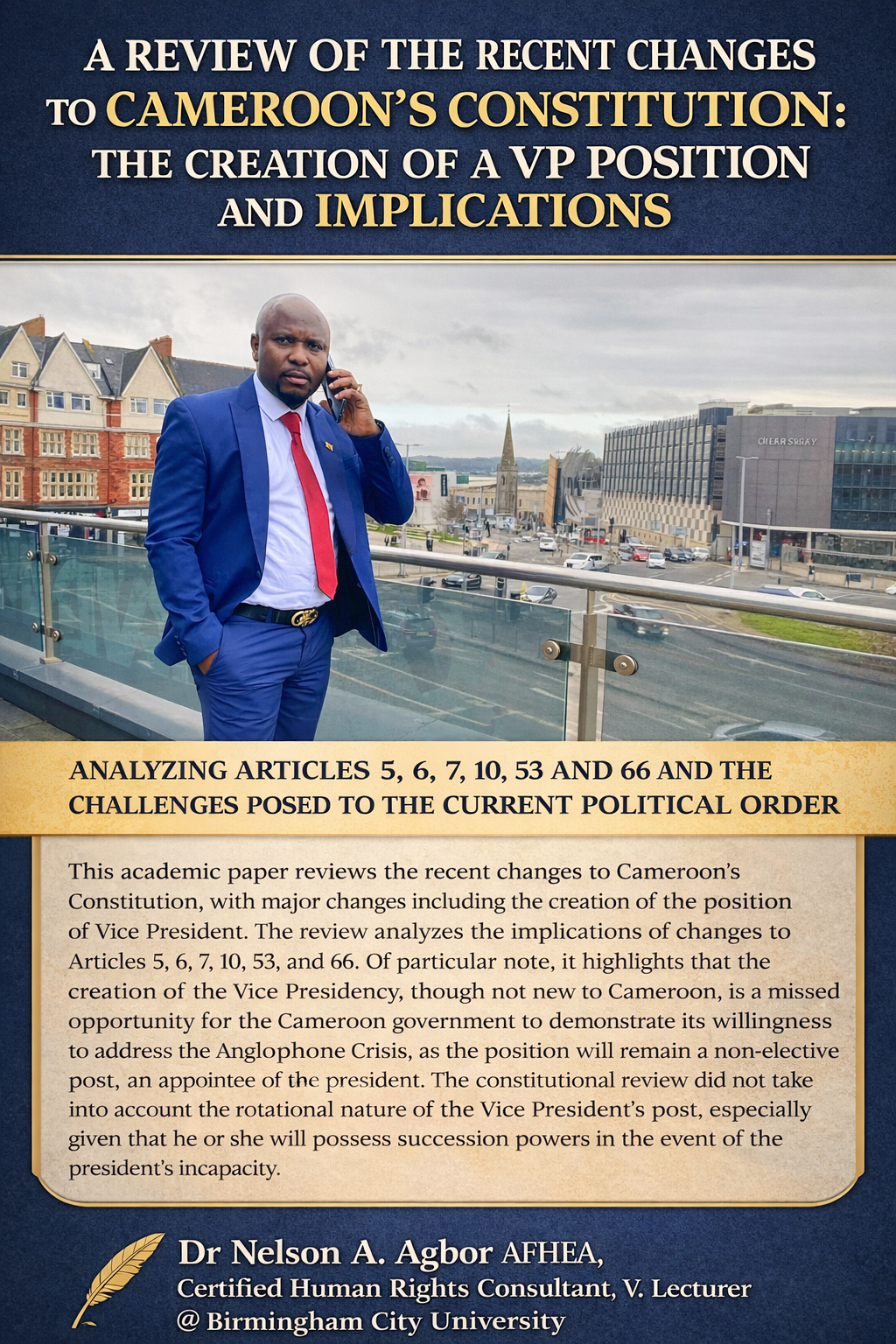
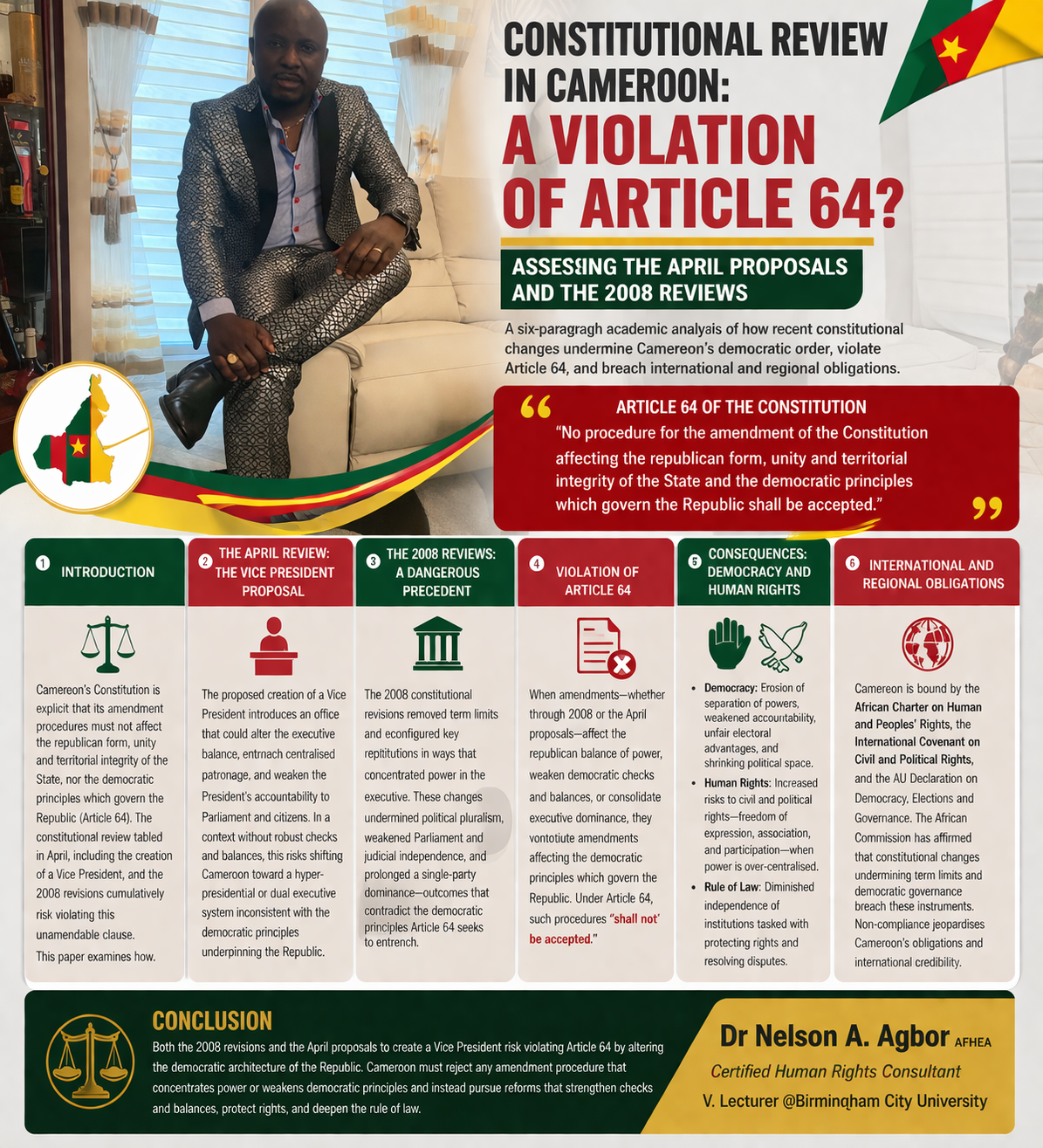
Constitutional Reform and Executive Reconfiguration in Cameroon: A Critical Analysis of Articles 5, 6, 7, 10, 53 and 66 and the Politics of the Vice Presidency.

The ongoing constitutional reform process in Cameroon, especially the proposed amendments to Articles 5, 6, 7, 10, 53, and 66, marks a pivotal moment in the development of the country’s constitutional framework. These reforms, most notably the reintroduction of the Vice Presidency, must be viewed within a broader

Read More...

BRICS NATIONS AND THE GLOBAL POWER SHIFT DYNAMICS

By Dr Tarh Ntantang Abstract The Global Economic Order has mostly been dominated by World Bank and the International monetary funds (IMF) which has been the station quo since the end of the cold war in 19991. But the rise of the BRICS an alliance of sub regional

Read More...

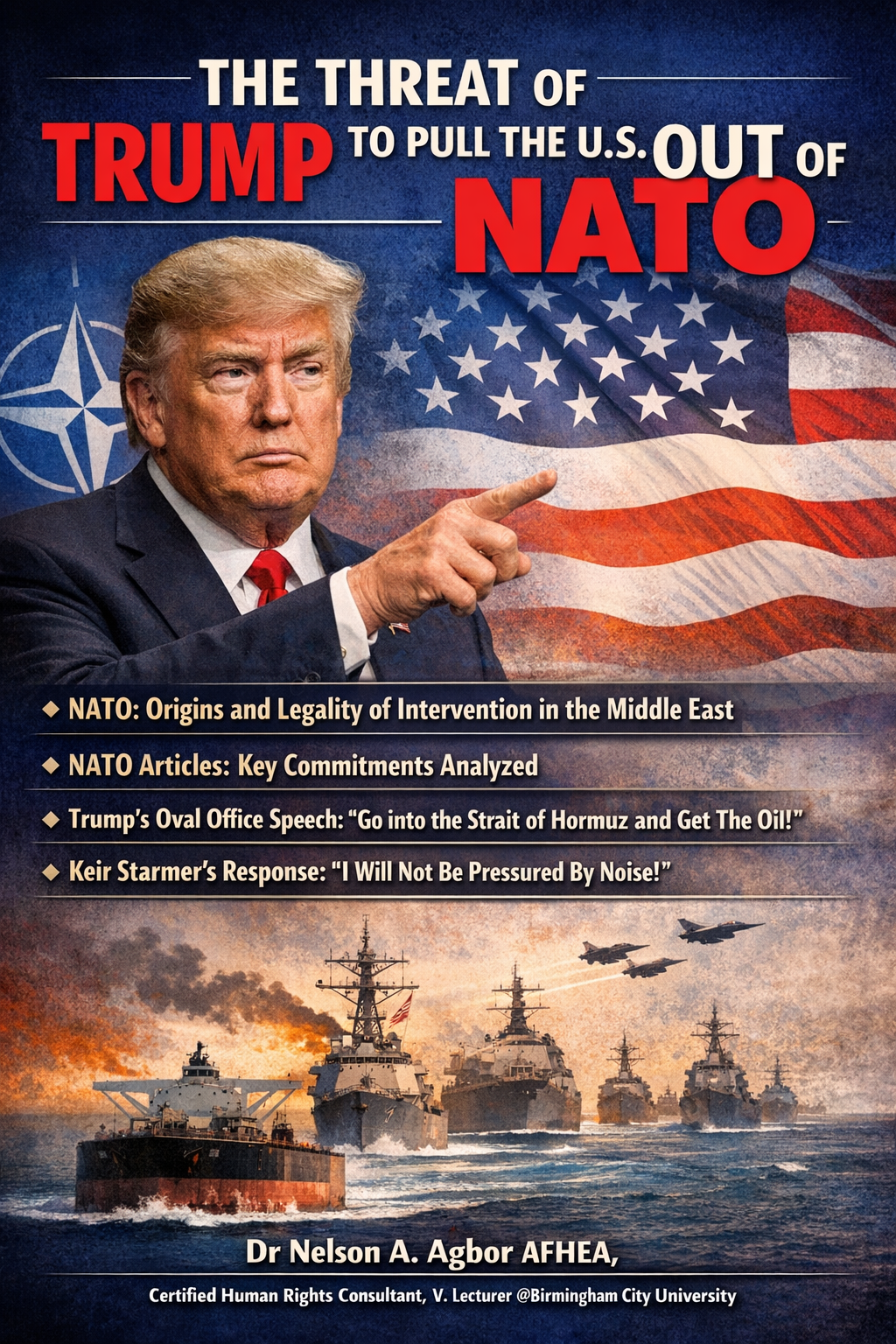
Withdrawal, Coercion, and Collective Defence: Legal and Strategic Limits of Donald Trump’s NATO Exit Threat in the Context of the 2026 Hormuz Crisis.

The renewed threat by Donald Trump to withdraw the United States from NATO must be viewed within both the alliance’s foundational principles and the evolving constitutional and geopolitical constraints that influence U.S. involvement. NATO was created in 1949 as a collective defence pact primarily aimed at deterring Soviet

Read More...

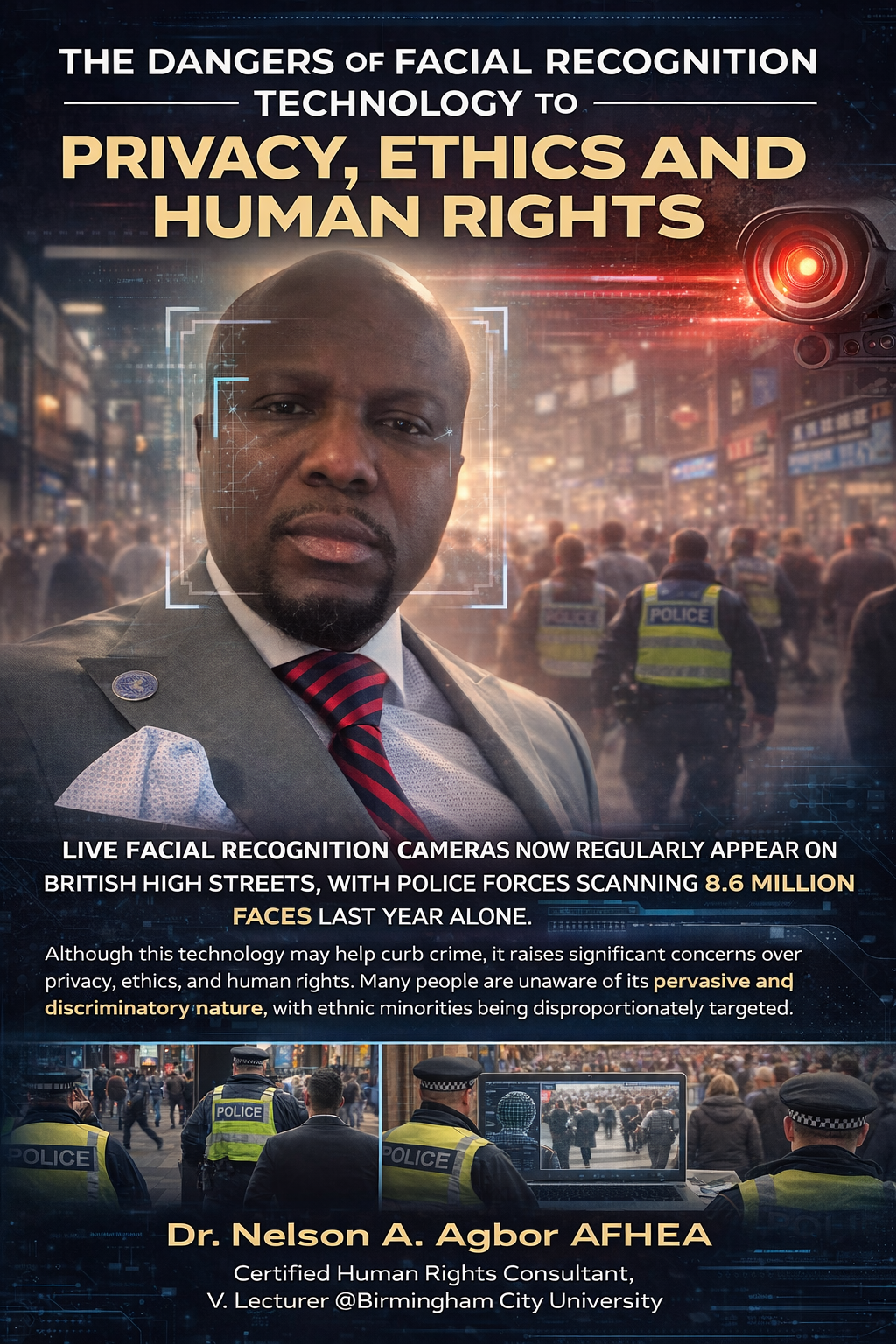
Surveillance in Plain Sight: Facial Recognition Technology, Public Security, and the Erosion of Privacy and Human Rights in the United Kingdom.

Facial recognition technology (FRT) has rapidly transitioned from a speculative idea to an essential component of modern surveillance systems. This change is particularly evident in British high streets, where police forces are increasingly using live facial recognition systems. Recent statistics reveal that 8.6 million faces were scanned within

Read More...

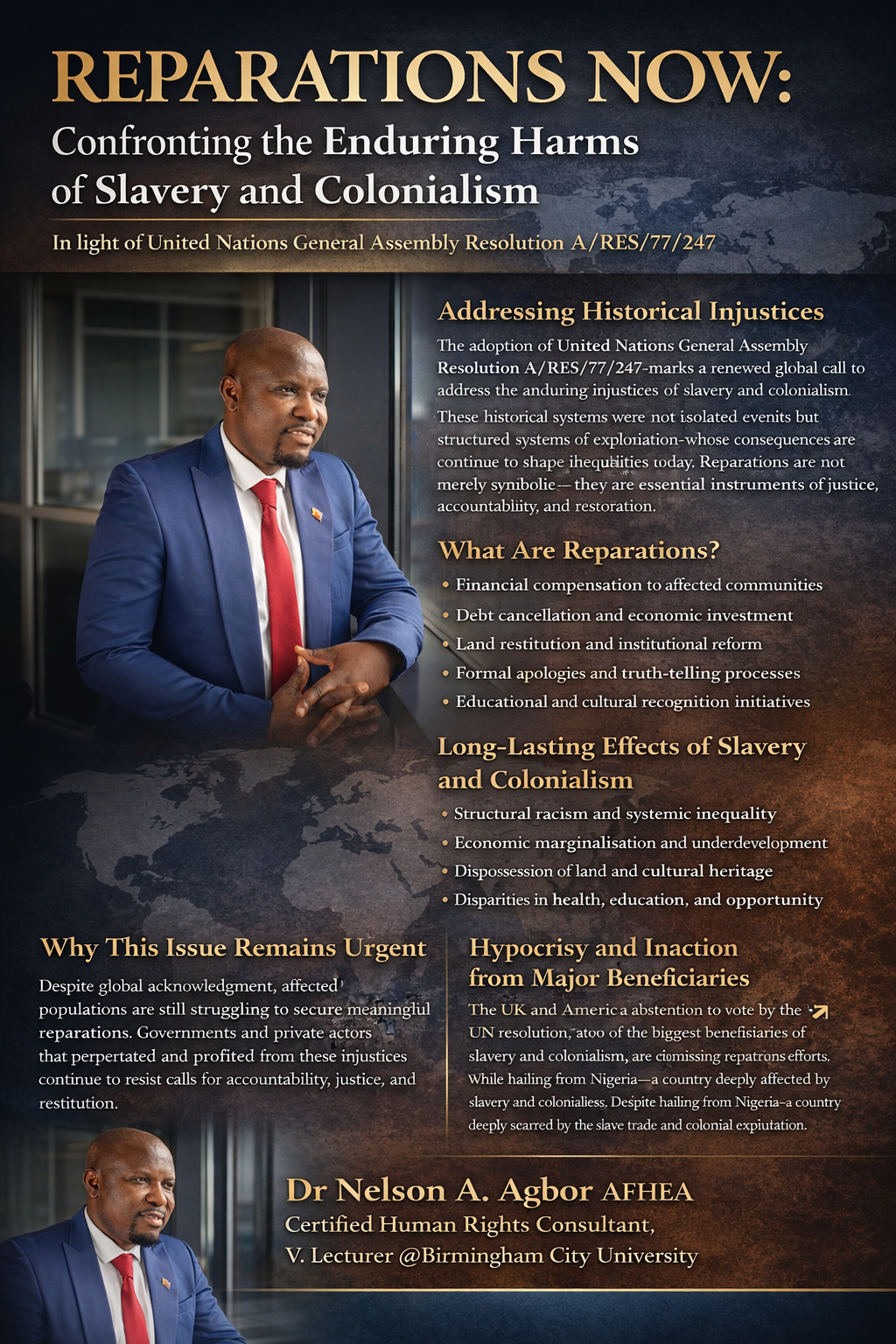
Legacies of Exploitation: Why Reparations for Slavery and Colonialism Remain Urgent in the 21st Century.

The issue of reparations for the historical injustices of slavery and colonialism has re-emerged as a key topic in international human rights discussions, especially following United Nations General Assembly Resolution A/RES/78/234, which urges renewed global focus on reparatory justice. This resolution indicates a growing awareness that the legacies

Read More...

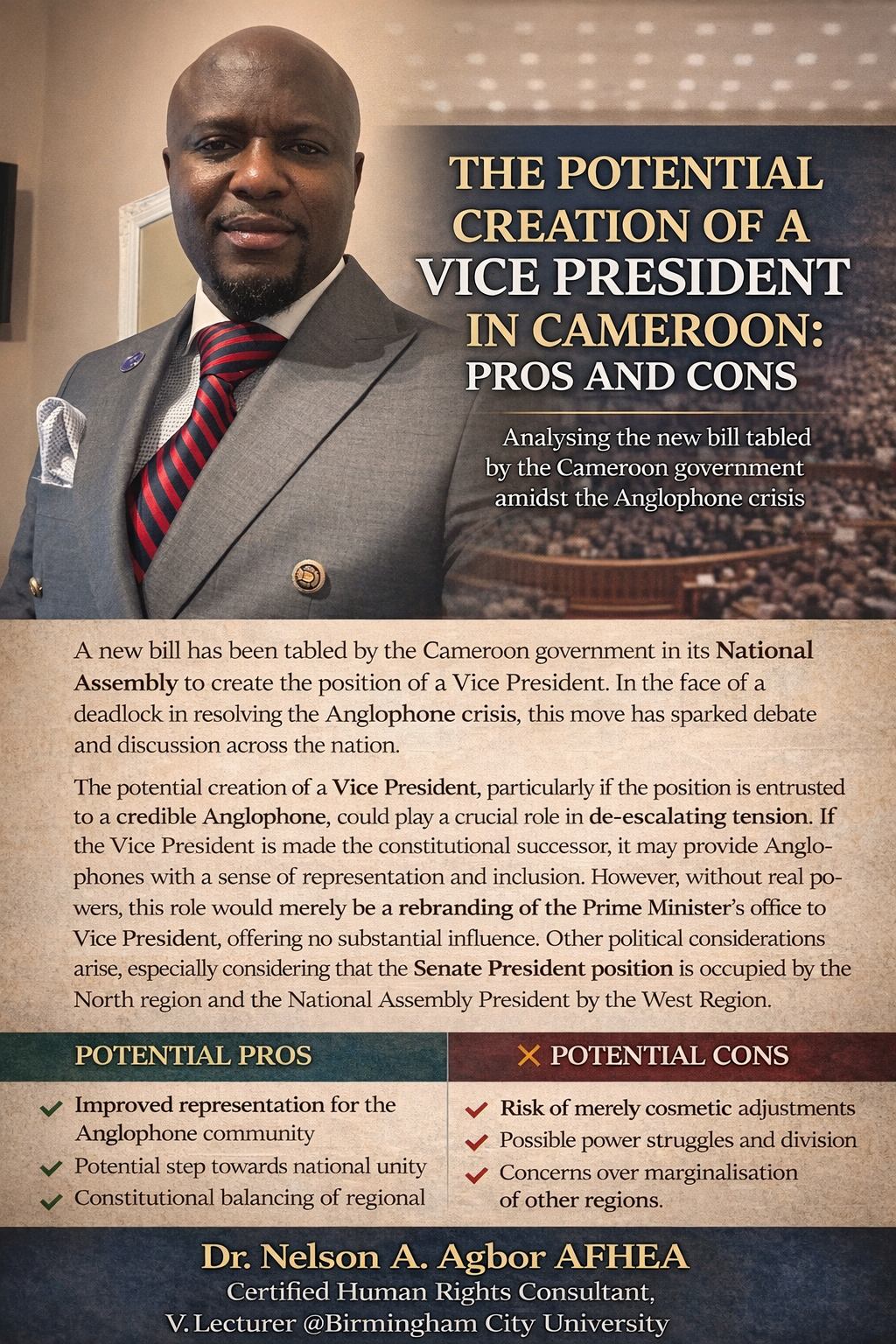
Reconfiguring Executive Power in Cameroon: The Proposed Vice Presidency and Its Implications for the Anglophone Crisis.

The tabling of a constitutional reform bill to establish the position of Vice President in Cameroon’s National Assembly signifies a potentially important institutional change within the country’s semi-presidential system. Although the details of the bill are still being debated in parliament, early signs suggest it could be part

Read More...

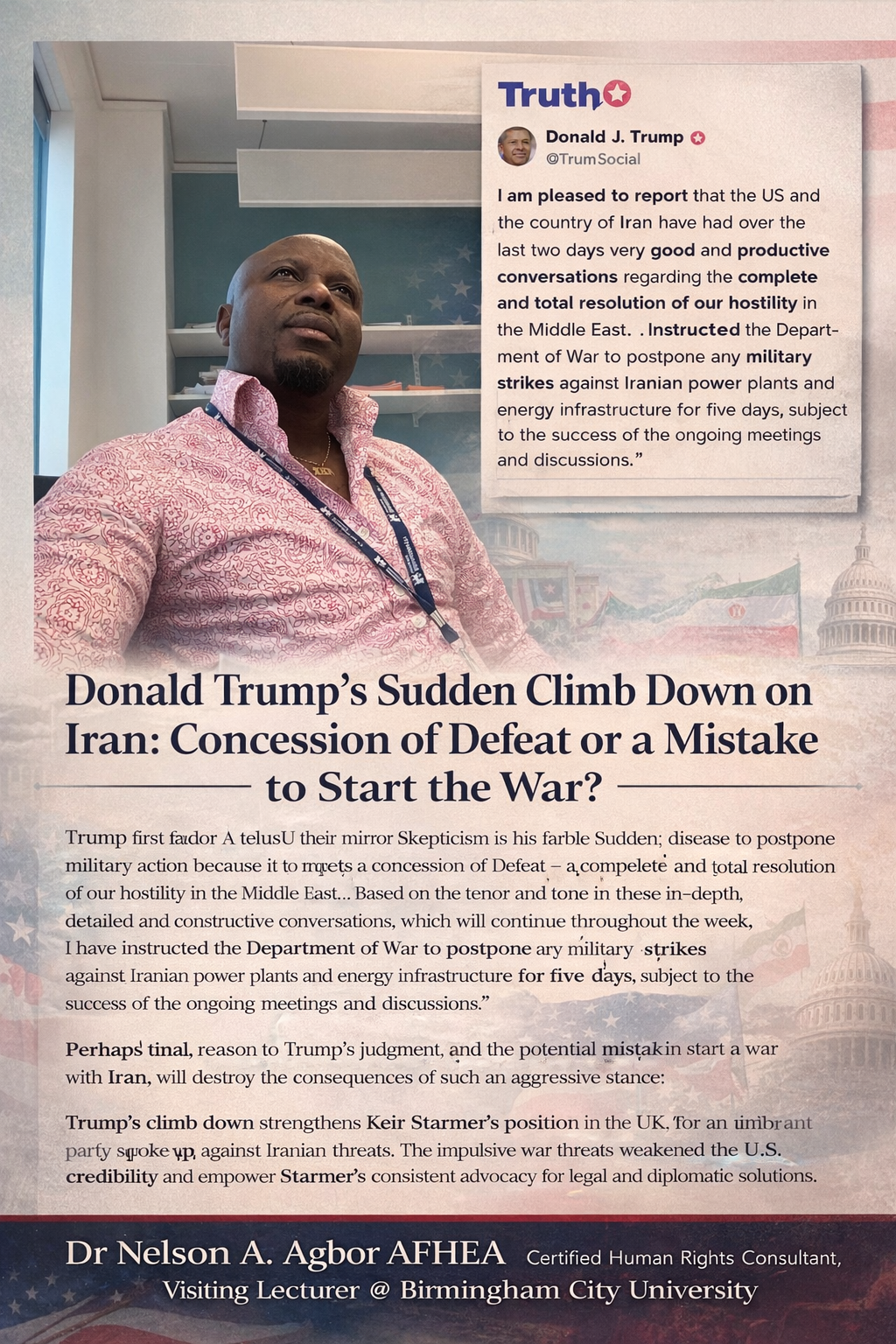
From ultimatum to Diplomacy: Reassessing Donald Trump’s Iran Strategy and its Implications for Western Leadership.

The recent remarks by Donald Trump regarding Iran mark a notable rhetorical shift from confrontation to cautious diplomacy. Following a perceived 48-hour ultimatum threatening the “obliteration” of Iranian infrastructure, Trump’s subsequent message on Truth Social highlighted “very good and productive conversations” and a temporary pause to military action.

Read More...

About Me

Legal Scholar & Human Rights Advocate

Dr Nelson A. Agbor

Visiting Lecturer in Law exploring the intersection of human rights, constitutional governance, and international law. Passionate about accessible legal education and meaningful scholarship.