Human Rights Law

The legal architecture of human dignity. Human rights law establishes the universal standards that protect our fundamental freedoms—from freedom of expression to protection from torture. Here we examine how international frameworks translate into domestic protection, how rights are enforced, and how law responds to violations. It’s law in service of justice.

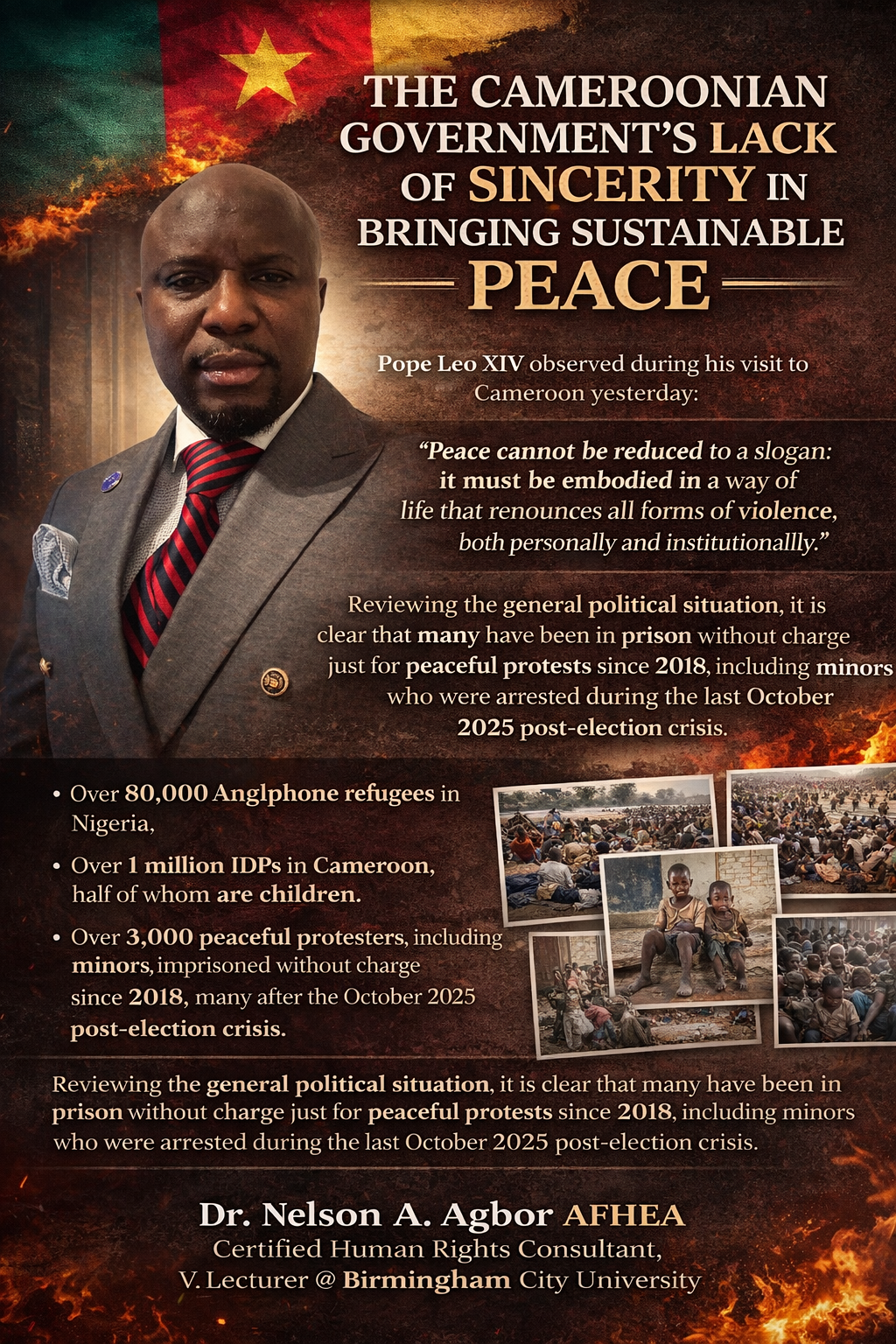
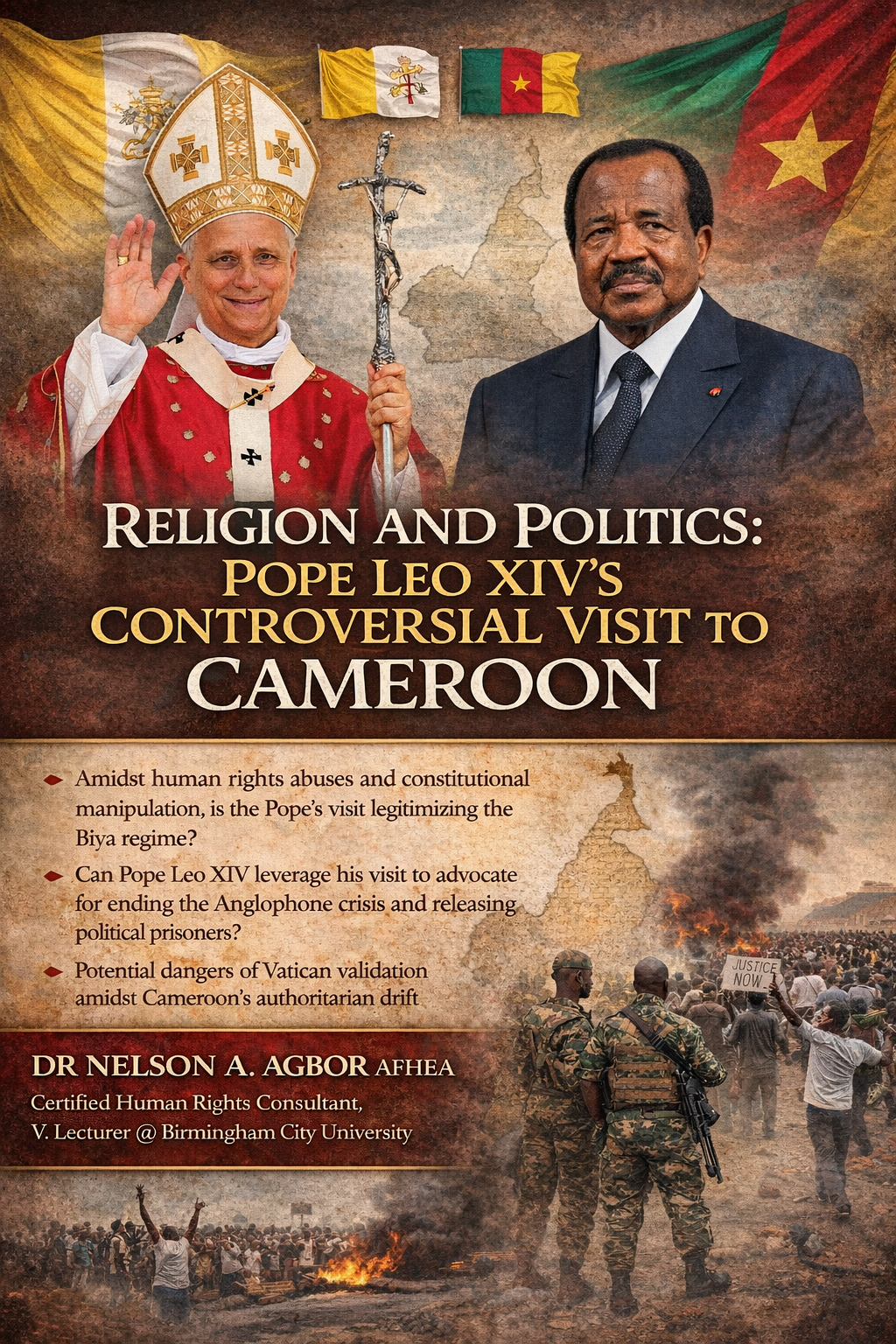
Performative Peace and Political Reality: Evaluating State Sincerity in Conflict Resolution in Cameroon’s Anglophone Crisis amid Pope Leo XIV’s Speech.

The question of sustainable peace in Cameroon remains one of the most pressing political and humanitarian crises in contemporary Africa. Despite repeated official rhetoric emphasising unity and stability, mounting evidence from humanitarian organisations, civil society actors, and international observers points to a persistent gap between state discourse and
Read More...

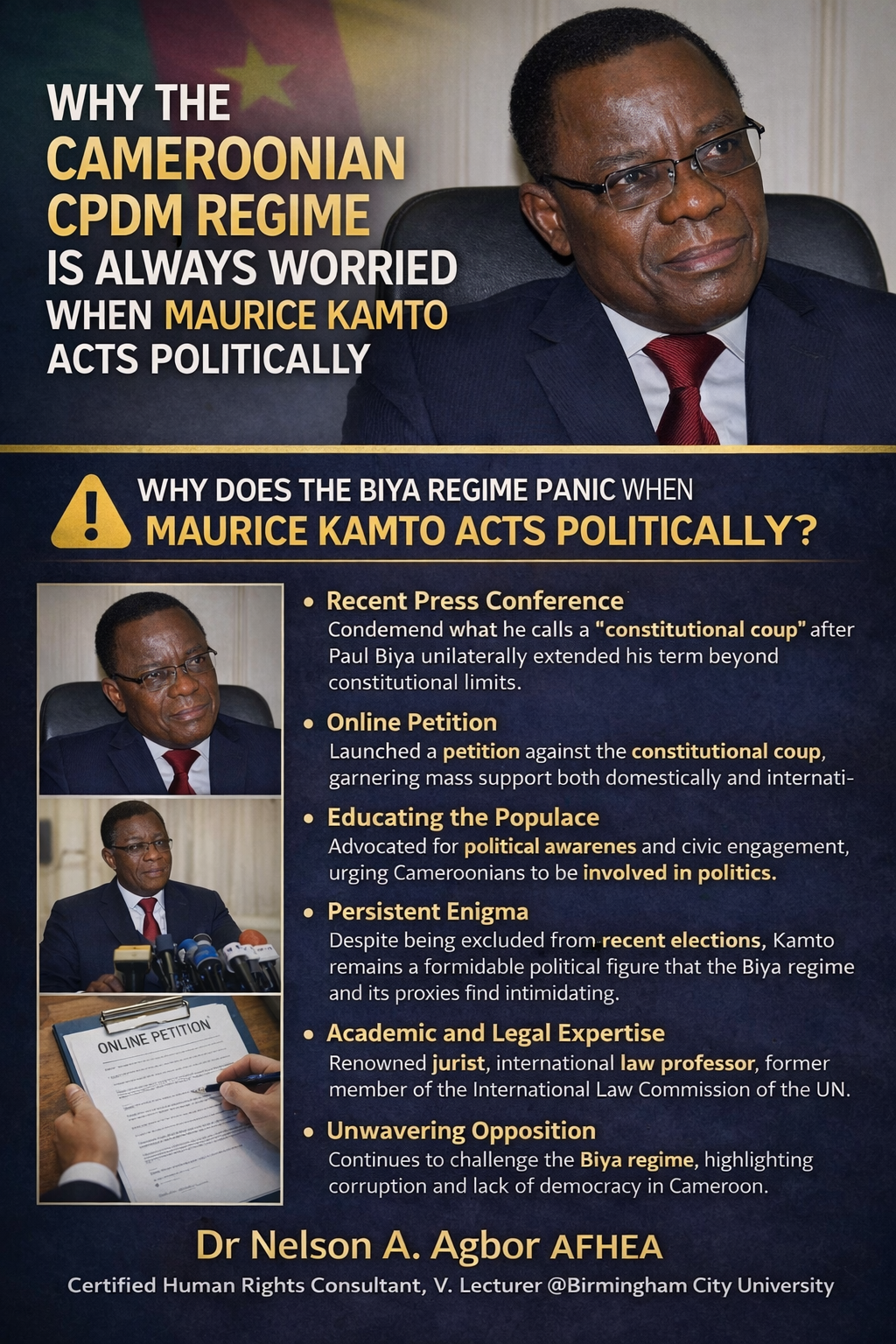
An Intellectual Threat to Authoritarian Stability: The Persistent Political Anxiety of the CPDM Regime in the Face of Maurice Kamto.

Contemporary political dynamics in Cameroon reveal a recurrent pattern: the ruling Cameroon People’s Democratic Movement (CPDM) appears persistently reactive, often entering what may be analytically described as “defensive panic mode” whenever Maurice Kamto undertakes a significant political act. This paper argues that such reactions are neither incidental nor

Read More...

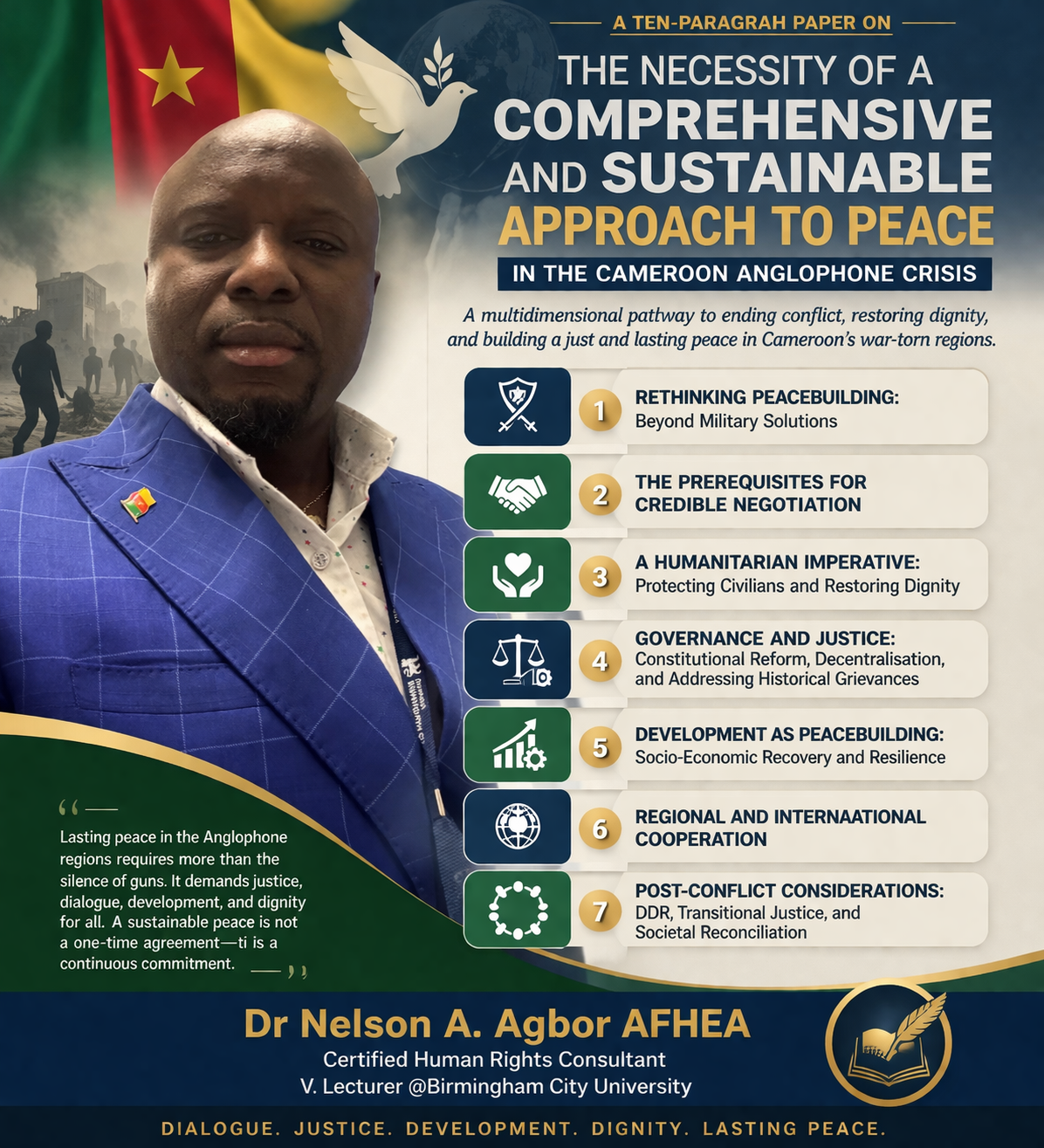
The Necessity of Comprehensive Peacebuilding in Cameroon’s Anglophone Crisis: Governance, Justice, and Human Security.

The prolonged Anglophone crisis in Cameroon is one of the most complex and deeply rooted conflicts in modern Africa, characterised by historical grievances, governance failures, and increasing violence. Since 2016, tensions between the central government and Anglophone regions have developed into an armed conflict marked by widespread human

Read More...

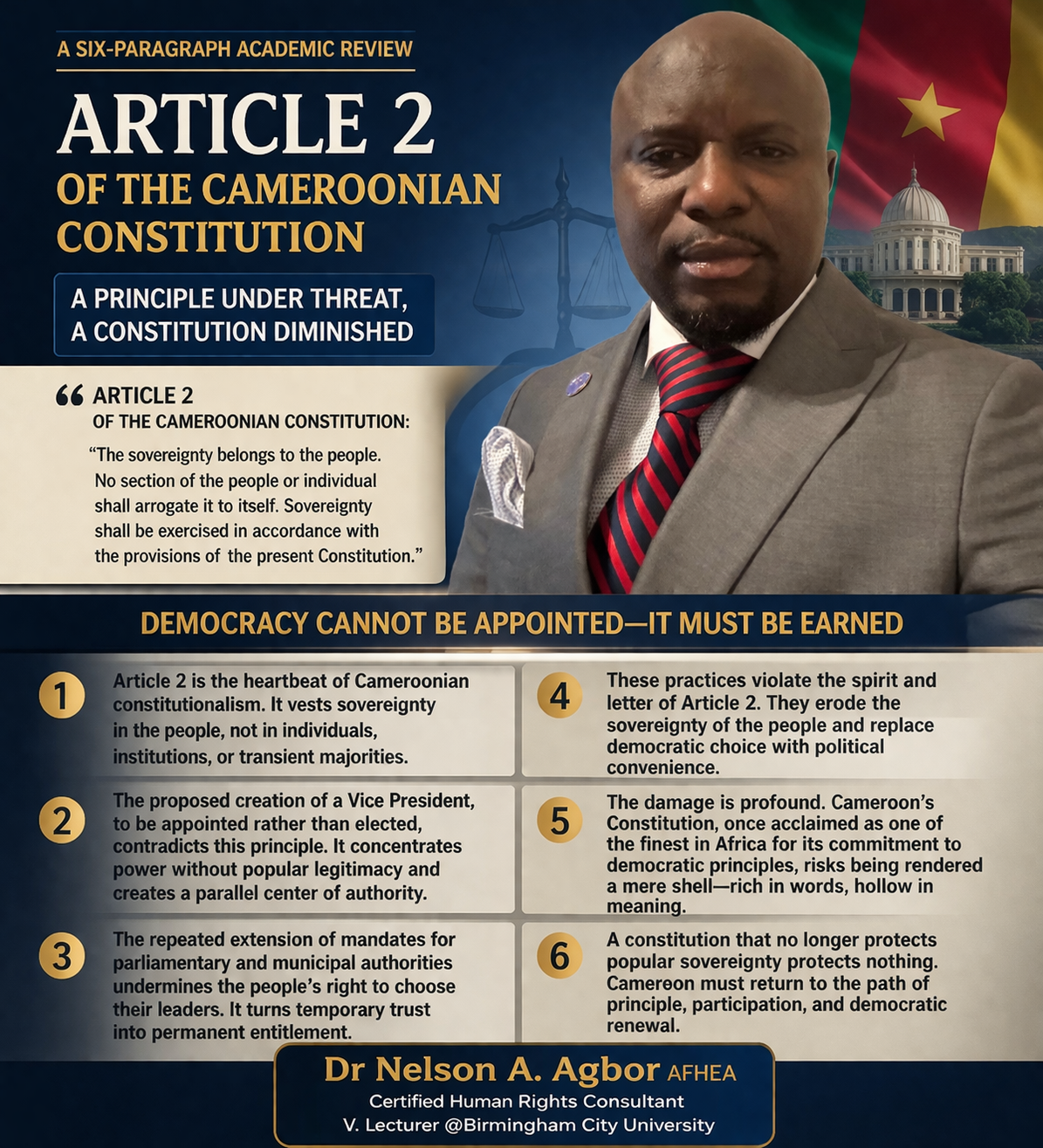
Article 2 of the Cameroonian Constitution Revisited: Democratic Principles and Constitutional Crisis of Executive Appointment and Mandate Extension.

Article 2 of the Constitution of Cameroon holds a fundamental role within the country’s constitutional framework. It asserts that national sovereignty resides with the people, who exercise it either through elected representatives or via a referendum. The provision further affirms the democratic nature of the state, emphasising that

Read More...

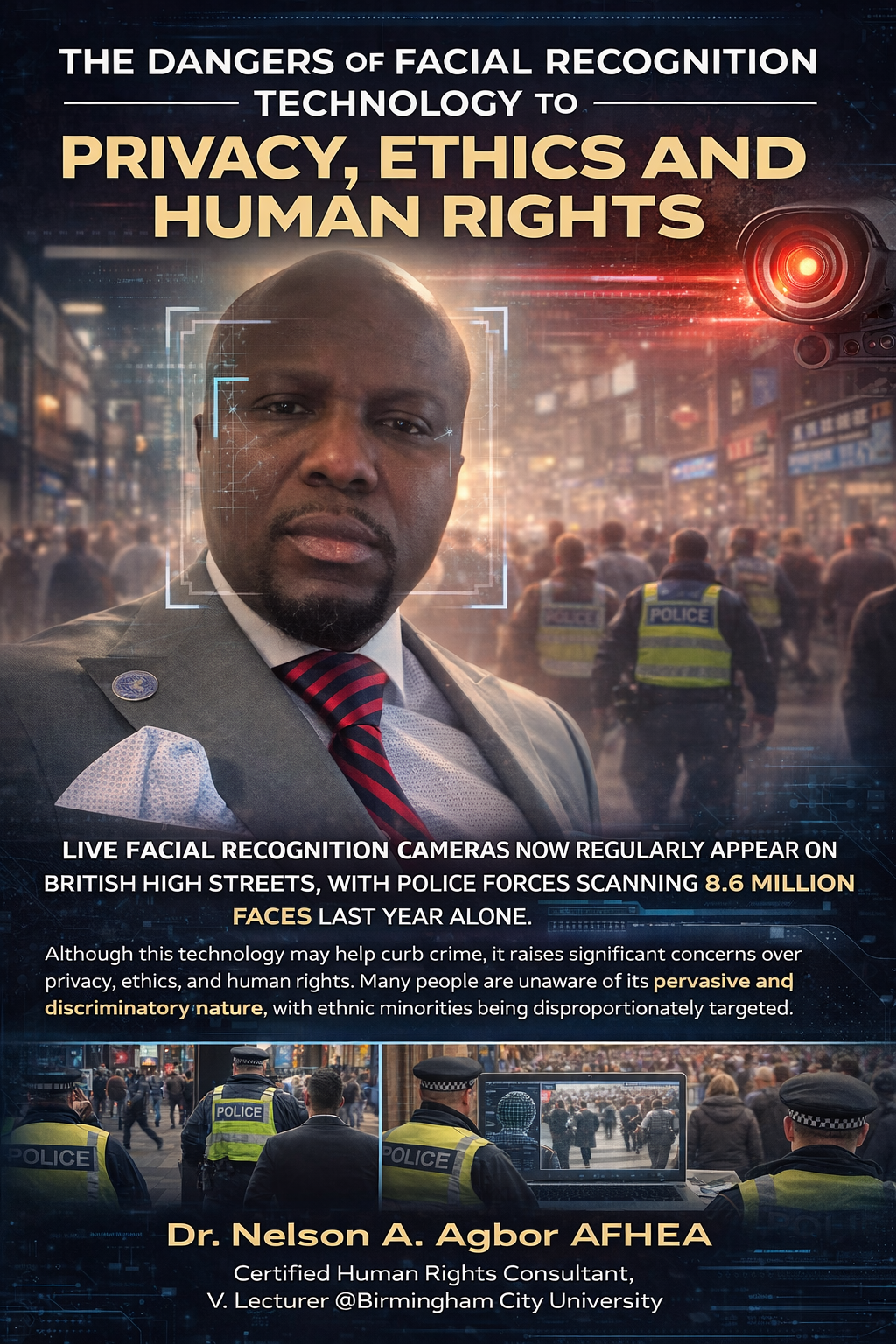
Surveillance in Plain Sight: Facial Recognition Technology, Public Security, and the Erosion of Privacy and Human Rights in the United Kingdom.

Facial recognition technology (FRT) has rapidly transitioned from a speculative idea to an essential component of modern surveillance systems. This change is particularly evident in British high streets, where police forces are increasingly using live facial recognition systems. Recent statistics reveal that 8.6 million faces were scanned within

Read More...

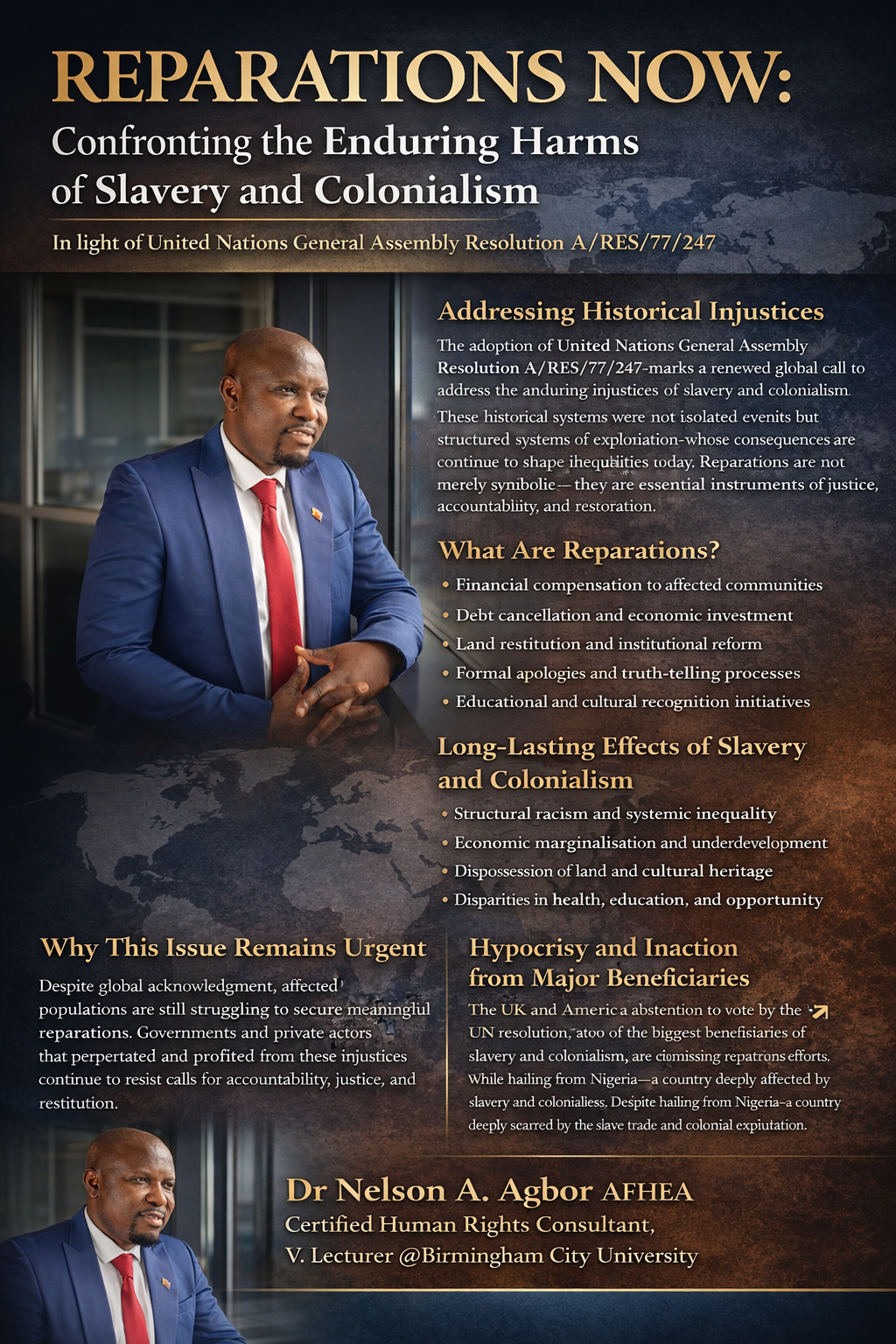
Legacies of Exploitation: Why Reparations for Slavery and Colonialism Remain Urgent in the 21st Century.

The issue of reparations for the historical injustices of slavery and colonialism has re-emerged as a key topic in international human rights discussions, especially following United Nations General Assembly Resolution A/RES/78/234, which urges renewed global focus on reparatory justice. This resolution indicates a growing awareness that the legacies

Read More...

About Me

Legal Scholar & Human Rights Advocate

Dr Nelson A. Agbor

Visiting Lecturer in Law exploring the intersection of human rights, constitutional governance, and international law. Passionate about accessible legal education and meaningful scholarship.