Constitutional Law

The law that frames all other law. Constitutional law is where fundamental principles meet living practice—examining how power is distributed, how rights are protected, and how societies define themselves. Through constitutional analysis, we investigate the relationship between state and citizen, the boundaries of authority, and the evolving meaning of justice in a changing world.

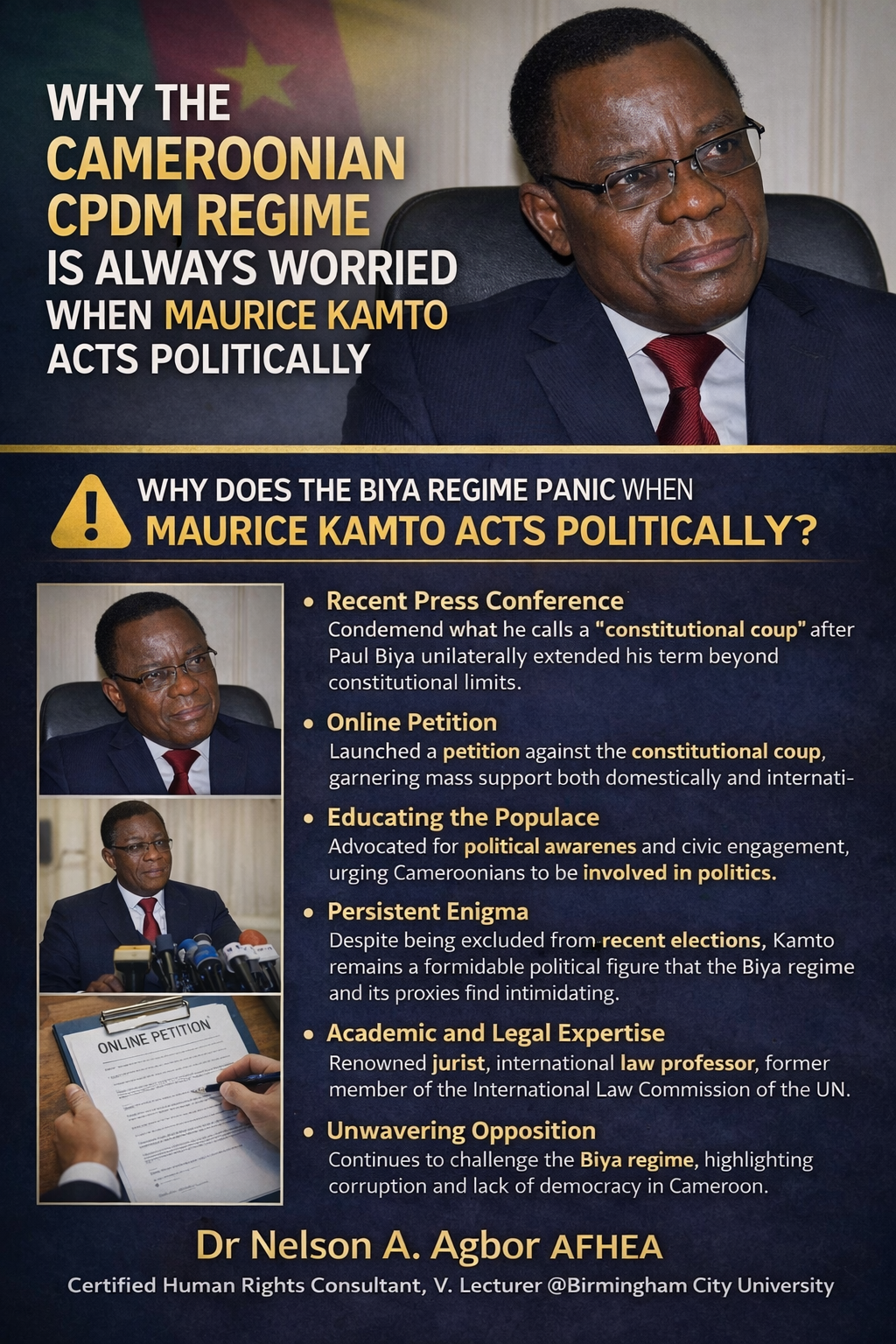
An Intellectual Threat to Authoritarian Stability: The Persistent Political Anxiety of the CPDM Regime in the Face of Maurice Kamto.

Contemporary political dynamics in Cameroon reveal a recurrent pattern: the ruling Cameroon People’s Democratic Movement (CPDM) appears persistently reactive, often entering what may be analytically described as “defensive panic mode” whenever Maurice Kamto undertakes a significant political act. This paper argues that such reactions are neither incidental nor

Read More...

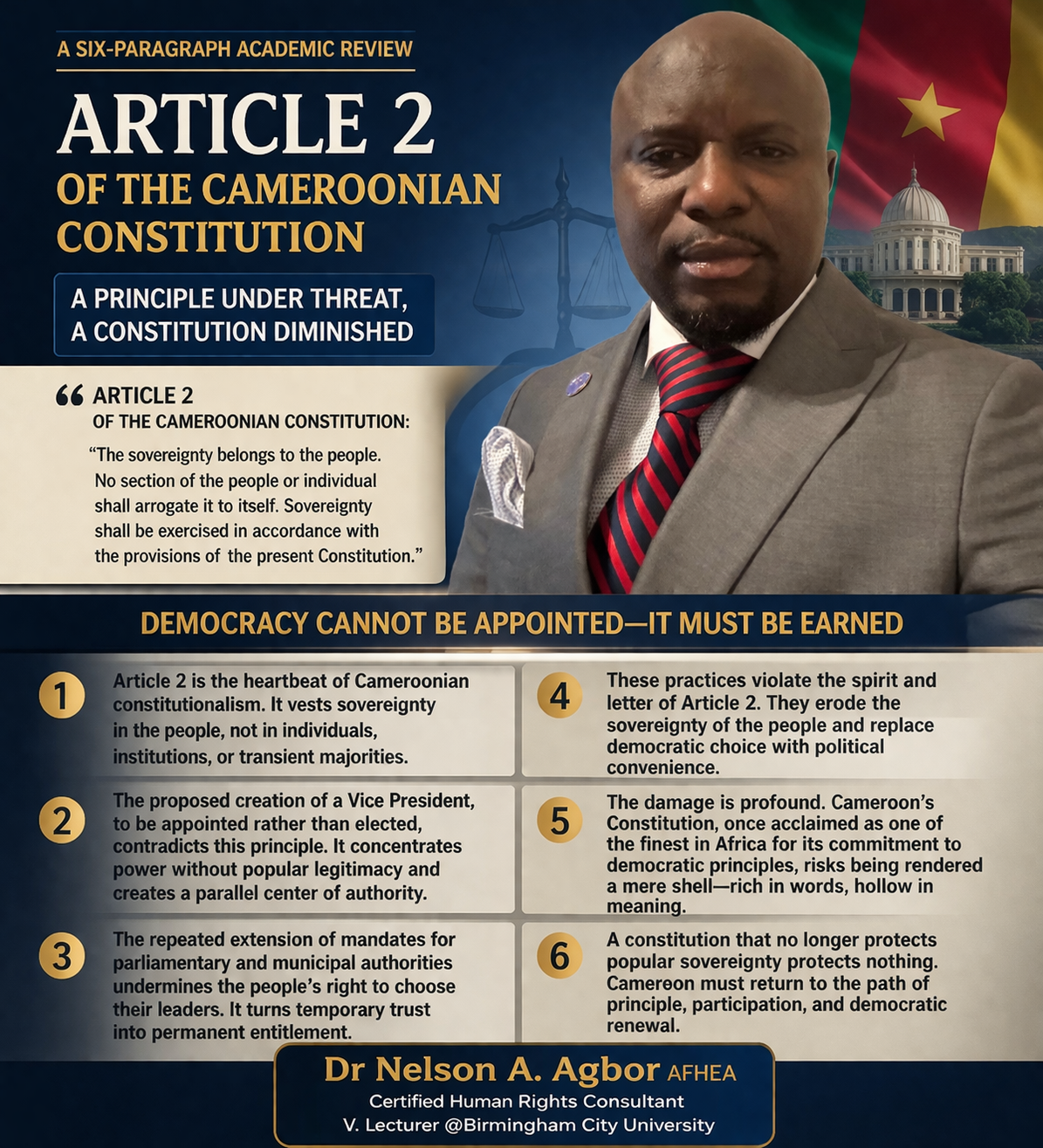
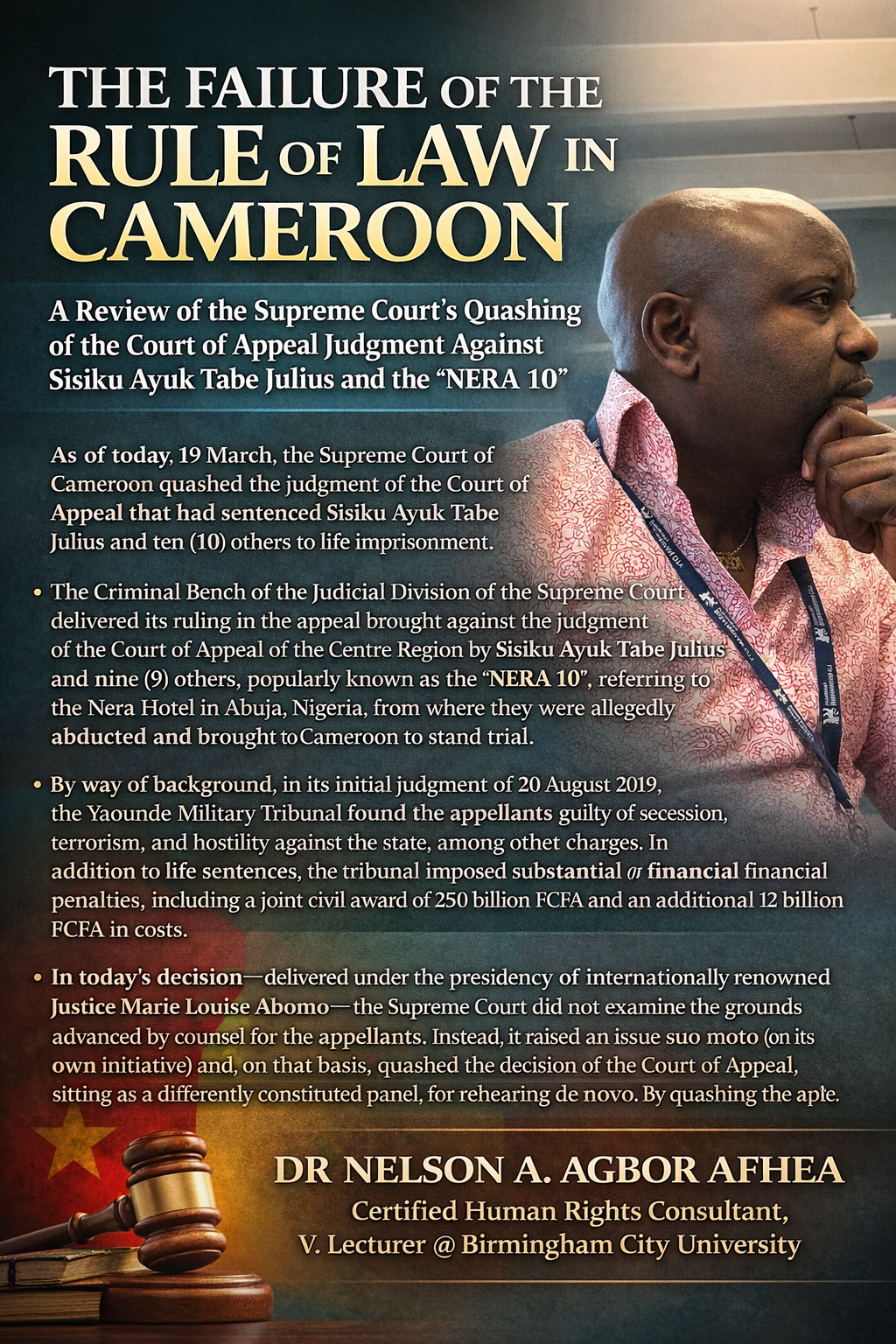
Article 2 of the Cameroonian Constitution Revisited: Democratic Principles and Constitutional Crisis of Executive Appointment and Mandate Extension.

Article 2 of the Constitution of Cameroon holds a fundamental role within the country’s constitutional framework. It asserts that national sovereignty resides with the people, who exercise it either through elected representatives or via a referendum. The provision further affirms the democratic nature of the state, emphasising that

Read More...

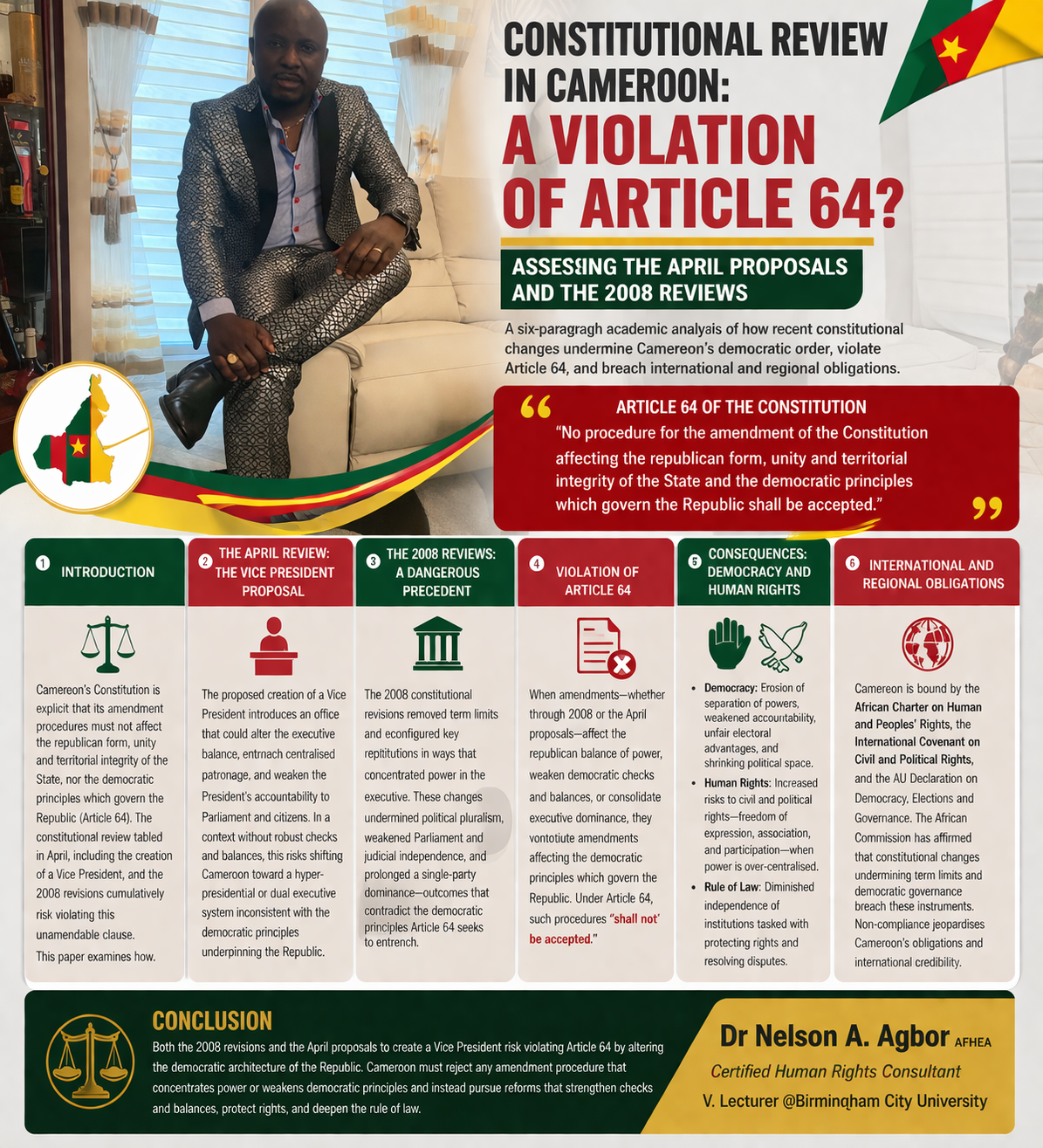
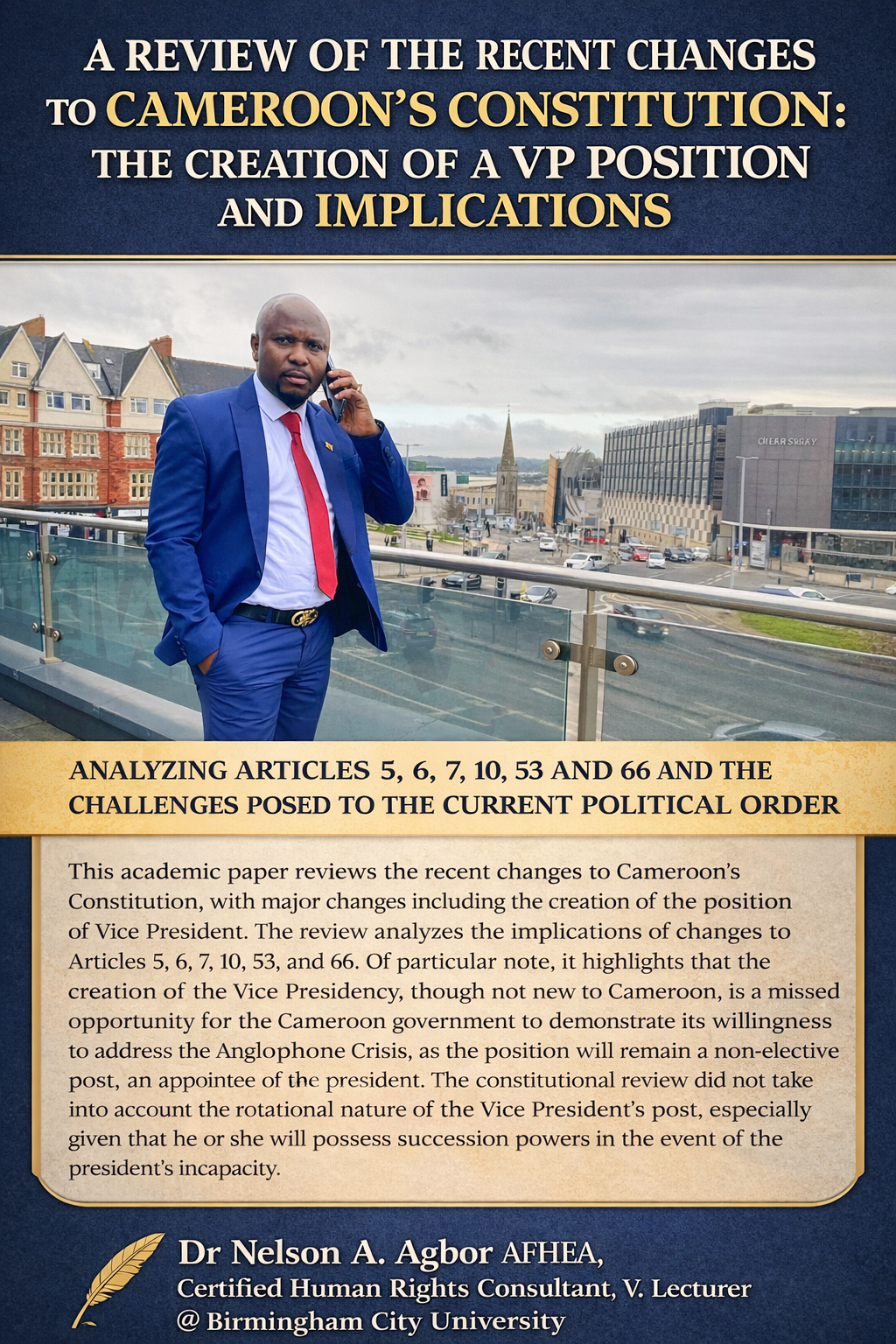
Constitutional Reform and Executive Reconfiguration in Cameroon: A Critical Analysis of Articles 5, 6, 7, 10, 53 and 66 and the Politics of the Vice Presidency.

The ongoing constitutional reform process in Cameroon, especially the proposed amendments to Articles 5, 6, 7, 10, 53, and 66, marks a pivotal moment in the development of the country’s constitutional framework. These reforms, most notably the reintroduction of the Vice Presidency, must be viewed within a broader

Read More...

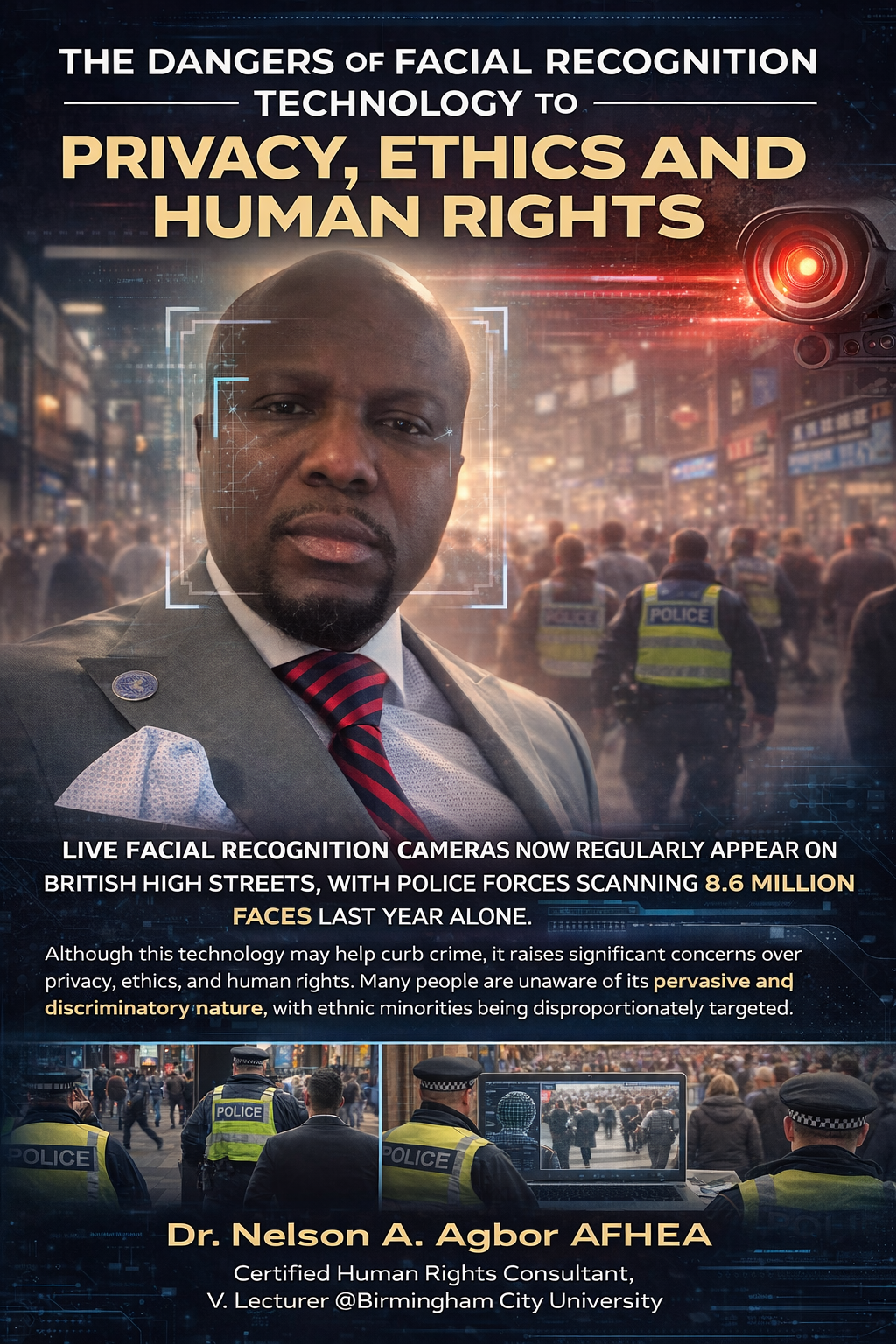
Surveillance in Plain Sight: Facial Recognition Technology, Public Security, and the Erosion of Privacy and Human Rights in the United Kingdom.

Facial recognition technology (FRT) has rapidly transitioned from a speculative idea to an essential component of modern surveillance systems. This change is particularly evident in British high streets, where police forces are increasingly using live facial recognition systems. Recent statistics reveal that 8.6 million faces were scanned within

Read More...

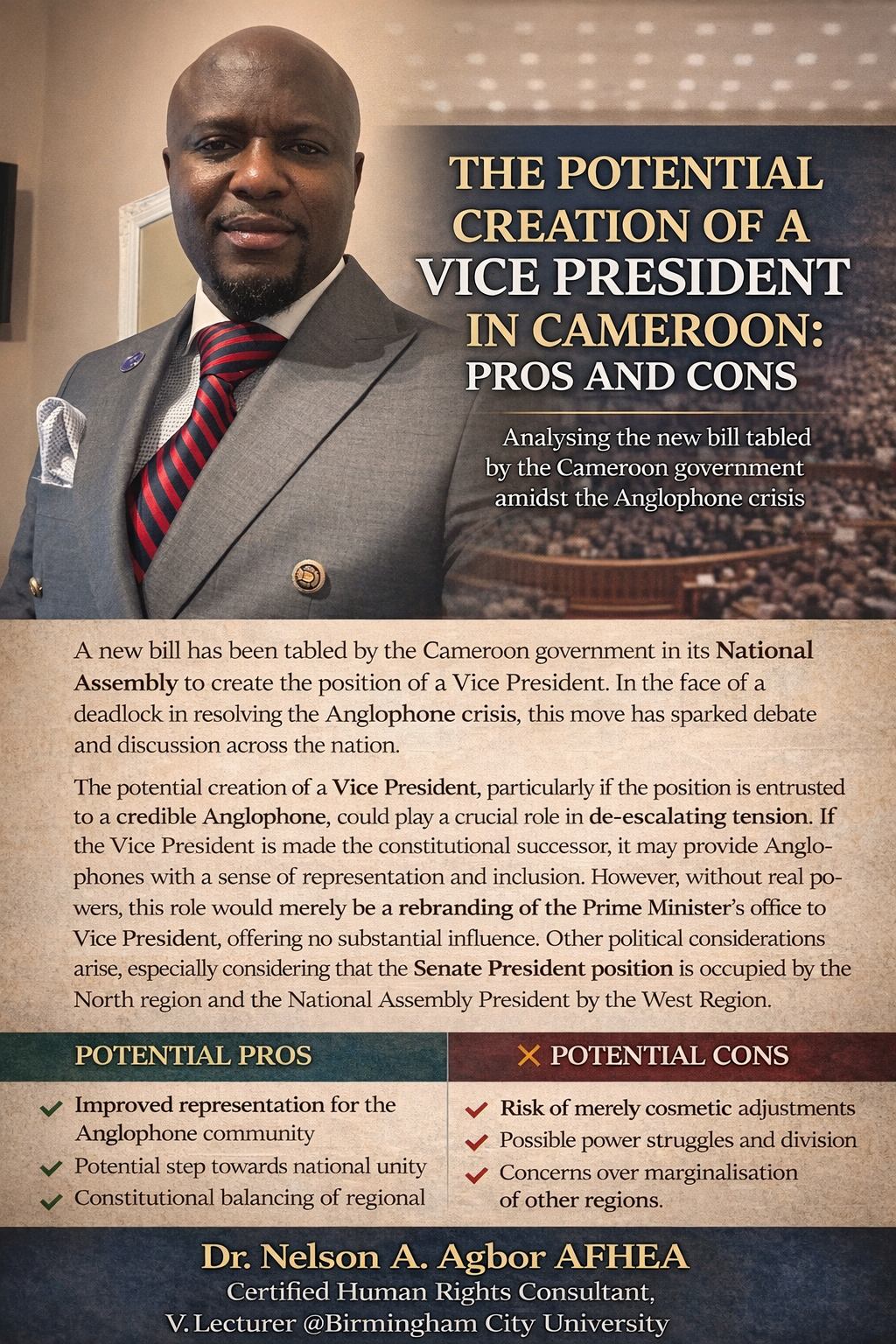
Reconfiguring Executive Power in Cameroon: The Proposed Vice Presidency and Its Implications for the Anglophone Crisis.

The tabling of a constitutional reform bill to establish the position of Vice President in Cameroon’s National Assembly signifies a potentially important institutional change within the country’s semi-presidential system. Although the details of the bill are still being debated in parliament, early signs suggest it could be part

Read More...

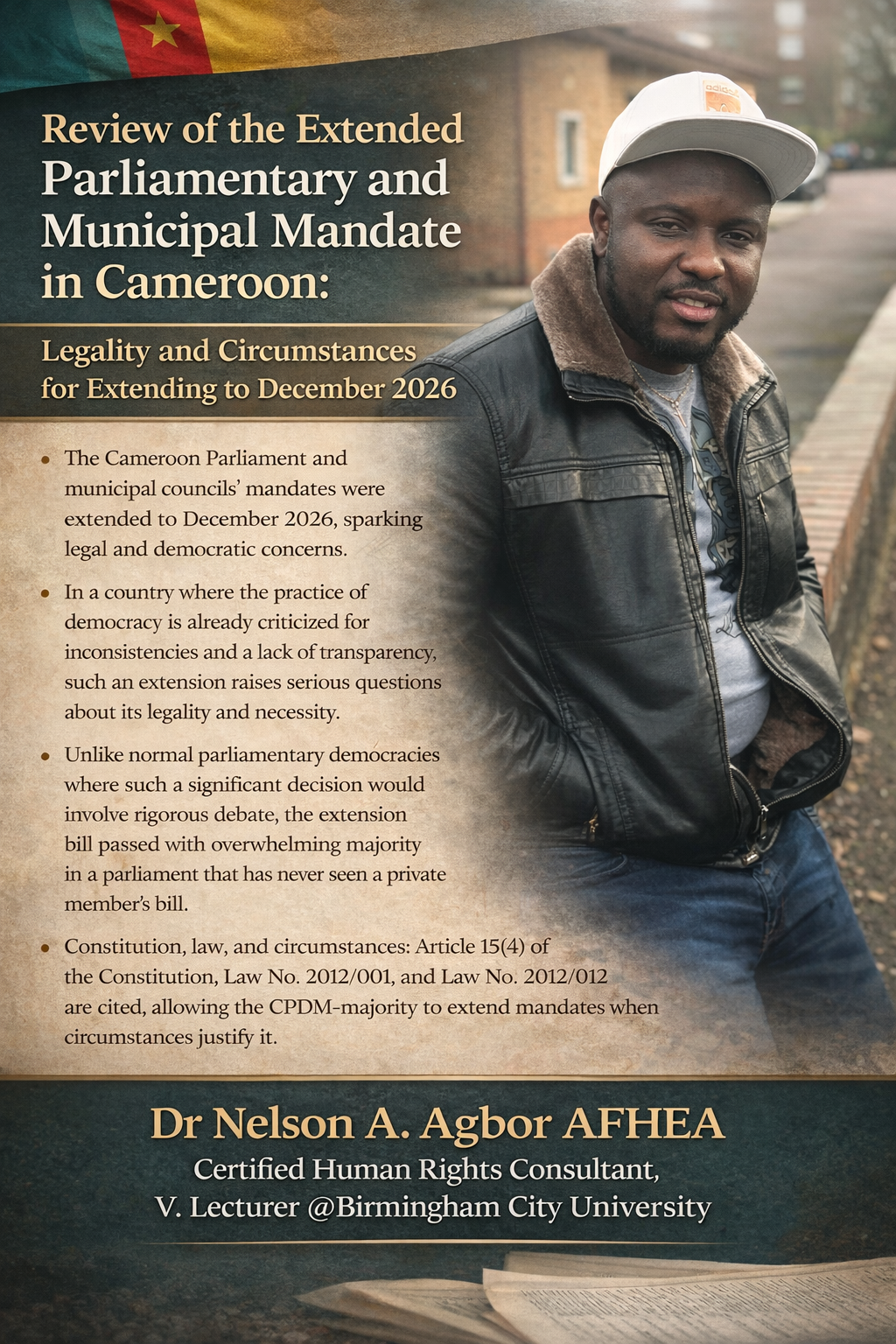
The Extension of Parliamentary and Municipal Mandates in Cameroon to December 2026: Legality, Context, and Democratic Implications.

The proposed extension of parliamentary and municipal mandates in Cameroon to December 2026 should be viewed within a broader pattern of electoral delays and constitutional manoeuvring that have increasingly shaped the country’s political path. Originally, legislative and municipal elections scheduled for 2025 were postponed through a series of

Read More...

About Me

Legal Scholar & Human Rights Advocate

Dr Nelson A. Agbor

Visiting Lecturer in Law exploring the intersection of human rights, constitutional governance, and international law. Passionate about accessible legal education and meaningful scholarship.