
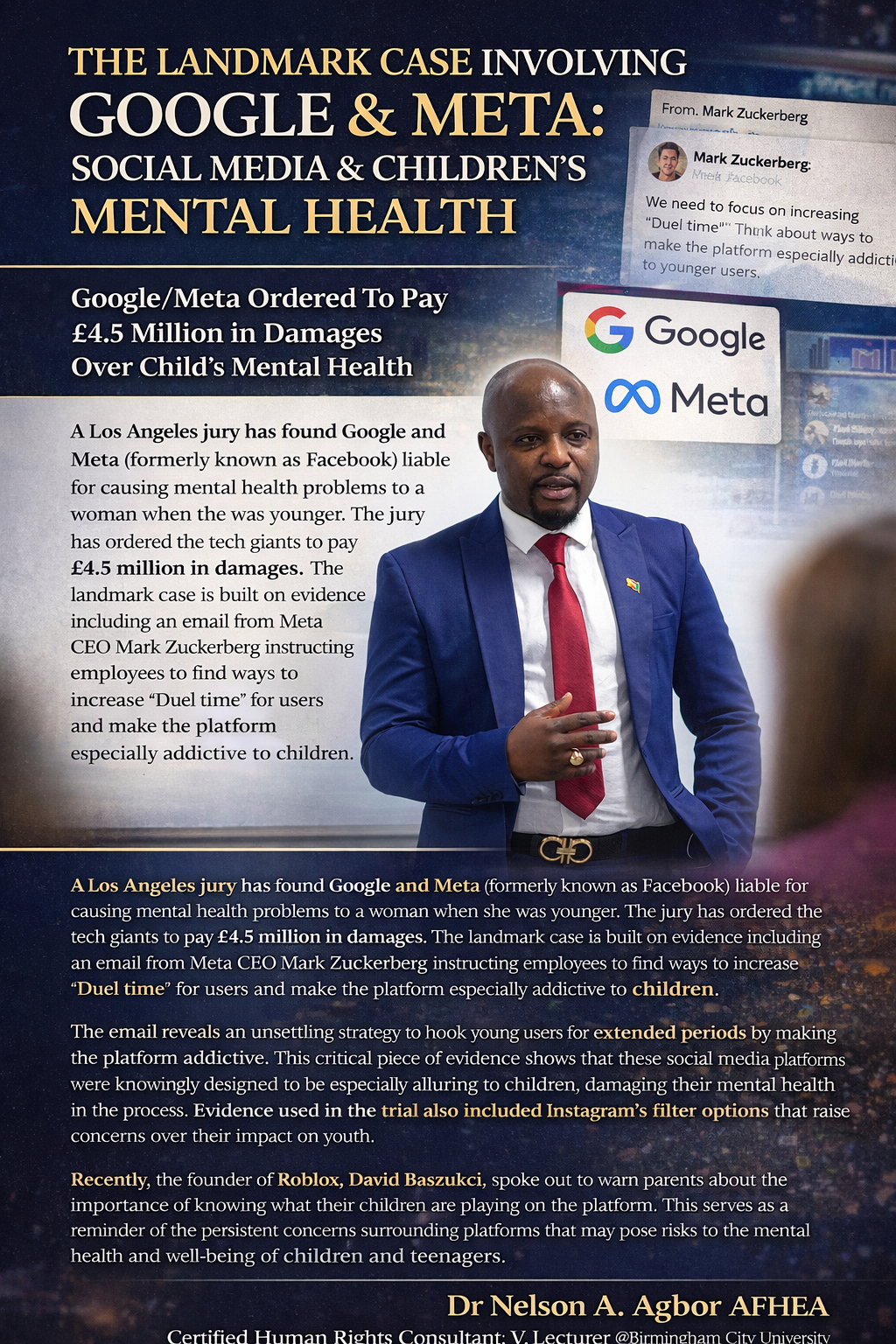
The landmark case of K.G.M. v. Meta et al. marks a key turning point in holding technology companies legally responsible for the mental health effects of their platforms. Decided in March 2026 by a Los Angeles jury, the case found Meta Platforms and Google liable for creating addictive products that caused serious psychological harm to a young woman who had used their platforms since childhood. The jury determined that these platforms were a “substantial factor” in causing depression, body dysmorphia, and other mental health issues, awarding millions in damages and primarily blaming Meta. This case is widely seen as the first successful effort to hold social media companies accountable for user harm through product liability, signifying a legal shift similar to past litigation against the tobacco industry.
Central to the plaintiff’s argument was the claim that these platforms were deliberately designed to maximise user engagement through psychologically manipulative features. Evidence presented during the trial included internal communications and testimony suggesting that executives were aware of the addictive nature of their products but failed to address the associated risks. Mark Zuckerberg, who testified in court, faced scrutiny over internal decision-making processes and the prioritisation of user engagement over safety. Although specific internal emails, such as those allegedly encouraging increased “dwell time,” remain part of the broader public debate rather than fully verified court findings, the trial nonetheless highlighted features such as infinite scrolling, autoplay videos, and algorithmic content delivery as mechanisms that extend usage and reinforce compulsive behaviour.
An additional aspect of the case concerned the role of platform aesthetics and tools, especially those linked to Instagram. The plaintiff argued that filters and image-enhancing technologies contributed to body image concerns and social comparison, worsening mental health issues. This aligns with broader academic research on “problematic social media use,” which identifies visual manipulation and curated content as key factors in anxiety and self-esteem problems among adolescents. The court’s openness to considering design elements as contributing factors in harm signals a shift in legal reasoning, extending beyond traditional content moderation to encompass platform architecture itself.
The significance of this case lies not only in its outcome but also in its wider implications for regulation. By establishing that social media companies can be held responsible for design choices, the verdict challenges longstanding legal protections, such as Section 230 in the United States. It opens the door to thousands of similar claims. Policymakers and advocates have already cited the case as evidence for stronger regulatory frameworks, including age verification, limits on algorithmic targeting, and enhanced parental controls. The comparison to “Big Tobacco” litigation highlights the potential for systemic change, where industries that knowingly produce harmful products may be compelled to adopt stricter safety standards and transparency measures.
Contemporary developments in the broader digital ecosystem further emphasise the need for such regulation. For instance, the founder of Roblox Corporation, David Baszucki, has publicly stressed parents’ responsibility to understand what their children are engaging with on the platform. This warning reflects a growing awareness within the technology industry of the potential risks linked to immersive, highly engaging digital environments. Although Roblox differs from traditional social media platforms, its interactive and user-generated content model similarly raises concerns about exposure, addiction, and psychological effects among young users.
In conclusion, the verdict in K.G.M. v. Meta et al. marks a significant moment in the regulation of digital platforms, signalling a shift towards greater corporate accountability for user well-being. The case shows that platform design, rather than just content, can be subject to legal scrutiny when it causes harm. It also highlights the urgent need for comprehensive regulatory frameworks to protect children from addictive digital environments. As courts and policymakers respond to this evolving landscape, the case is likely to serve as a key precedent shaping the future relationship between technology, law, and public health.
Dr Nelson A. Agbor AFHEA
Certified Human Rights Consultant
V. Lecturer @Birmingham City University.




