The International Court of Justice’s 19 November 2026 judgment in The Gambia v. Myanmar marks a significant moment in the legal struggle against genocide. The Court found Myanmar responsible for genocide against the Rohingya during the 2017 clearance operations in northern Rakhine State. It also found breaches of obligations to prevent and punish genocide and preserve evidence. This was a determination of state responsibility, rather than a criminal conviction: the ICJ adjudicates disputes between states and does not convict individuals. Nevertheless, the judgment carries profound significance for survivors and international accountability.
Its broader importance lies in the questions it reopens. Who receives protection under the international definition of genocide? Why do some campaigns of collective destruction attract sustained legal attention while others remain peripheral? Read alongside Rwanda, Cameroon and Sudan, the judgment exposes a troubling distance between recognising atrocities and preventing them. This perspective argues for two complementary responses: carefully expanding genocide’s protected categories and enforcing existing obligations without waiting for a final judicial declaration.
Rwanda remains an essential reference point. On 2 September 1998, the International Criminal Tribunal for Rwanda convicted Jean-Paul Akayesu of genocide and crimes against humanity, delivering the first international conviction for genocide. Its recognition that rape and sexual violence could constitute genocidal acts transformed understanding of how groups are destroyed. Genocide could operate through attacks on bodies, reproductive life, and collective survival, as well as through mass executions.
The enduring lesson is that legal development requires attention to victims’ experiences. Sexual violence had not suddenly become destructive in 1998; international adjudication had become more capable of recognising its destructive function. Rwanda therefore challenges any assumption that fidelity to the Genocide Convention requires interpretative immobility. Its legacy also reveals the limitations of retrospective justice. A conviction can establish responsibility and challenge denial, but it cannot restore those whose protection failed.
Myanmar belongs within this developing architecture, although its institutional position differs from Rwanda’s. Akayesu concerned individual criminal liability before a criminal tribunal; Myanmar concerns the international responsibility of a state. Another relevant comparison is the ICJ’s 2007 Bosnia judgment, which found Serbia responsible for not preventing genocide at Srebrenica and not cooperating fully with the relevant criminal tribunal. The Myanmar finding extends the practical significance of state responsibility by directly addressing a state’s commission of genocide.
The Gambia’s role is equally consequential. Its intervention demonstrates the possibility of pursuing a collective treaty interest beyond geographical proximity or direct national injury. The Court’s recognition that The Gambia could seek remedies helping the Rohingya gives that principle practical substance. For states confronting atrocities elsewhere, this provides a model of legal initiative, subject to jurisdictional requirements. Sovereignty does not drop responsibility, and distance need not extinguish solidarity.
Yet this achievement works within a restrictive definition. Article II of the 1948 Genocide Convention protects national, ethnic, racial, and religious groups. It requires an intention to destroy such a group, wholly or partly, through specified acts: killing, serious bodily or mental harm, destructive living conditions, birth prevention, or forcible transfer of children. Political groups are excluded as independent categories. Linguistic communities likewise receive no express, freestanding protection, although communities may qualify under an existing protected category.
These boundaries matter because collective identities rarely fit neatly into separate compartments. Language, territory, political affiliation, and ethnicity often overlap. A population may be targeted through accusations of disloyalty that simultaneously racialise or ethnicise its members. Legal analysis must examine those intersections rather than accept perpetrators’ descriptions. Nevertheless, where destruction targets a genuinely excluded category, interpretation alone cannot legitimately rewrite the Convention.
Myanmar also contributes to the debate over intent. The Court kept the requirement that genocidal intent must be the only reasonable inference where it is shown circumstantially. Crucially, it explained that genocidal intent may coexist with other intentions: a military or political aim does not necessarily exclude an intention to destroy a protected group. The evidence must be assessed together. This approach challenges the assumption that invoking counterinsurgency automatically supplies an innocent alternative explanation for destructive conduct.
The judgment so strengthens the application of existing law without removing its categorical limits. A demanding evidential threshold remains necessary for a finding of such gravity. However, courts should distinguish evidential rigour from an expectation that perpetrators openly announce their purpose. Context, selective targeting, and the relationship between different forms of violence can illuminate intent. The challenge is to preserve precision while ensuring that sophistication, secrecy, or mixed goals do not become shields against responsibility.
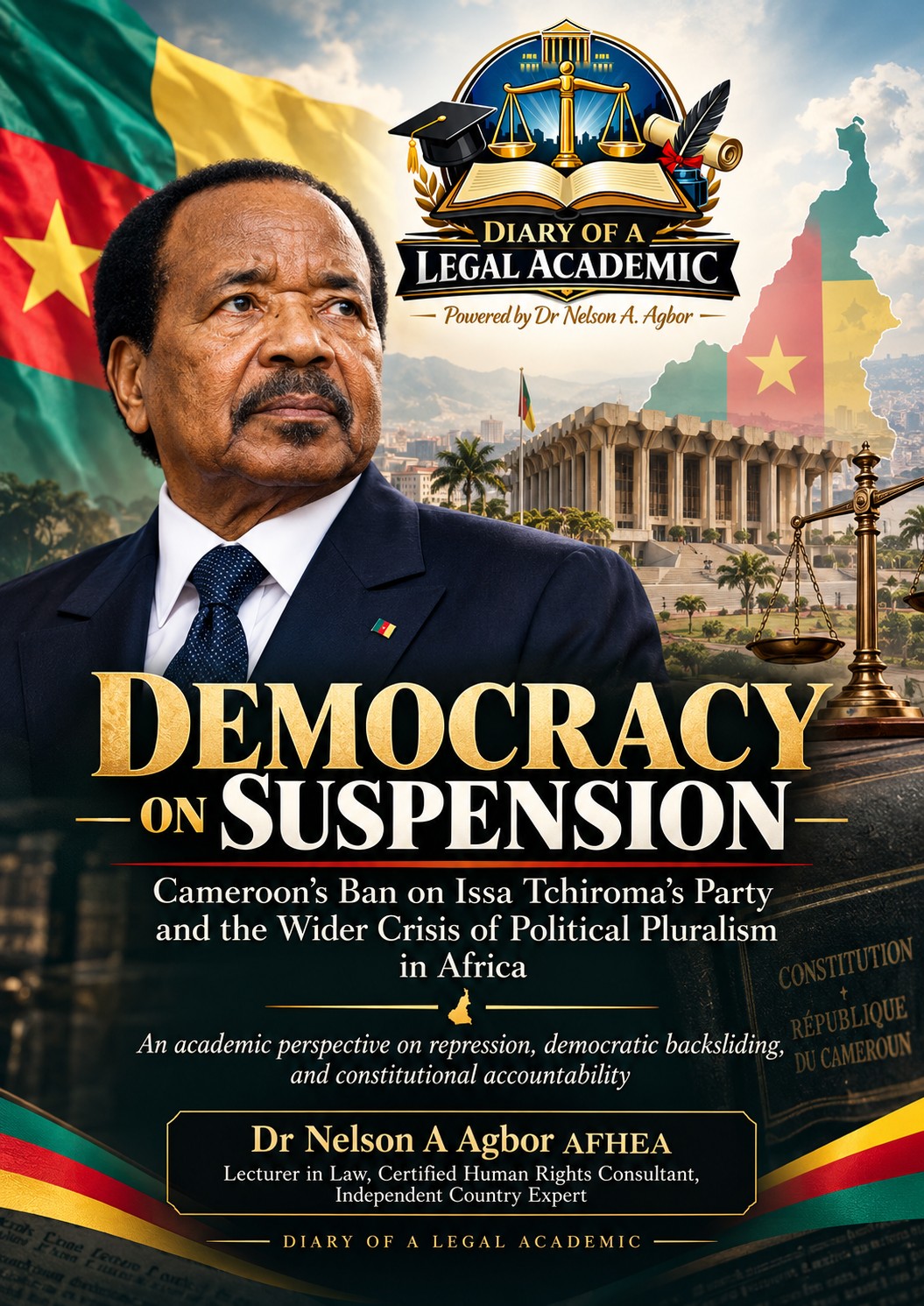
Cameroon’s Anglophone conflict makes these concerns particularly urgent. Amnesty International and Human Rights Watch have documented unlawful killings, sexual violence, abductions and property destruction involving state forces, armed separatists, and other actors. Attacks on students, teachers and schools have compounded civilian suffering. These patterns demand differentiated investigation; showing abuses by several parties does not prove that their conduct, purposes, or responsibility are identical.
It would be legally unsound to declare every atrocity in Cameroon genocidal without establishing the relevant acts, protected group, and specific intent. Equally, it would be unsound to assume that Anglophones necessarily fall outside existing protection merely because language is central to their identity. Their qualification under protected categories requires careful factual and legal analysis. The argument for expansion addresses the remaining gap: communities should not lose protection against intentional collective destruction because their identity is principally linguistic or political.
A revised definition should therefore expressly include linguistic and political groups, with safeguards against arbitrary classification. Protection should extend to groups defined by enduring social relationships or by perpetrators’ systematic construction of a collective enemy. The central requirement should remain an intention to destroy the group, wholly or substantially in part. This would preserve genocide’s distinctive character while correcting an exclusion difficult to justify from the standpoint of equal human dignity.
Sudan shows why reform must go with enforcement. In February 2026, the UN Fact-Finding Mission reported that atrocities committed by the Rapid Support Forces around El-Fasherdisplayed hallmarks of genocide. Its findings addressed destructive conditions, killings, sexual violence and targeting of non-Arab communities, particularly the Zaghawa and Fur. These are investigative findings rather than a final criminal judgment, but they provide a grave basis for protective action.
Sudan therefore cannot simply be presented as a crisis excluded by genocide’s definition. Ethnically targeted destruction may already satisfy the existing categories where all elements are proven. Expansion could capture more campaigns against politically defined populations, but it would not solve failures to enforce current law. Indeed, Sudan exposes a more disturbing possibility: international institutions may recognise signs of genocide while states still do not organise an adequate response.
The language of abandonment captures survivors’ frustration but requires precision. Rights organisations have continued documenting Cameroon’s abuses, while UN investigators have reported extensively on Sudan. Human Rights Watch also reported Belgian proceedings concerning alleged crimes linked to Cameroon’s separatist conflict in March 2026. Total silence is therefore an inaccurate description. The stronger criticism concerns the gulf between documentation and effective protection: reports and investigations have not secured the safety civilians need.
Responsibility for that gulf is unequal. Civil society organisations cannot impose sanctions, compel cooperation, or guarantee humanitarian access. States and intergovernmental institutions have different powers and bear distinct duties. Nevertheless, rights groups can sustain advocacy, support locally led documentation, and resist attention cycles that allow prolonged crises to disappear. International concern should be assessed through continuity, resources, and practical protection, rather than the number of statements issued.
Reform must also avoid making genocide the sole measure of atrocity. War crimes and crimes against humanity remain grave offences even when genocidal intent cannot be proved. Investigations, humanitarian help and civilian protection should continue through every available legal route. Treaty reform would require negotiation and corresponding institutional changes; it could not retrospectively create criminal liability. Its purpose should be to close future protection gaps while strengthening present responses.
Myanmar’s judgment offers recognition, legal authority and a foundation for remedies. Its lasting value, however, will depend on what follows beyond the courtroom. Rwanda showed that international law could recognise previously neglected methods of group destruction. Cameroon challenges whom that law protects, while Sudan exposes the consequences of failing to act where existing protection may already apply. A credible commitment to “never again” requires both a more inclusive definition and political action that reaches endangered communities before their destruction becomes an established judicial fact.
Dr Nelson A. Agbor, AFHEA, Law Lecturer @Universty of Northampton, Certified Human Rights Consultant and Independent Country Expert