
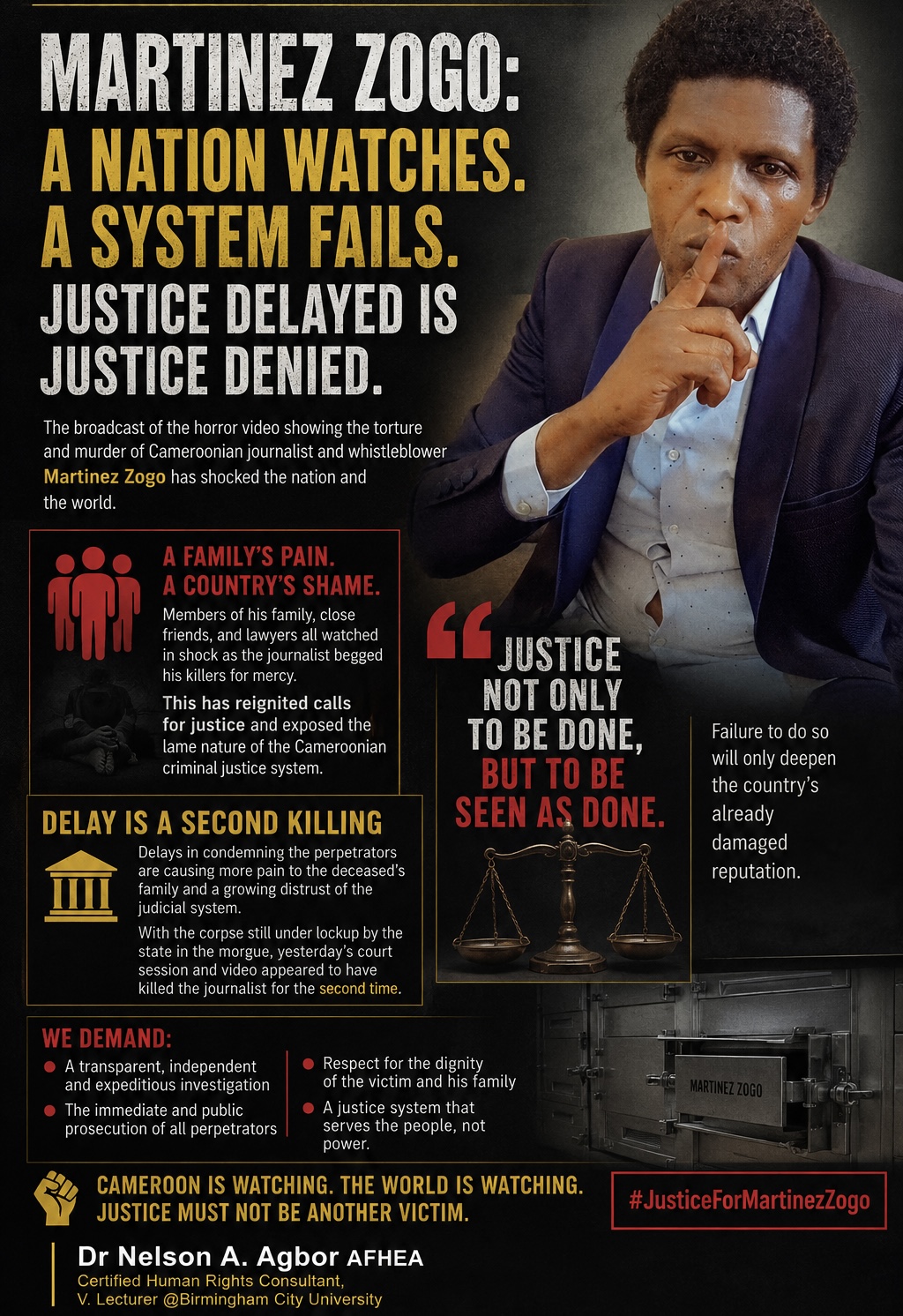
The broadcast of the graphic video depicting the torture and murder of Cameroonian journalist and whistleblower Martinez Zogo has reopened deep wounds in Cameroonian society and intensified longstanding concerns about impunity, accountability, and the effectiveness of the country’s criminal justice system. The disturbing footage, reportedly viewed by members of Zogo’s family, close friends, legal representatives, and the wider public, has transformed an already painful national tragedy into a renewed collective trauma. More than two years after his brutal killing, the video’s circulation has reignited urgent calls for justice and raised serious questions about the state’s ability and willingness to hold perpetrators accountable.
Martinez Zogo was widely known for his investigative journalism and his outspoken criticism of corruption and abuse of power. His abduction, torture, and eventual murder sent shockwaves across Cameroon and beyond, drawing condemnation from media freedom advocates, human rights organisations, and international observers. The recent emergence of video evidence of his final moments has provided a chilling reminder of the brutality he endured. The footage captures a man pleading for mercy from his captors, exposing not only the crime’s cruelty but also the profound human cost borne by his family and loved ones.
The emotional impact of the video’s broadcast cannot be overstated. For Zogo’s relatives and friends, the footage forced them to relive the circumstances of his death in the most graphic and painful imaginable way. Watching a loved one beg for his life before being murdered constitutes a form of secondary victimisation that compounds existing grief and trauma. The anguish experienced by those closest to Zogo underscores the need to handle such evidence with sensitivity, dignity, and respect for victims and their families.
Beyond the personal tragedy, the video has become a powerful symbol of the weaknesses that continue to plague the Cameroonian criminal justice system. Despite widespread public outrage and repeated assurances from authorities that justice would be served, progress in prosecuting those responsible has been slow and, in the eyes of many observers, unsatisfactory. Delays in reaching definitive conclusions, securing convictions, and providing transparent updates have fuelled growing public frustration and scepticism about the administration of justice.
The prolonged judicial process has imposed an additional burden on Zogo’s family. Every postponed hearing, procedural setback, and perceived lack of urgency serves as a painful reminder that accountability remains elusive. Justice delayed is often experienced as justice denied, particularly in cases involving grave human rights violations. The continued absence of a clear, definitive resolution has left family members trapped in a cycle of uncertainty, grief, and emotional exhaustion.
Equally troubling is the broader impact of these delays on public confidence in state institutions. The legitimacy of any criminal justice system depends not only on its capacity to punish wrongdoing but also on its ability to inspire trust among citizens. When a case of such national significance remains unresolved for an extended period, many begin to question whether the law is applied equally and whether powerful interests are shielded from scrutiny. Such perceptions can be as damaging as actual failures of justice..
The state’s continued retention of Zogo’s remains further amplifies these concerns. With his corpse still in official custody at the morgue, his family has been denied the chance to conduct a final burial and to begin a fuller process of mourning. In many African societies, burial rites carry profound cultural, spiritual, and emotional significance. The inability to lay a loved one to rest is an ongoing source of suffering. It reinforces the perception that the case remains trapped in a state of legal and political limbo.
Against this backdrop, yesterday’s court proceedings and the public release of the torture video appeared, to many observers, to kill Martinez Zogo a second time. Although his physical death occurred years ago, the vivid replay of his suffering before a national audience reopened wounds that had never fully healed. Rather than bringing closure, the events deepened collective grief and underscored the unfinished quest for justice. The spectacle of his final moments has become inseparable from the broader failure to deliver a timely and credible judicial outcome.
The Zogo case highlights a fundamental principle of the rule of law: justice must not only be done but also be seen to be done. This principle is essential because public confidence in judicial institutions depends on transparency, fairness, and visible accountability. Citizens must be able to see that investigations are thorough, prosecutions are impartial, and verdicts are based on evidence rather than political influence. Without such visible assurances, even legitimate judicial processes risk losing public credibility.
Ultimately, the handling of the Martinez Zogo case will have consequences that extend far beyond the courtroom. Cameroon already faces significant challenges in governance, human rights, press freedom, and institutional trust. Failure to deliver timely, transparent, and convincing justice in this case will further damage the country’s reputation at home and abroad. Conversely, a credible judicial resolution could demonstrate a commitment to accountability and the rule of law. For the sake of Zogo’s family, the integrity of the justice system, and the nation’s standing in the world, the imperative remains clear: justice must be delivered, and it must be delivered in a manner that is visible, credible, and beyond reproach.
Dr Nelson A. Agbor AFHEA
Certified Human Rights Consultant
V. Lecturer @Birmingham City University.




