
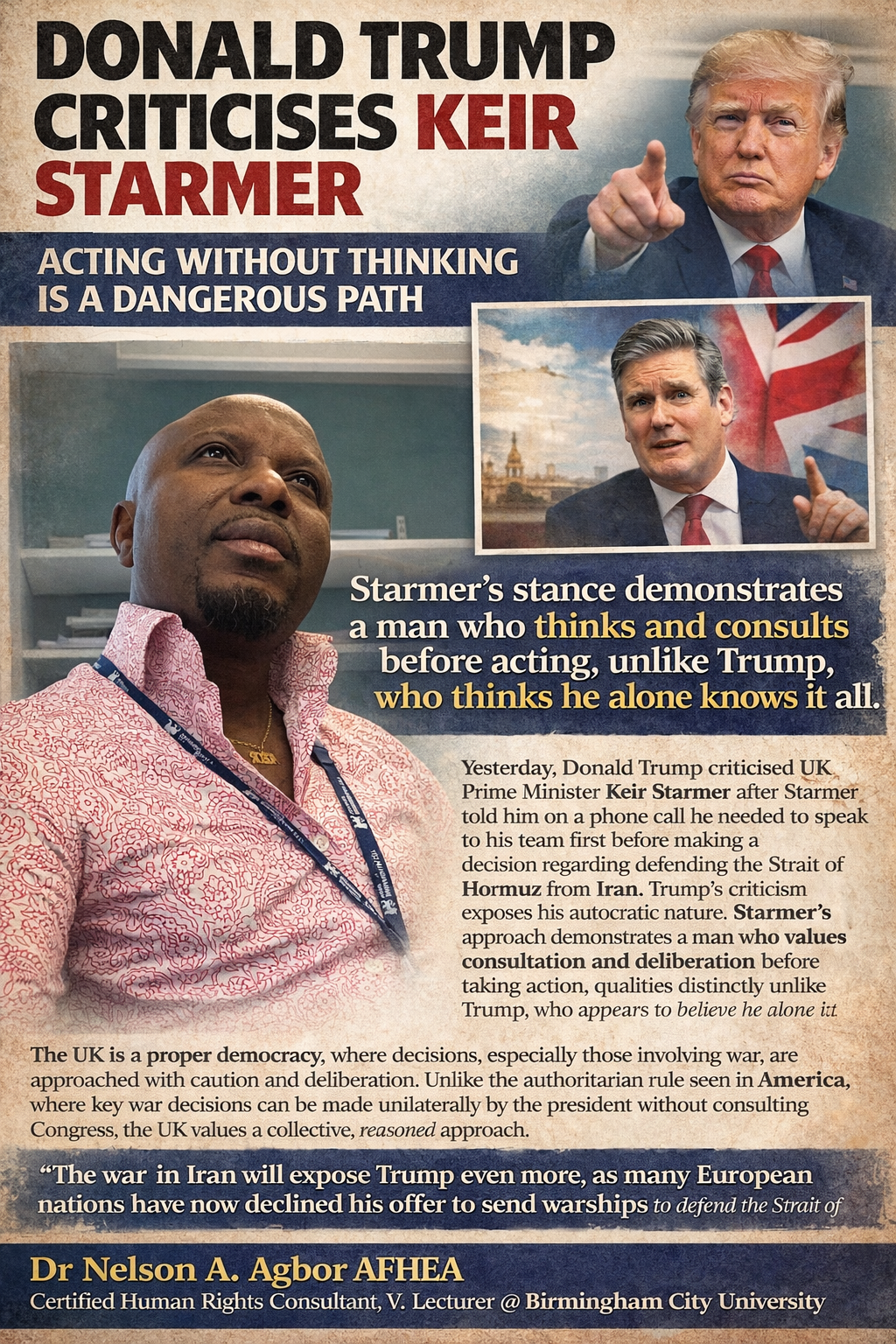
Recent remarks by the U.S. President Donald Trump, in which he criticised UK Prime Minister Keir Starmer for delaying a decision while consulting his team, offer a valuable perspective on contrasting leadership styles in modern transatlantic politics. The episode, centred on a reported phone call, has been portrayed by commentators as symbolic of larger differences in political temperament, institutional norms, and decision-making processes between the two figures.
Starmer’s reported response that he wished to consult his team before committing to a course of action closely aligns with established traditions of cabinet government in the United Kingdom. Within the Westminster system, executive authority is formally vested in the Prime Minister but exercised collectively through responsibility and discussion among ministers and advisors. From this perspective, Starmer’s stance can be seen as consistent with a governance model that emphasises procedural legitimacy, internal scrutiny, and the aggregation of expert input before decisions are made.
Conversely, Trump’s criticism seems to reflect a more individualised view of executive authority. Throughout his political career, Trump has frequently highlighted decisiveness, personal judgment, and the importance of acting quickly, sometimes with limited consultation. Leadership scholars might describe this approach as “personalist” or “centralised,” where authority is held by the leader rather than distributed through institutional structures. While this approach can project strength and clarity, it has also been criticised for potentially marginalising expertise and diminishing deliberative safeguards.
The comparison also prompts wider reflection on the differences between the UK and US political systems. The UK’s parliamentary model inherently integrates executive decision-making within a framework of legislative accountability and party discipline. In contrast, the US operates under a presidential system with a division of powers between the executive and Congress. While the U.S. Constitution grants Congress considerable authority, especially regarding war powers, scholars and policymakers continue to discuss the extent to which modern presidents act unilaterally in practice, particularly in foreign policy and military matters.
Contemporary geopolitical tensions, including those involving Iran and the strategic importance of the Strait of Hormuz, further highlight these leadership contrasts. In such contexts, the extent to which leaders consult allies, legislative bodies, and internal advisors becomes a focus of international scrutiny. Reports that some European nations have been cautious or reluctant regarding military commitments emphasise the complexity of coalition-building and the importance of multilateral consensus in modern security arrangements.
Ultimately, the exchange between Trump and Starmer highlights not just a personal disagreement but a wider divergence in governing philosophies. Starmer’s focus on consultation reflects a procedural and collective approach to leadership, whereas Trump’s critique emphasises a preference for decisive, leader-driven action. For analysts, the importance of this episode lies less in the immediate dispute than in what it reveals about persistent tensions between deliberation and decisiveness, and between institutionalism and personalism in democratic governance.
Dr Nelson A. Agbor AFHEA
Certified Human Rights Consultant
V. Lecturer @Birmingham City University.




