
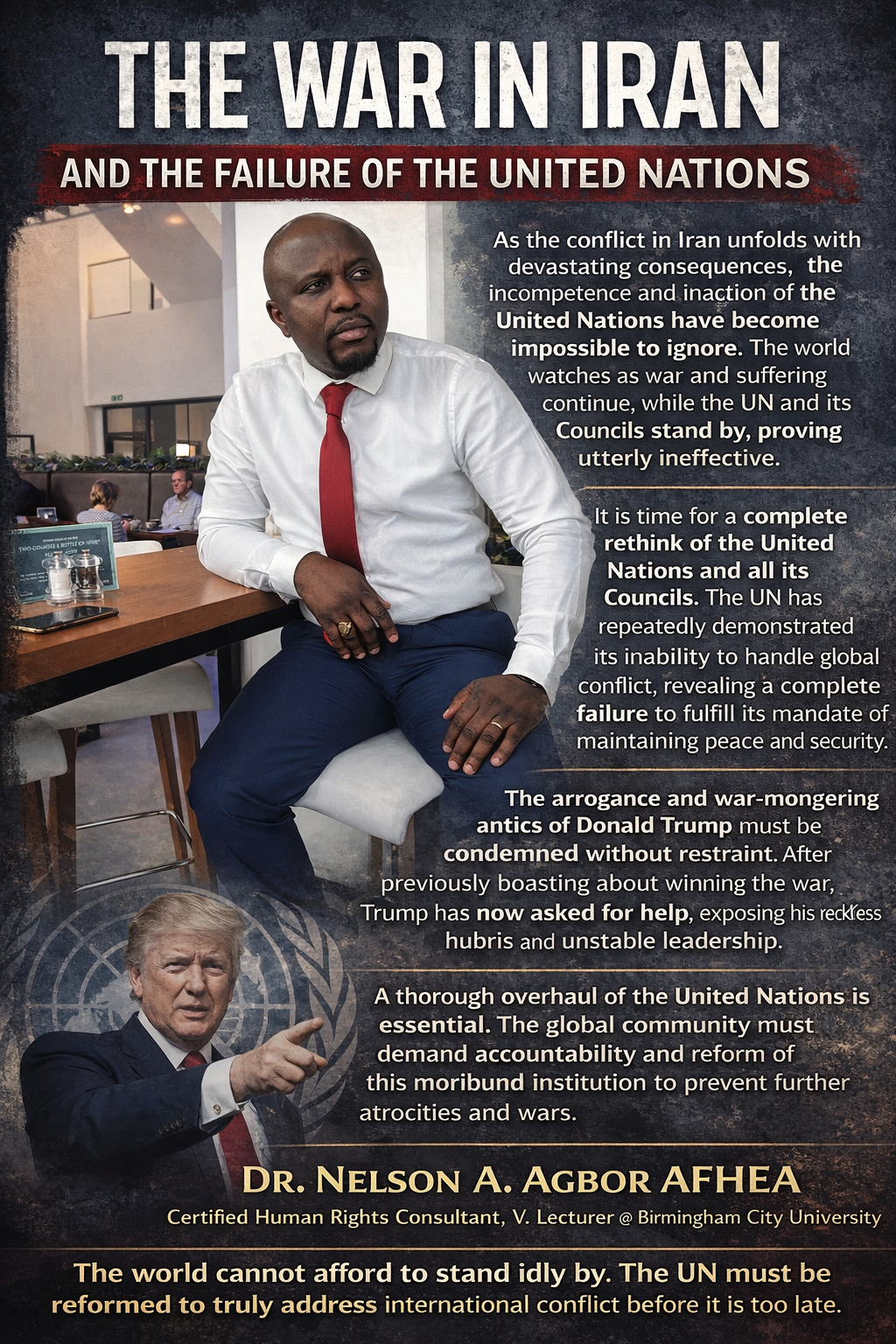
The ongoing war in Iran has become a key geopolitical crisis of the early twenty-first century, revealing fundamental weaknesses in global governance and multilateral diplomacy. As tensions have increased across the region, the international community has found it difficult to respond effectively to growing humanitarian crises, regional instability, and the risk of wider war. The evolving conflict highlights not only the fragility of Middle Eastern security frameworks but also the shortcomings of international institutions intended to prevent such crises. In particular, the role and effectiveness of the United Nations have been scrutinised anew as the world witnesses prolonged violence without decisive collective action.
The conflict has evolved through a complex interaction of military actions, political rhetoric, and shifting alliances. Military operations and retaliatory strikes have increased tensions both within Iran and among neighbouring states, raising fears of a wider regional escalation. Civilian populations suffer the most from these events, facing infrastructure damage, displacement, and economic disruption that deepen humanitarian concerns. Despite international awareness of these issues, diplomatic efforts aimed at mediating the conflict have largely stalled. This paralysis has highlighted a growing gap between the scale of modern warfare and the ability of international institutions to respond effectively.
This crisis has reignited long-standing criticisms of the United Nations’ structural design, especially of its decision-making bodies, such as the Security Council. The veto power held by permanent members often results in political deadlock, blocking unified responses even in cases of clear humanitarian urgency. In the context of the Iranian conflict, geopolitical rivalries among major powers have hampered coordinated action, reinforcing the view that the institution acts more as a platform for competing national interests than as an effective protector of global peace. Such paralysis raises serious questions about whether the institutional framework established in 1945 is still suitable for the complexities of modern warfare.
Consequently, many scholars and policymakers have started advocating for a comprehensive re-evaluation of the United Nations system. Reform proposals vary from restructuring the Security Council to limiting veto powers and increasing representation for emerging powers and developing regions. More ambitious proposals suggest a wider overhaul of UN governance, including the development of stronger enforcement mechanisms for international law and faster diplomatic and humanitarian response capabilities. Without such reforms, critics argue, the organisation risks becoming irrelevant in the face of large-scale conflicts that require swift, coordinated global action.
Simultaneously, the rhetoric and actions of national leaders have significantly worsened the situation. Donald Trump’s statements and actions have faced particular criticism in international discussions. Critics contend that confrontational language and early claims of victory have heightened tensions rather than fostered diplomatic solutions. The apparent contradiction between previous assertions that the conflict was already won and later requests for help from allies has led some observers to see these as symbols of a broader pattern of unilateralism and strategic inconsistency in modern foreign policy.
Ultimately, the war in Iran highlights a deeper crisis within the international order. The ongoing armed conflict, combined with the perceived failure of global institutions to intervene effectively, has increased calls for systemic reform. If the United Nations is to stay relevant in maintaining international peace and security, significant structural changes may be required. Without such reforms, the organisation risks becoming more symbolic than functional, leaving the world ill-prepared to face the complex wars and humanitarian crises of the current era.
Dr Nelson A. Agbor AFHEA
Certified Human Rights Consultant
V. Lecturer @Birmingham City University.




