
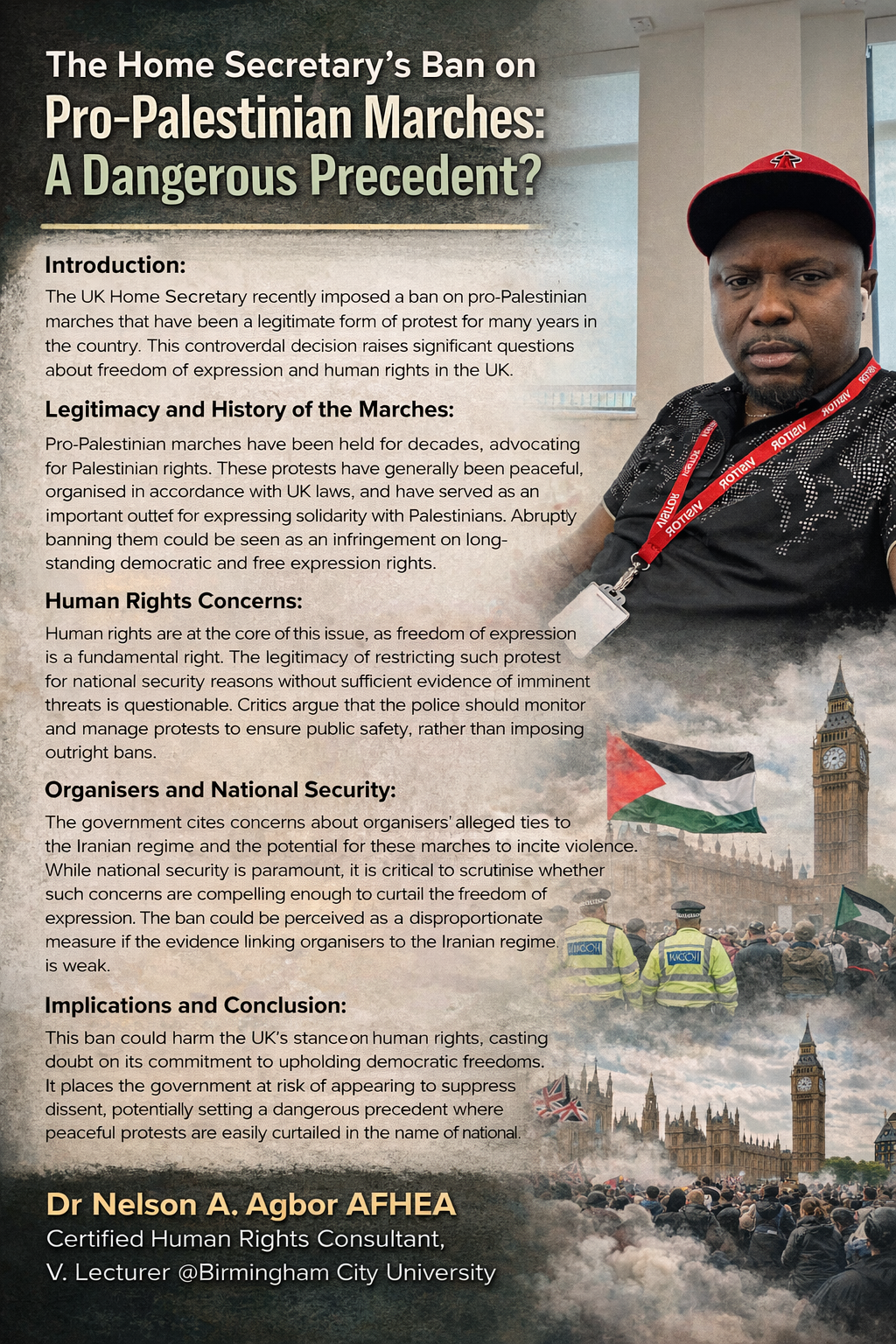
The UK Home Secretary’s decision to ban the annual Al-Quds Day march in London marks a major intervention in the country’s long-standing tradition of political protest. The march, which shows solidarity with Palestinians and opposes Israeli policies, has been held annually in London for decades, reportedly for about forty years. Originating from an international event established in Iran after the 1979 Islamic Revolution, Al-Quds Day demonstrations occur worldwide and have traditionally drawn participants advocating for Palestinian rights. Although controversial, organisers argue that the London march has generally taken place peacefully and is a legitimate form of political expression within a democratic society. The long history of the march and its role in public debate on Middle Eastern politics raise questions about whether banning it is a proportionate response to the risks identified by authorities.
From a legal and human rights perspective, the right to protest is a fundamental democratic freedom in the UK. Articles 10 and 11 of the European Convention on Human Rights, incorporated into domestic law by the Human Rights Act 1998, safeguard freedom of expression and peaceful assembly. These rights are not absolute and may be limited when public safety or the prevention of disorder is at risk. Under the Public Order Act 1986, police can request that the Home Secretary prohibit public processions if they believe serious public disorder cannot otherwise be prevented. The decision to ban the march, therefore, falls within a recognised legal framework. Nonetheless, in practice, British protest law traditionally emphasises regulation rather than outright prohibition, with the police typically imposing conditions on demonstrations rather than banning them altogether.
The government primarily justified the ban on grounds of national security and public order. The Metropolitan Police warned that the size of the march, combined with anticipated counter-protests and increased tensions over conflicts in the Middle East, posed a significant risk of serious disorder. The Home Secretary agreed with this assessment, stating that the ban was essential to prevent violence and ensure public safety. Concerns have also been raised about the organisers of the event, especially the Islamic Human Rights Commission (IHRC), which critics in government allege is closely linked to the Iranian regime. Past marches have also faced criticism for displaying symbols associated with Hezbollah, a group banned in the UK as a terrorist organisation. These factors have contributed to framing the march not just as a protest, but as a potential platform for extremist messaging or foreign influence.
Despite these concerns, the sufficiency of national-security justifications remains subject to debate. UK protest law already provides comprehensive mechanisms for policing demonstrations, including the power to impose conditions, restrict routes, and arrest individuals who engage in hate speech or support banned organisations. In this context, critics argue that a full ban on the procession may be disproportionate, especially when authorities acknowledge that a static protest cannot legally be banned and will still proceed. If police are able to regulate demonstrations routinely, as they do for hundreds of protests each year, then opting to prohibit a march rather than enforce existing laws could appear inconsistent with the UK’s traditional approach to managing political dissent.
The broader implications of the decision also deserve careful thought. Internationally, the United Kingdom often portrays itself as a defender of civil liberties and democratic freedoms. Restrictions on protest, even when legally justified, may therefore draw attention to the country’s commitment to human rights. At home, using extraordinary powers to ban a march could set a precedent that future governments might use against other controversial protests. If protest bans become more frequent, the balance between national security and freedom of expression could shift, gradually reducing the space for political dissent. For these reasons, while the government’s security concerns are understandable in a volatile geopolitical context, maintaining public trust in democratic institutions requires that such restrictions remain rare, well justified, and subject to ongoing review.
Dr Nelson A. Agbor AFHEA
Certified Human Rights Consultant
V. Lecturer @Birmingham City University.




