
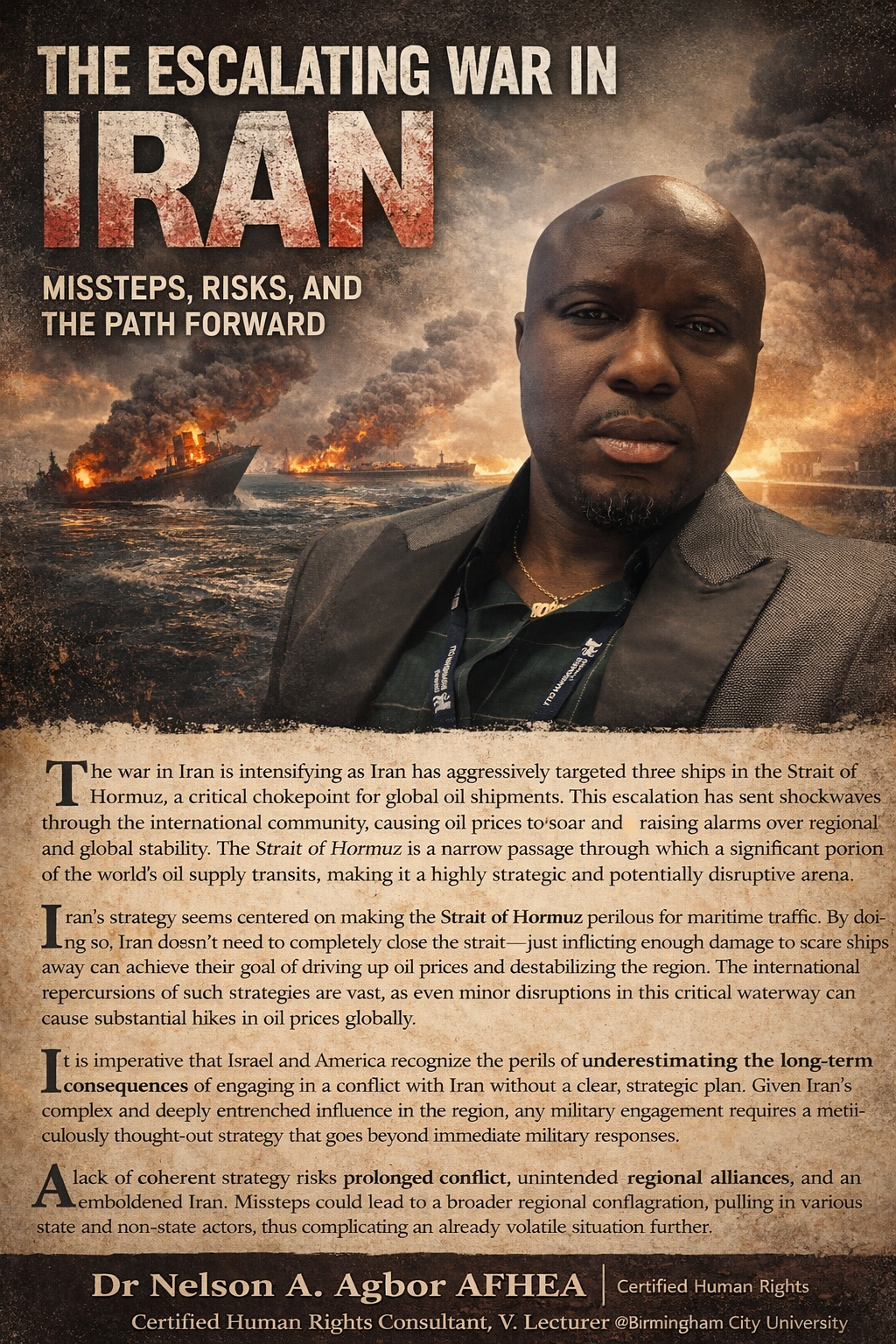
The escalation of hostilities involving Iran has significantly changed the strategic landscape of the Middle East and increased global economic and security concerns. What started as a few limited confrontations and proxy clashes has gradually developed into a more direct and dangerous conflict involving Iran, Israel, the United States and other European and Middle Eastern countries. Recent attacks on commercial ships in the Strait of Hormuz, one of the world’s most crucial maritime chokepoints, show how the conflict is spilling over beyond traditional military targets to impact the global economic system itself. As approximately one-fifth of the world’s oil supplies pass through this narrow waterway, even minor disruptions can cause immediate fluctuations in global energy markets. The reported strikes on three ships demonstrate how Iran can exert strategic influence without necessarily seeking a conventional battlefield victory.
Iran’s strategy aligns with its long-standing doctrine of asymmetric warfare. Rather than engaging in direct, large-scale battles with technologically superior militaries, Tehran has historically relied on indirect pressure, regional proxies, cyber operations, and maritime disruption. The Strait of Hormuz is especially suited to this approach. Iran does not need to completely close the shipping route to achieve its strategic aims; it only needs to create enough uncertainty and risk to increase insurance costs, deter shipping companies, and trigger spikes in global oil prices. Even sporadic attacks or credible threats can therefore cause significant economic impacts. By targeting commercial vessels rather than military ships, Iran can influence the international system while maintaining a degree of plausible deniability and strategic ambiguity.ity.
From the perspective of Israel and the United States, the initial decision to confront Iranian military capabilities appears to have been driven by immediate security concerns, including perceived threats from Iranian regional activities and weapons programmes. However, critics contend that the intervention lacked a clearly articulated long-term strategy for managing escalation. Military planners may have focused on degrading Iran’s capabilities without fully considering Tehran’s ability to retaliate across multiple domains, such as maritime, economic, cyber, and through allied non-state actors across the Middle East. The result is a widening conflict environment where tactical successes may not lead to strategic stability.
One of the greatest risks involves the potential for long-term regional destabilisation. Iran has a widespread network of allied militias and political allies across Iraq, Syria, Lebanon, and Yemen, many of which have demonstrated the ability to disrupt shipping routes, launch missile attacks, and target U.S. or allied interests. The increase in maritime attacks in the Strait of Hormuz could therefore be part of a broader cycle of escalation. Furthermore, ongoing disruptions to global energy supplies could trigger economic shocks that extend far beyond the Middle East, impacting inflation, trade flows, and political stability in energy-dependent countries worldwide.
Ultimately, the current trajectory of the conflict raises serious questions about strategic foresight and crisis management. While military action may achieve short-term tactical objectives, the absence of a clearly defined end state risks entrenching a prolonged confrontation with unpredictable global consequences. Iran’s ability to exploit economic vulnerabilities, particularly its dependence on secure maritime oil transport, demonstrates that the conflict cannot be understood solely in military terms. Unless diplomatic avenues or broader strategic plans are developed, the war risks evolving into a sustained contest of attrition that could reshape regional security and global energy markets for years to come.
Dr Nelson Agbor AFHEA
Certified Human Rights Consultant
V. Lecturer @Birmingham City University




