
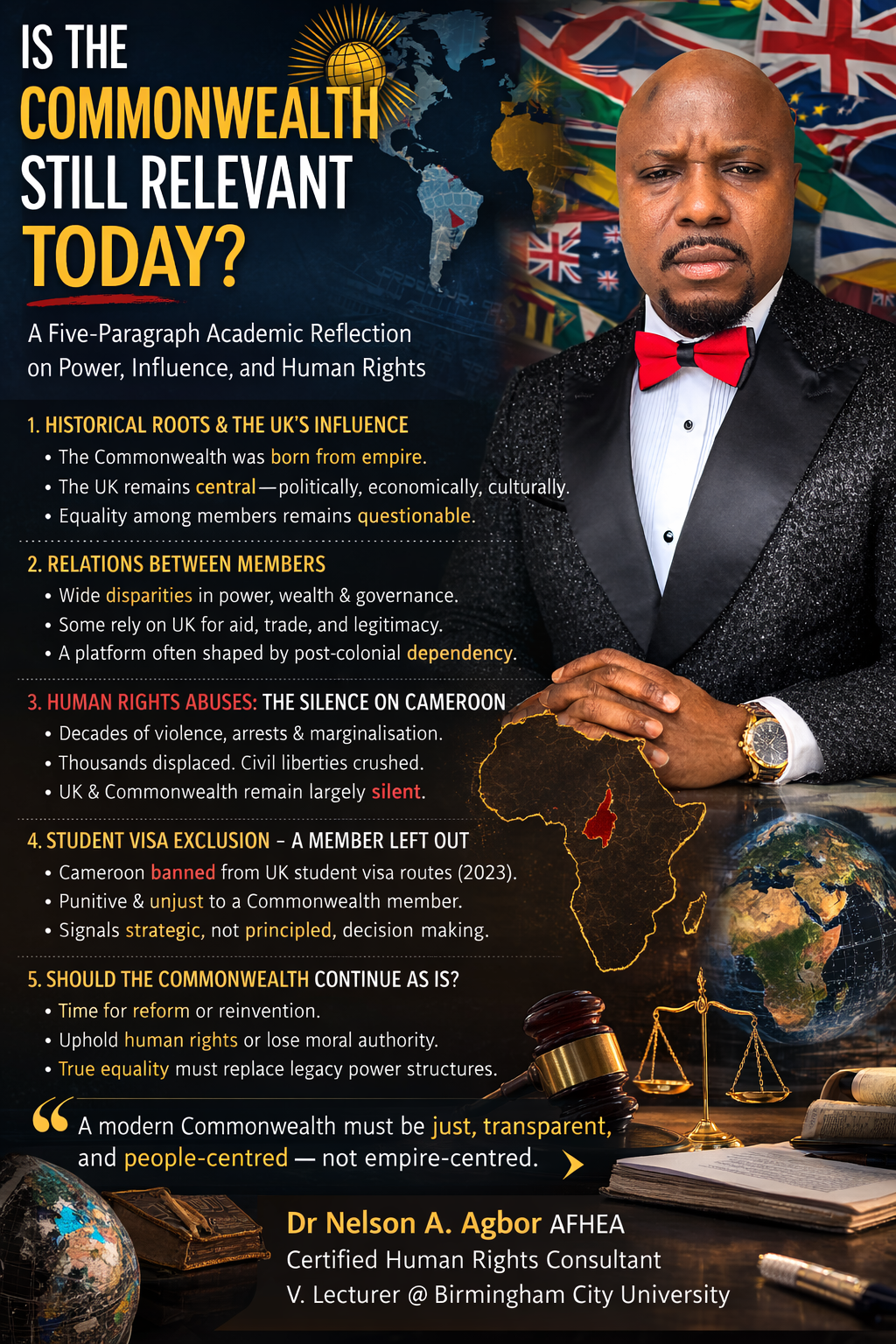
Commonwealth Day offers an opportunity to consider the purpose and ongoing relevance of the Commonwealth of Nations within the modern international framework. Founded as a voluntary association of nations, most of which were formerly part of the British Empire, the Commonwealth asserts that it promotes democracy, development, and human rights among its 56 member states. However, in the twenty-first century, questions increasingly emerge about whether the organisation effectively advances these objectives or merely maintains symbolic ties to Britain’s imperial history. As geopolitical alliances change and global governance structures diversify, the Commonwealth’s real influence and the fairness of its relationships among members merit fresh examination.
One of the main tensions within the Commonwealth concerns the relationship between the United Kingdom and other member states. Although the organisation officially operates on principles of equality and voluntary cooperation, the United Kingdom continues to hold disproportionate symbolic and political influence. London hosts the Commonwealth Secretariat, the British monarch remains the symbolic head of the association, and many diplomatic, educational, and economic initiatives within the Commonwealth are closely linked to British institutions. Critics argue that this setup maintains a subtle hierarchy that reflects colonial relationships, prompting questions about whether the organisation genuinely fosters a partnership among equals or preserves a legacy framework centred on the United Kingdom.
Further challenges emerge when examining the Commonwealth’s commitment to human rights. The organisation’s charter explicitly emphasises democracy, the rule of law, and respect for human rights, yet enforcement mechanisms remain weak. Ongoing human rights concerns in certain member states highlight this gap between principle and practice. Cameroon, for example, has faced persistent allegations of abuses related to the conflict in its Anglophone regions, including reports of violence against civilians and restrictions on political freedoms. Despite these widely reported concerns, responses from the Commonwealth, particularly from the United Kingdom, have often been perceived as muted. Such silence raises difficult questions about whether political considerations outweigh the organisation’s stated commitment to defending human rights.e organisation’s stated commitment to defending human rights.
Recent immigration policy decisions in the United Kingdom further complicate the narrative of Commonwealth solidarity. Reports that students from Cameroon have faced exclusion or increased restrictions within the UK student visa system seem to contradict longstanding rhetoric about educational exchange and opportunity among Commonwealth nations. Historically, the Commonwealth has promoted educational mobility as a key aspect of cooperation, with scholarships and university partnerships acting as visible symbols of shared ties. When policies appear to limit opportunities for citizens of member states, particularly those already experiencing political instability, the credibility of the Commonwealth’s commitment to mutual support comes into question.
The issues mentioned above encourage a wider reassessment of whether the Commonwealth still holds a meaningful purpose in its current form. If the organisation cannot effectively address democratic backsliding, human rights abuses, or unequal treatment among its members, its legitimacy may face increased doubt. Reform, whether through stronger accountability, more balanced leadership, or clearer policy cohesion among members, might be essential if the Commonwealth is to remain relevant. Otherwise, Commonwealth Day may become not only a celebration of historical ties but also a moment to consider whether this post-imperial institution continues to meet the needs and values of its diverse membership.
Dr Nelson A. Agbor AFHEA
Certified Human Rights Consultant
V. Lecturer @Birmingham City University.




