
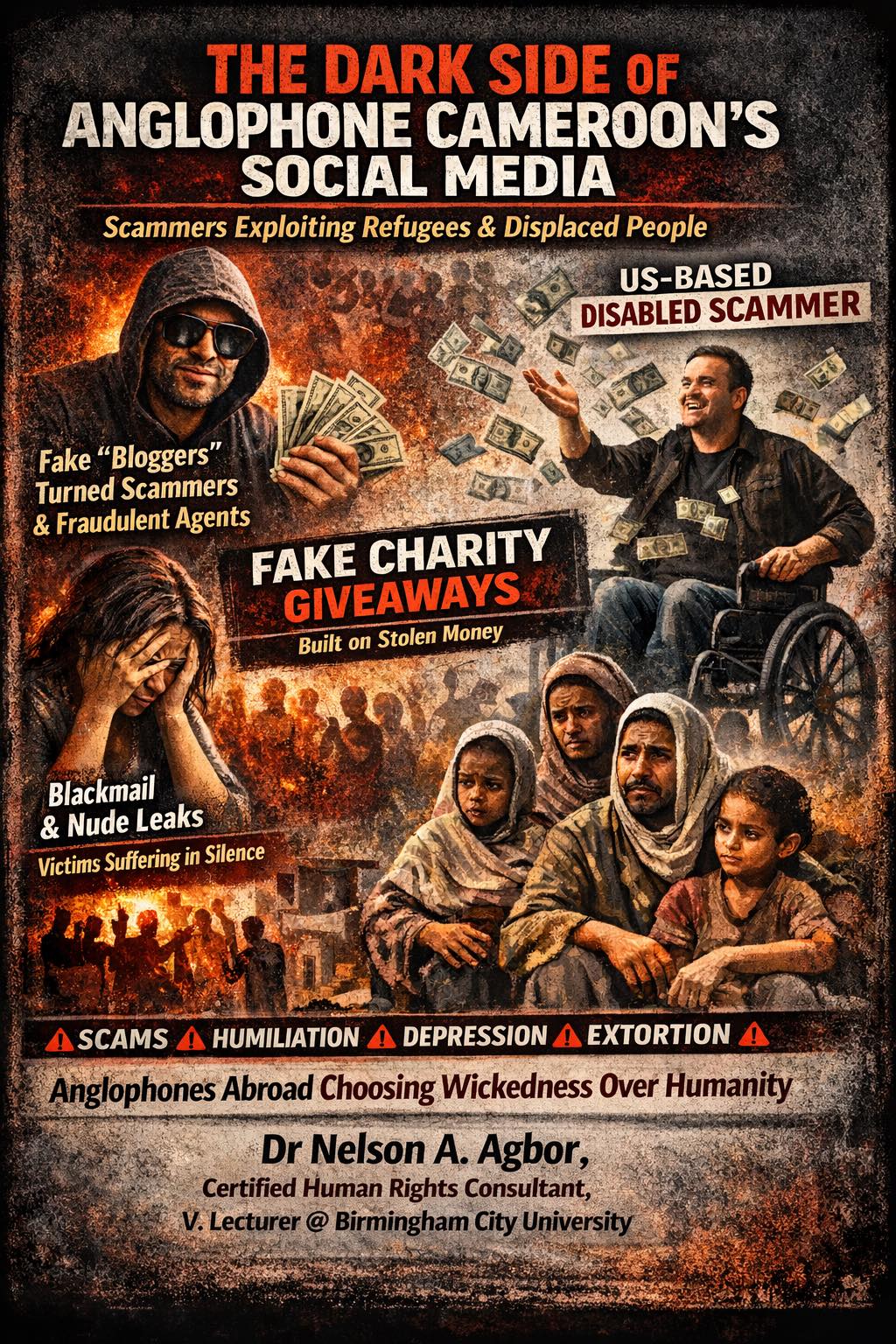
Cameroon’s social media space has increasingly evolved into a troubling arena where vulnerability is exploited for profit, particularly amid the prolonged humanitarian crisis affecting Anglophone regions. What should serve as a platform for information sharing, advocacy, and community support has, in many instances, degenerated into a marketplace of deception. A disturbing number of self-styled “bloggers” have reinvented themselves as informal travel agents and immigration consultants, preying on the desperation of refugees and internally displaced persons seeking safety and stability. These individuals promise relocation opportunities, asylum assistance, or visa facilitation, only to disappear after collecting exorbitant fees from people who can least afford to lose such resources.
Their brazen display of ill-got wealth compounds the moral bankruptcy of these actors. After scamming vulnerable victims, many of whom have fled violence and instability, they return to social media to stage so-called “charity giveaways.” These spectacles are carefully curated performances designed to sanitise their reputations and attract admiration from unsuspecting followers. The applause they receive from gullible fans reflects a deeper crisis of accountability within digital communities, where ostentatious displays of generosity often mask systemic exploitation. In reality, such giveaways are frequently funded by the tears and trauma of displaced families who sold their last possessions in the hope of a better future.
Even more alarming is the weaponisation of private information to silence and intimidate victims. Reports of blackmail, particularly targeting women, paint a grim picture of gendered exploitation. Nude photographs and videos, initially shared under coercion or pretences, are circulated as tools of humiliation and control when victims demand accountability. The psychological toll of such abuse is devastating, pushing some victims toward depression and social withdrawal. Cyberbullying, threats, and reputational sabotage are deployed strategically to ensure silence, reinforcing a culture of fear that allows perpetrators to operate with impunity.
The hypocrisy is staggering. Many of these individuals publicly brand themselves as humanitarians, activists, or defenders of the oppressed, yet privately extort low-income families and displaced persons for staggering sums. Their growing online followings are not built on integrity or service, but on manipulation, spectacle, and calculated deceit. Particularly troubling is the recent case of a diaspora-based scammer in the United States, himself living with a disability, who allegedly has multiple victims. One recent victim reportedly endured severe emotional distress after her nude images and videos were circulated following a financial dispute. Such actions not only constitute criminal behaviour but also erode trust within already fragile communities.
It is profoundly disheartening that segments of the Cameroonian diaspora, especially among Anglophones who themselves often narrate stories of marginalisation and struggle, have embraced exploitation under the guise of blogging and advocacy. When platforms meant for solidarity become tools for predation, the consequences extend beyond individual victims; they corrode communal bonds and normalise cruelty. The dangers are clear: financial ruin for displaced families, psychological trauma for blackmailed victims, and a culture of impunity that rewards deception. Addressing this toxic ecosystem requires collective vigilance, stronger digital literacy, legal accountability, and a moral reckoning within the community. Silence and applause must give way to scrutiny and justice.
US Institute of Diplomacy and Human RightsCentre for Human Rights and Democracy in AfricaUnited NationsHuman Rights WatchAmnesty International UKAfrican Committee of Experts on the Rights and Welfare of the ChildSky NewsAfrican UnionAgbor NkonghoChristopher FomunyohOccupy DemocratsInstitute for Human Rights and Development in Africa (IHRDA)African Court on Human and Peoples’ RightsUnited Nations Human RightsUnited States Institute of PeaceEuropean Convention on Human RightsUK House of LordsNdape SallyOld Pancho Cy internationalReliable Safe Path AbroadCameroon congosa conerMimi MefoHigh Commission of Canada to CameroonCameroon News Agency-EntertainmentCameroon News AgencyCameroon legit info line
Dr Nelson A. Agbor,
Certified Human Rights Consultant,
V. Lecturer @Birmingham City University.




