
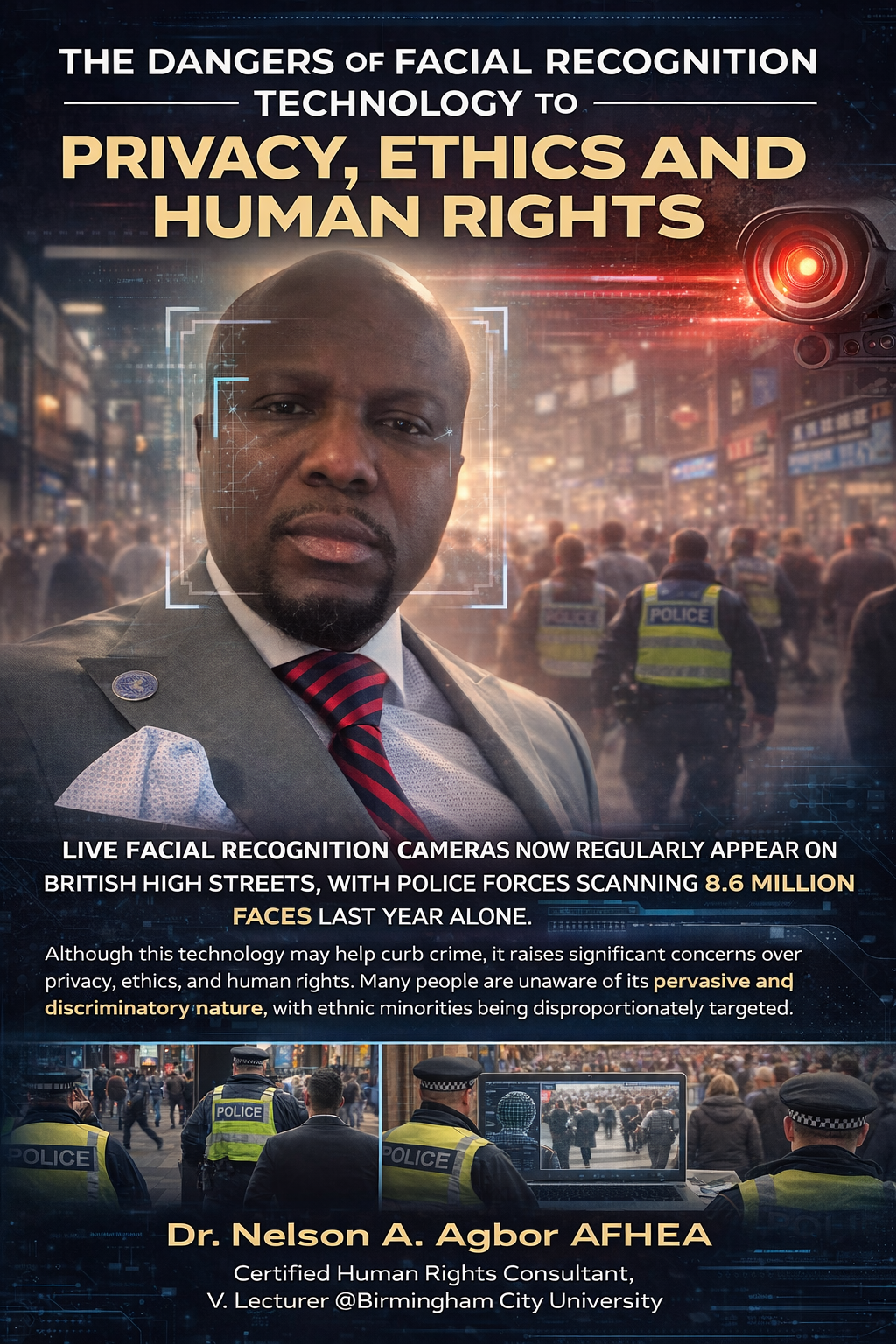
Facial recognition technology (FRT) has rapidly transitioned from a speculative idea to an essential component of modern surveillance systems. This change is particularly evident in British high streets, where police forces are increasingly using live facial recognition systems. Recent statistics reveal that 8.6 million faces were scanned within a single year, nearly doubling the previous year’s figure, emphasising both the scale and swift expansion of its application. Despite this growth, public awareness of the extent and implications of such surveillance remains limited. This gap between deployment and understanding raises significant concerns about privacy, ethics, and human rights in a democratic society.
At its core, FRT directly challenges the right to privacy. Unlike conventional surveillance methods, facial recognition enables real-time identification and tracking of individuals without their knowledge or consent. This fundamentally alters public space, transforming it from an area of relative anonymity into one of constant surveillance. The passive collection of biometric data arguably creates some of the most sensitive personal information, posing risks not only of misuse but also of function creep, where data gathered for one purpose is repurposed for others. Such developments threaten to normalise invasive surveillance practices that gradually erode civil liberties.
Ethically, the deployment of facial recognition technology raises questions about proportionality, transparency, and accountability. The principle of proportionality requires that surveillance measures be necessary and balanced against the rights they infringe. However, the mass scanning of millions of faces, most of whom are not suspected of any wrongdoing, suggests a broad and arguably indiscriminate application. Furthermore, the opacity surrounding how facial recognition systems operate, including the algorithms used and the criteria for inclusion in watchlists, undermines public trust. Without clear mechanisms for oversight and redress, individuals have limited means to challenge or even understand how they are being surveilled.
A particularly urgent concern is the discriminatory impact of facial recognition systems. Numerous studies have shown that these technologies tend to make more errors when identifying individuals from ethnic minority backgrounds, especially Black and Asian populations. This increases the risk of disproportionate targeting and misidentification, which can have serious consequences, including wrongful stops, questioning, or even arrest. In the UK, where worries about racial profiling in policing already exist, the use of potentially biased technologies risks worsening existing inequalities. Perceptions of and realities of unequal treatment further weaken trust in law enforcement among affected communities.
It is crucial, however, to recognise the potential advantages of facial recognition technology in crime prevention and public safety. Supporters argue that FRT can improve policing efficiency by enabling rapid suspect identification, locating missing persons, and stopping serious crimes. In specific controlled situations, such as targeted operations with clear objectives, the technology may offer valuable support to law enforcement. These positive uses indicate that FRT is not inherently problematic, but rather that its risks depend on how it is applied and managed.
Considering these competing factors, the main challenge is to develop strong regulatory frameworks that balance security goals with protecting fundamental rights. This involves setting clear limits on when and where facial recognition can be employed, ensuring independent oversight, and requiring transparency in both technological design and operational deployment. Importantly, there must be genuine engagement with the public, especially with ethnic minority communities who are disproportionately impacted, to rebuild trust and address their concerns. Without these measures, the ongoing growth of facial recognition technology risks creating a surveillance culture that violates privacy, sustains discrimination, and threatens the very rights it aims to safeguard.
Dr Nelson A. Agbor AFHEA
Certified Human Rights Consultant
V. Lecturer @Birmingham City University.




