
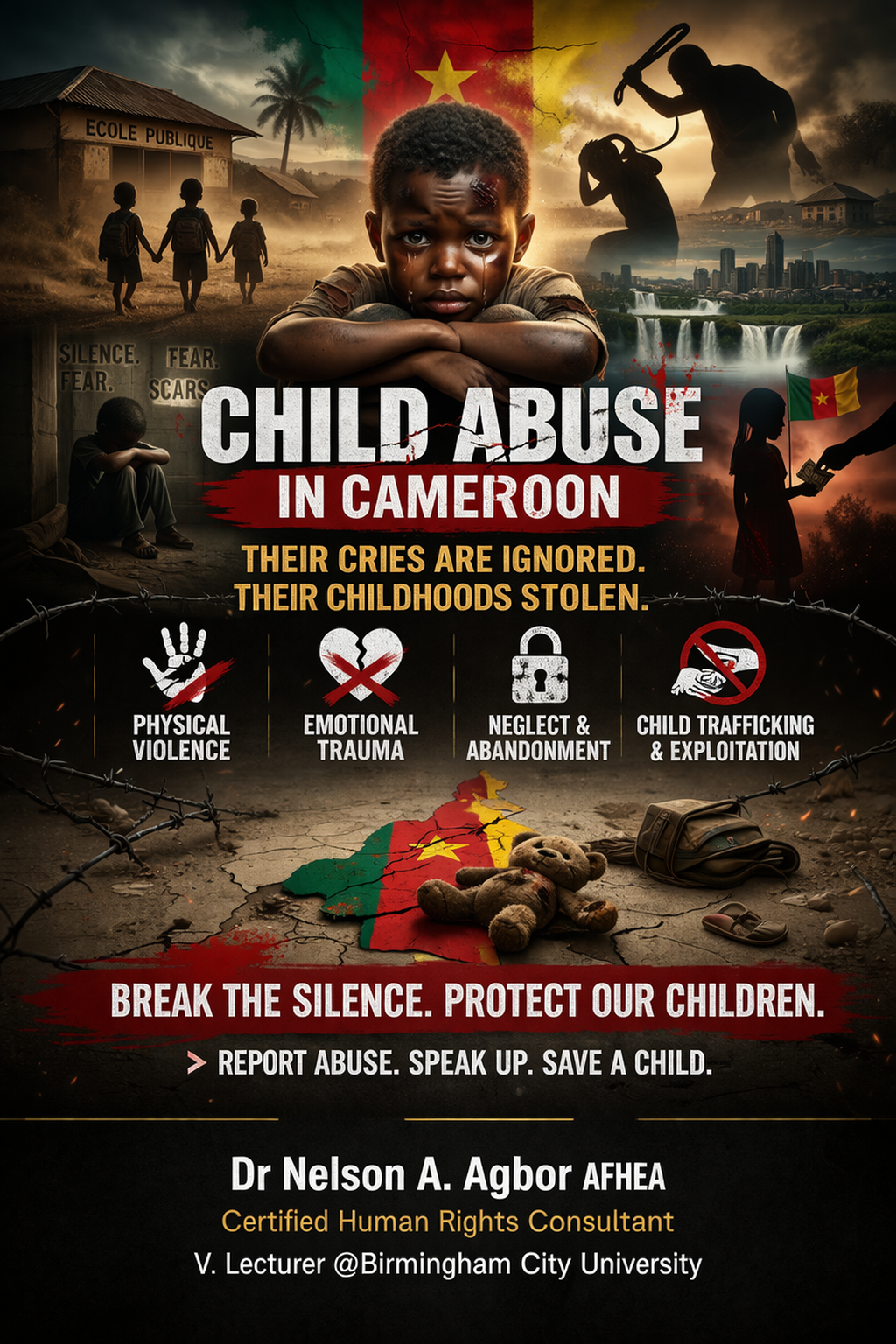
The ongoing abuse of children in Cameroon is one of the most troubling social and human rights issues facing the country today. Throughout the nation, children continue to experience violence, sexual abuse, neglect, and even death at the hands of adults who are supposed to protect them. These repeated acts of brutality expose a serious crisis in child protection, law enforcement, and societal duty. The frequency of such incidents indicates not just isolated crimes but a systemic failure to safeguard society’s most vulnerable members. As cases of abuse rise, the urgent need for national action becomes increasingly clear.
A recent, heartbreaking case has once again brought this crisis into public focus: the rape and murder of an 11-year-old girl, Divine Mbarga Atangana, by a man reportedly over forty years old, who remained at large for over a week. According to information gathered, the young girl was reported missing on 18 March 2026 after leaving her grandmother’s home following a disagreement. Her lifeless body was found the next day, 19 March, in an unfinished building in the neighbourhood, sparking shock and outrage among residents.
This heinous crime has sparked widespread outrage and fear, especially given that it took over a week for the offender to be arrested. The failure of law enforcement agencies in cases like this to promptly apprehend suspects raises serious doubts about the effectiveness and commitment of the country’s child protection systems. Such delays in delivering justice not only deepen the trauma experienced by affected families and communities but also encourage potential offenders who perceive a culture of impunity.
This latest tragedy marks the third major case of child death in Cameroon in recent months, further emphasising the growing danger faced by children. It follows the heinous killing of Bebe Matis, who was allegedly stabbed to death by his father’s friend after an altercation. The brutality of this earlier incident shocked the nation. It highlighted the alarming reality that children are increasingly at risk even within spaces traditionally considered safe, such as family and community environments. The recurrence of such cases suggests a deeply troubling trend in which violence against children is becoming more frequent and increasingly normalised.
The situation has worsened significantly due to the Anglophone crisis, which has now persisted for more than ten years. This prolonged conflict has fostered an environment of instability, fear, and social disintegration, with children suffering the most. Many children in the affected areas have been displaced, denied education, separated from their families, and exposed to violence they neither comprehend nor deserve. In a crisis rooted in political and historical grievances far beyond their understanding, children have become the most innocent victims. The collapse of social institutions and community structures in conflict zones has left many minors vulnerable to exploitation, abuse, and death.n, abuse, and death.
Moreover, the rising threat to children in Cameroon highlights deeper institutional failings. Law enforcement agencies, judicial bodies, and child welfare institutions often do not respond swiftly or effectively to cases involving minors. Investigations are frequently delayed, offenders evade arrest, and justice is often denied. This ongoing lack of accountability fosters a culture where crimes against children can persist with little fear of repercussion. The state’s failure to develop robust preventive and punitive measures has created a dangerous environment where children’s lives are continually at risk.
In effect, the abuse and killing of children in Cameroon demand urgent and decisive action from the government and all societal stakeholders. Stronger legal frameworks, faster investigations, effective prosecution of offenders, and enhanced community-based child protection systems are essential. The government must take concrete steps to ensure children are protected from violence, particularly in conflict-affected areas. Protecting children is not just a legal duty but a moral and national obligation. Cameroon cannot hope to build a safe and prosperous future while its children continue to live in fear and vulnerability.
Dr Nelson A. Agbor AFHEA
Certified Human Rights Consultant
V. Lecturer @Birmingham City University.




