
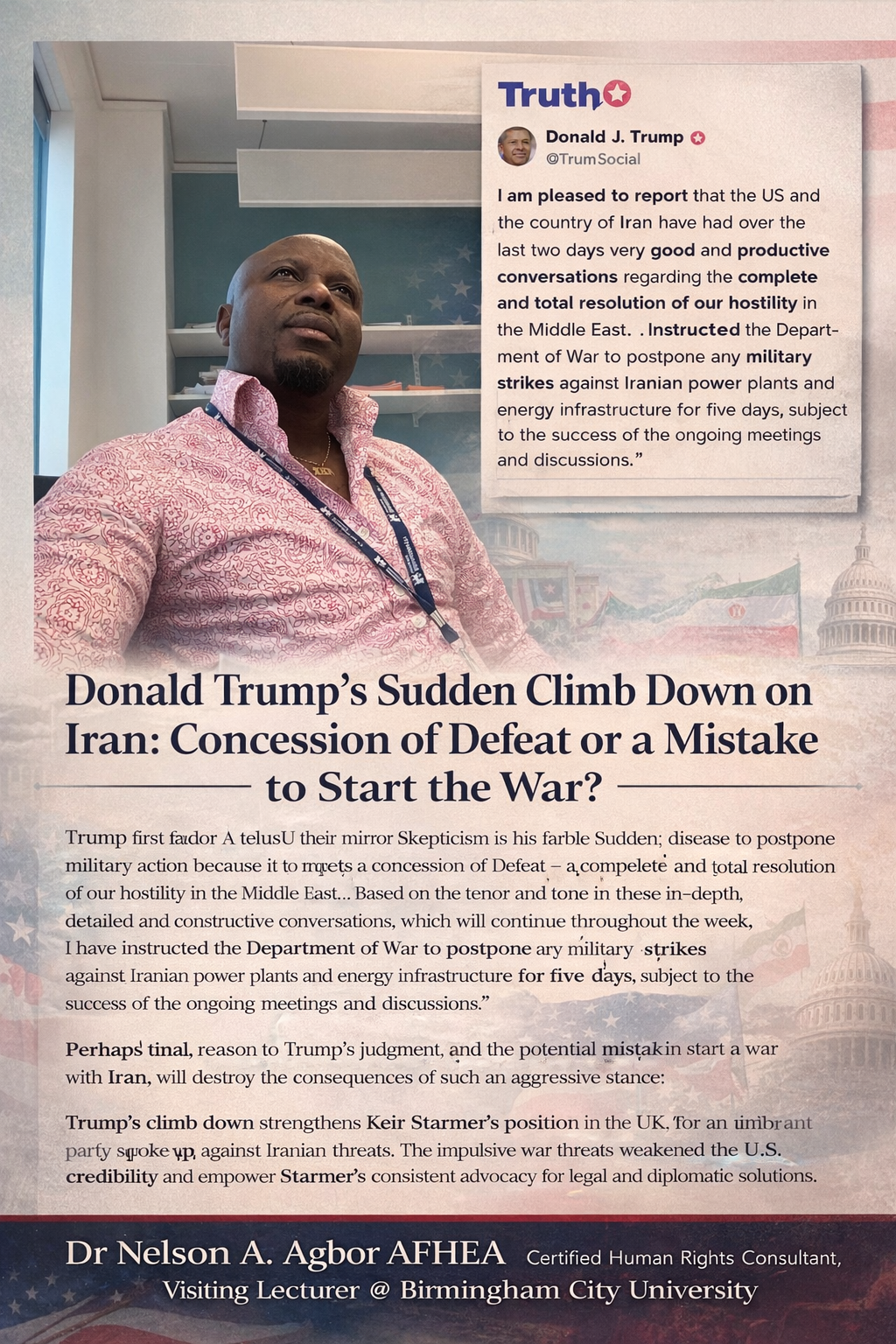
The recent remarks by Donald Trump regarding Iran mark a notable rhetorical shift from confrontation to cautious diplomacy. Following a perceived 48-hour ultimatum threatening the “obliteration” of Iranian infrastructure, Trump’s subsequent message on Truth Social highlighted “very good and productive conversations” and a temporary pause to military action. This sudden change raises significant questions about strategic consistency, credibility, and the wider implications for U.S. foreign policy in the Middle East. The contrast between maximum threats and conciliatory language underscores a recurring pattern in Trump’s geopolitical communication style: escalation followed by quick recalibration.lowed by rapid recalibration.
At the heart of this development lies the tension between coercive diplomacy and performative brinkmanship. Trump’s initial ultimatum indicated a willingness to use overwhelming force against Iranian power plants and energy infrastructure, a move that would likely be a significant escalation under international law. However, the subsequent announcement of a five-day postponement of strikes, contingent on ongoing negotiations, suggests either a reassessment of the costs of military engagement or a tactical manoeuvre aimed at extracting concessions. The language of “productive conversations” implies that backchannel diplomacy may already have been in progress, casting doubt on whether the ultimatum was ever genuinely intended to be executed.
This sudden climb-down prompts scrutiny over whether it signals a concession of weakness or a calculated diplomatic opening. Critics may see the reversal as an implicit acknowledgment that the initial threat was either impractical or strategically flawed. The lack of tangible preconditions imposed on Iran in Trump’s statement further reinforces the idea that the United States has stepped back from a position of strength. Conversely, supporters might argue that the threat of force successfully compelled Iran to the negotiating table, thus justifying the initial escalation. However, without clear evidence of Iranian concessions, the story of successful coercion remains tenuous.ains tenuous.
More broadly, this episode prompts questions about whether the initial move towards war was itself a misjudgment. The swift shift from threats of “obliteration” to praise for “constructive conversations” indicates a lack of strategic consistency. Such oscillation risks damaging the credibility of U.S. commitments and signals to both allies and adversaries that policy may be guided more by impulsive rhetoric than by careful decision-making. In international relations, credibility is a vital asset; repeated reversals can weaken trust and encourage adversaries to see threats as negotiable rather than conclusive.
In contrast, the measured and legally grounded approach of Keir Starmer gains renewed importance in this context. Starmer’s focus on diplomacy, multilateralism, and compliance with international law starkly opposes Trump’s shifting stance. By consistently committing to negotiation and legal frameworks, Starmer positions the United Kingdom as a stabilising force in global affairs. Trump’s apparent retreat, therefore, inadvertently underscores the value of such an approach, highlighting the dangers of unilateral escalation and the advantages of sustained diplomatic engagement.
Ultimately, Trump’s recent statements reflect a broader pattern in his foreign policy: the use of dramatic threats, followed by partial de-escalation, presented as a success. Whether this episode constitutes a concession of defeat or a strategic recalibration remains contested, but it undeniably exposes the fragility of a policy based on unpredictability. In doing so, it also highlights alternative models of leadership, such as Starmer’s, that emphasise consistency, legality, and diplomacy over spectacle. As tensions with Iran continue to develop, the contrast between these approaches will likely influence both immediate outcomes and long-term perceptions of Western leadership on the global stage.
Dr Nelson A. Agbor AFHEA
Certified Human Rights Consultant
V. Lecturer @Birmingham City University.




