
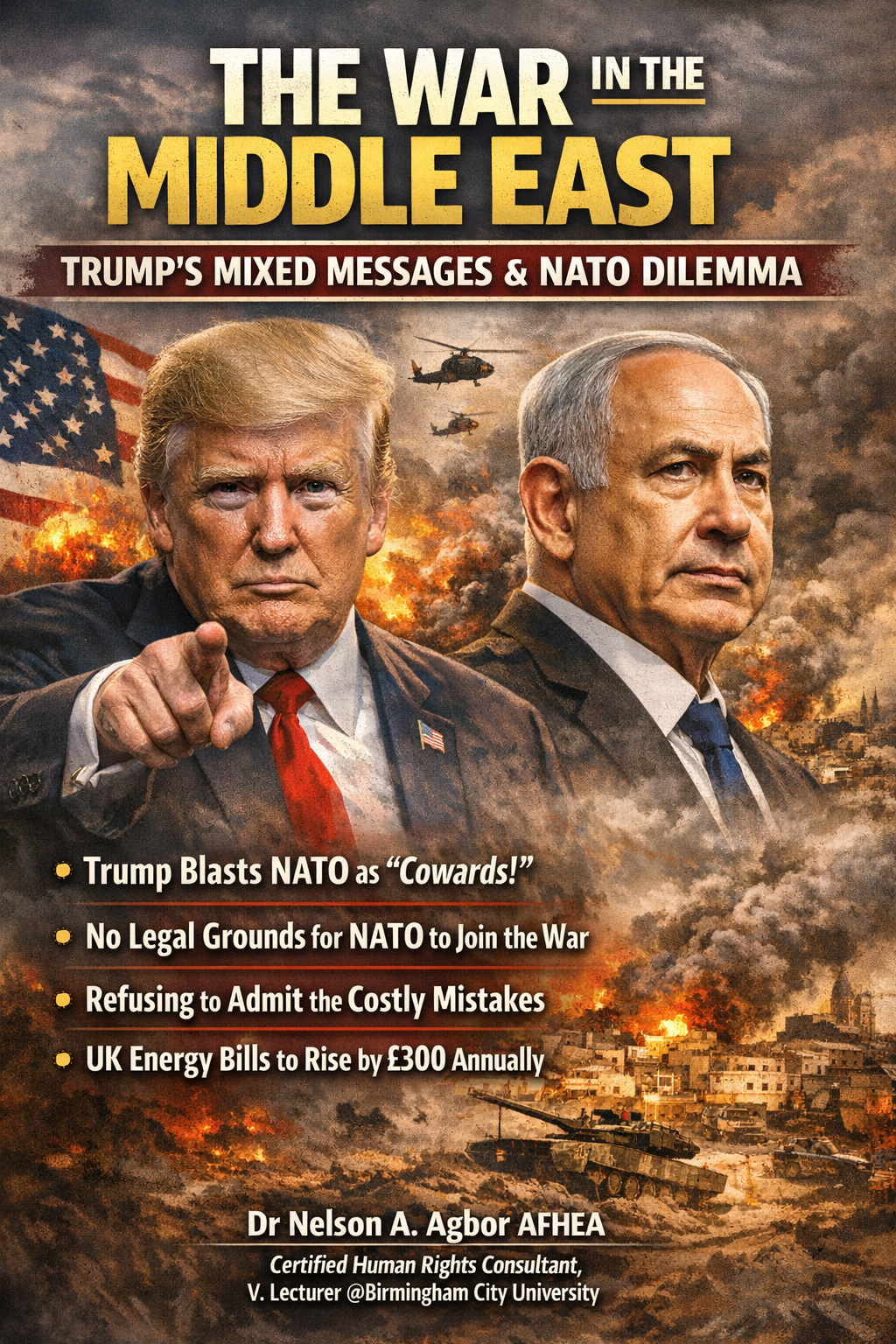
The ongoing conflict in the Middle East has entered a volatile and uncertain phase, characterised by shifting alliances, unclear strategic objectives, and increasingly ambiguous political messaging from global leaders. Among the most scrutinised voices is that of U.S. President Donald Trump, whose recent statements on the war’s trajectory have been notably inconsistent. At times, Trump has portrayed the intervention as a strategic success, emphasising military strength and deterrence; at others, he has hinted at dissatisfaction with its progress, criticising both allies and the broader international response. This lack of coherence has contributed to a growing sense of instability, not only within the region but also among Western allies attempting to interpret the United States’ long-term intentions.
Trump’s rhetoric has gone beyond the battlefield to include sharp criticism of the North Atlantic Treaty Organisation (NATO), which he has accused of weakness and called its members “cowards” for their reluctance to engage more directly in the conflict. Such comments reflect a longstanding tension between Trump and the alliance, dating back to his previous presidency, during which he often questioned NATO’s value and burden-sharing arrangements. However, these criticisms ignore the fundamental legal and structural limits of NATO as an organisation. Founded in 1949 as a collective defence pact, NATO’s main role is to ensure mutual defence among its members in the event of an attack, not to start or participate in offensive military operations outside its defined scope.d scope.
Indeed, there is no legal mechanism within NATO’s founding treaty that allows the alliance to jointly enter a war of choice in the Middle East. Article 5, often regarded as the foundation of NATO’s collective defence principle, applies strictly to situations where a member state is attacked. Even then, the response depends on each member’s constitutional processes and political will. The current conflict does not satisfy these criteria, and therefore, NATO’s involvement remains limited to indirect support measures, such as intelligence sharing, logistical assistance, and regional stabilisation efforts. Trump’s calls for greater NATO participation, therefore, either stem from a misunderstanding or a deliberate mischaracterisation of the alliance’s role.
Compounding these tensions is the broader issue of strategic accountability. Critics argue that the U.S. administration, under Trump’s influence and amid ongoing political pressure, has failed to fully acknowledge the miscalculations that led to the current escalation. The decision to engage militarily without a thorough assessment of potential outcomes has resulted in a prolonged conflict with no clear resolution in sight. This reluctance to admit mistakes has hindered meaningful policy reassessment and undermined confidence among both domestic and international audiences. Without transparent evaluation, the risk of further strategic errors remains high.
The repercussions of the conflict are not limited to the Middle East or the United States; they are already being felt across Europe, especially in the United Kingdom. One of the most immediate effects has been a rise in energy prices, driven by disruptions in global supply chains and heightened geopolitical risks. Analysts estimate that UK households could face an increase of around £300 per year in energy costs, worsening an already difficult cost-of-living crisis. This economic pressure underscores the interconnected nature of modern conflicts, where decisions made in one region can have widespread impacts on distant populations.
In conclusion, the current state of the war in the Middle East highlights the dangers of inconsistent leadership, misaligned expectations among allies, and inadequate strategic planning. Trump’s mixed messaging and criticism of NATO not only obscure the realities of the conflict but also risk weakening the cohesion of longstanding international partnerships. As the situation continues to develop, policymakers must prioritise clarity, accountability, and adherence to established legal frameworks. Without these elements, the chances for de-escalation and long-term stability remain uncertain, whilst the global consequences, economic, political, and humanitarian, continue to grow.
Dr Nelson A. Agbor AFHEA
Certified Human Rights Consultant
V. Lecturer @Birmingham City University.




